
 Business License
Snap Button MOQ, Sampling and Lead Time: What Buyers Should Expect
A snap button MOQ is the quantity a factory can run without losing money on setup, and it is the first figure most buyers ask for. It is also the figure most often quoted from memory and then revised once finish, colour and packing are known. Understanding what sits behind the number removes much of the friction from a first order.
This guide covers the three stages that decide whether a closure order runs smoothly: the quantity a production line can start at, the sampling route from drawing to approved sample, and the button production lead time a buyer should place in front of a garment delivery date. It finishes with a planning table that works as a practical checklist before an order is confirmed.
1. What a Snap Button MOQ Actually Covers
A snap button MOQ is not one number but the sum of three setup costs: the mold or die, the plating or molding batch, and the packing run. A stock design in a standard size and finish can often start at a few thousand pieces, because the tooling already exists and the same part runs for other buyers during the month.
When any of those three elements changes, the floor moves. A new size needs a new die. A custom colour needs a molding batch large enough to justify the colour change. Custom packing adds a separate minimum set by the packaging supplier rather than by the button factory.
| Cost element | Why it sets a floor | Effect on quantity |
|---|---|---|
| Existing mold or die | No setup cost left to recover | Lowest floor |
| New mold for a new size | Tooling cost must be carried by the order | Higher floor |
| Custom colour or plating batch | Minimum batch per colour or finish | Medium to high floor |
| Printed cartons or custom packing | Print run minimum per carton design | Adds a fixed quantity |
| Mixed sizes in one order | Press changes between sizes | Spread across the whole order |
The practical point is that the number is negotiable inside limits. A buyer who accepts a stock finish and allows the parts to run alongside an existing batch will usually start lower than one who specifies a bespoke colour and a dedicated carton print.
2. Custom vs Stock: How Each Sets a Snap Button MOQ
Stock and custom orders sit in different places on the same cost curve. The table below sets out what each route requires before a line can start, which is usually the quickest way to see why two quotations for the same closure differ so widely.
| Route | Tooling needed | Typical starting band | Where it fits |
|---|---|---|---|
| Stock size, stock finish | None | A few thousand pieces | Sampling, pilot runs, colour tests |
| Stock size, custom finish | None | Medium band, set by the plating batch | Brand ranges with a signature colour |
| New size, stock finish | One new die | Medium to high band | New size added to a running range |
| New size, custom finish and logo | Die plus engraving | Highest band | Full custom programme |
Engraving a logo changes the tooling conversation rather than the material cost. A deeper engraving needs more press force and a slightly slower cycle, so the plate wears faster and the die is usually charged at a higher rate than a plain one.
Ask for the quotation to separate tooling from unit price. A buyer who can see the tooling line separately can decide whether to carry it once or spread it, and that decision often changes the whole order structure.
3. Sampling a Snap Button Order: From Inquiry to Approved Sample
Sampling is where a specification becomes a physical part, and it is the stage where a clear brief saves the most calendar time. The table below sets out the steps and the durations that normally apply when the answers arrive promptly.
| Step | What happens | Typical duration |
|---|---|---|
| Specification review | Size, material, finish and packing confirmed | 1 - 2 days |
| Quotation | Unit price, tooling and starting quantity issued | 1 - 3 days |
| Sample from existing mold | Parts pulled, finished and assembled | 3 - 5 days |
| Sample from a new mold | Mold cut, first shots, finishing | 7 - 12 days |
| Courier and review | Sample shipped, pull test by the buyer | 3 - 6 days |
Two habits shorten this stage. Send a reference sample or a photograph alongside the written specification, because a single image removes more ambiguity than three paragraphs. Confirm the pull target before the sample is made, so the buyer is testing against a stated figure rather than an expectation.
Sample approval should end with a sealed and signed reference piece held by both sides. Without that reference, a later dispute about finish or holding force turns into a memory test. Difei Button (Guangzhou) Co Ltd issues the sealed reference alongside the sample and keeps a matching piece on file.
4. Button Production Lead Time: What Shapes It
Button production lead time is driven more by queue position than by quantity. A factory running a full week of the same size and finish will add a smaller order to the run, while a quiet line will start a larger order faster. The volume a buyer asks for is often the smaller part of the answer.
Five factors move the figure in practice. Raw material availability sets the start date, since brass and specific POM grades are held in different quantities, and plating capacity sets the middle because plating is a shared line with its own minimum batch. Tooling readiness then decides whether the order waits for a die at all, while packing and carton print add a fixed tail. Freight booking finally sets the ship date, which sits outside the factory schedule entirely.
Season matters as much as anything on that list. Orders placed in the weeks before a major holiday window face a compressed calendar, and a plan that ignores it loses a fortnight rather than a day.
5. Lead Time Stages, Week by Week
Once a sample is approved, a closure order normally breaks into four stages. The table below shows a typical sequence for an order in the ten thousand to fifty thousand piece range, after sample approval and material confirmation.
| Stage | Activity | Typical window |
|---|---|---|
| Week 1 | Material release, molding or stamping | 3 - 5 working days |
| Week 2 | Plating, assembly, in-line inspection | 4 - 6 working days |
| Week 3 | Packing, carton marking, documentation | 2 - 3 working days |
| Week 4 | Dispatch and freight booking | 1 - 3 working days |
Adding those windows gives a working estimate of roughly 15 to 25 working days from material release to dispatch, which is the range worth building into a garment calendar. Larger orders extend the middle stages rather than the first, because molding and stamping scale with capacity while inspection and packing scale with piece count.
Difei Button (Guangzhou) confirms the schedule per order and reports progress at each stage, so a buyer can see where the order actually stands rather than waiting for a single ship date to arrive or slip.
6. Small Batch Snap Button Runs and Stock Molds
A small batch snap button run is the most common request from brands testing a new line, and it is also the request most likely to run into a hidden minimum. The limit is usually not the molding but the finishing batch, which has its own floor per colour or plating type.
Not long ago a startup workwear label asked for 3,000 closures in a custom colour and expected delivery within four weeks. The mold existed, but the plating line needed a batch of roughly 20,000 pieces for that specific finish to run at a workable cost. Instead of forcing the full quantity, the order was produced in a stock finish for the launch, with the custom plating scheduled once the second season's volume was confirmed. The label launched on schedule and the custom colour arrived with the follow-up order, which had grown to about 25,000 pieces.
That pattern repeats often enough to be worth planning for. A pilot order in a stock finish and a confirmed colour for the second season usually beats a delayed launch in the exact shade the designer wanted.
7. Tooling and Mold Cost in a Small Batch Snap Button Order
Tooling is the element that most often pushes a small batch snap button order above its budget, and it is also the element easiest to spread. A plain snap die typically runs from roughly US$80 to US$250 depending on size and cavity count. A die with an engraved logo or a multi-cavity layout usually falls between US$300 and US$800. Difei Button (Guangzhou) quotes tooling as a separate line, so it can be weighed against the starting quantity rather than buried in the unit price.
A bag maker some time ago split a mold cost of about US$400 across a first order of 8,000 pieces, which added roughly 5 cents to each closure. On the reorder the same tooling added nothing at all, so the unit price dropped without any change to the specification.
Two questions settle the tooling decision. Who owns the mold after the order, and will the buyer be charged again if the size is repeated later. A written answer to both removes the most common source of dispute on a repeat order.
8. Planning Your First Snap Button Order
A realistic schedule starts from the garment delivery date and works backwards, with the snap button MOQ confirmed before the schedule is fixed at all. The table below sets out the buffers worth building in, expressed as planning figures rather than promises, since every order carries its own conditions.
| Milestone | Planning figure | Note |
|---|---|---|
| Specification and quotation | 2 - 5 days | Faster with a reference sample attached |
| Sampling and approval | 1 - 2 weeks | Longer if a new mold is required |
| Production | 15 - 25 working days | After material release |
| Inspection and packing | 2 - 3 days | Included in the production window |
| Freight | Varies by mode | Booked outside the factory schedule |
Three checks prevent most first-order problems. Confirm the starting quantity separately for the mold, the finish and the packing, because each has its own floor. Confirm the pull target before sampling rather than after. Finally, ask Difei Button (Guangzhou) Co Ltd for the schedule in stages, so any drift appears early enough to react to.
With those three in place, a first order usually behaves predictably, and the second order becomes a reorder rather than a repeat of the same conversation.
9. Frequently Asked Questions
9.1 What is a typical snap button MOQ?
A snap button MOQ commonly starts in the low thousands of pieces for a stock size in a stock finish, because no tooling cost has to be recovered. The number rises once a new die is cut, and it rises again when a custom colour or a specific plating is required, since finishing lines run their own minimum batch. Printed cartons add a further fixed quantity that the button factory does not control. Treat any quoted figure as valid for that combination of size, finish and packing, and re-confirm it whenever one of the three changes.
9.2 How long is button production lead time after sample approval?
Button production lead time after sample approval normally runs about 15 to 25 working days to dispatch for orders in the ten thousand to fifty thousand piece range, assuming material is available. Molding or stamping takes roughly one week, plating and assembly about another, and packing adds a short tail. Larger volumes extend the middle stages rather than the start. Two factors sit outside that window entirely: holiday shutdowns, which can add one to three weeks, and freight booking, which depends on the route and the season.
9.3 Can I place a small batch snap button order with a custom colour?
Often yes, but the finishing batch usually sets the limit rather than the molding. A small batch snap button order in a custom colour may need to be grouped with a similar shade on the plating line, or produced with a stock finish first and the custom colour scheduled once volume grows. The workable route depends on how close the target colour is to something already running. Ask for both options with a price and a date against each, then decide whether the exact shade justifies the extra quantity.
9.4 Does ordering more pieces shorten the lead time?
Rarely in the way buyers expect. A larger quantity can move an order up the queue when it matches a run the factory already has scheduled, and that is a genuine gain. It does not shorten molding, plating or packing in proportion to the volume, because those stages scale with piece count rather than with order value. The practical approach is to ask when the same size and finish is next scheduled to run, then decide whether aligning with that window is worth adjusting the quantity.
Recently Posted
-
Inside Difei Button's Quality System: From First-Piece Approval to Batch Traceability
September 21, 2026A button quality system is judged at the sewing line rather than in the sales office. By the time a carton reaches a garment facto Read More
 -
Buttons for Denim and Jeanswear: Wear and Wash Performance
September 21, 2026A jeans button leads a harder life than any other closure on a garment. It is pulled with one hand while the fabric resists, it pa Read More
 -
Plastic Snap Buttons vs Metal Snap Buttons: A Selection Framework
September 21, 2026A buyer comparing a plastic vs metal snap button is usually trying to settle one question: which closure keeps the garment working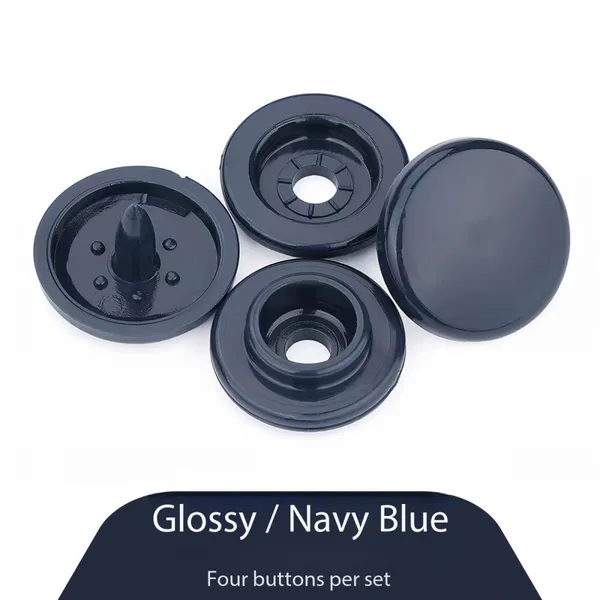 Read More
 -
Spring Snap Buttons Explained: How Metal Snap Fasteners Work
September 21, 2026A spring snap button is the closure behind the short, sharp click on a denim jacket, a work shirt placket or the flap of a canvas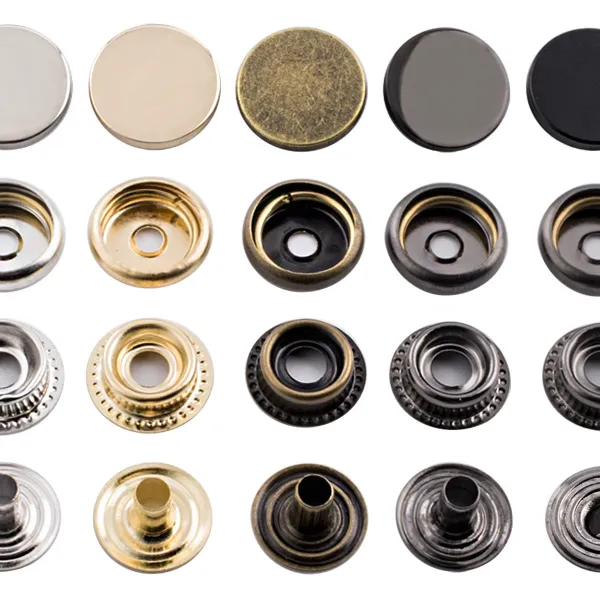 Read More

Contact Us
Recommended Products
-
 Clothing Accessories Lead Free Brass Metal Ring Prong Snap Button With 4 Parts for Infant Baby Clothes Baby BibsUS$ 0.01 - 0.03MOQ: 5000 Sets
 -
Brass Metal Stainless Steel Material Ring Prong Snap Button With 4 Parts Lead Free & Nickel Free for Infant Baby Clothes Baby Bibs Baby SuitsUS$ 0.01 - 0.03MOQ: 5000 Sets
-
Metal Grommets Eyelets Gold Eyelet for Bag Shoes and Garment AccessoriesUS$ 0.01 - 0.03MOQ: 5000 Sets
-
Cheap Price Custom Jeans Button Metal Custom Logo Metal Button for JeansUS$ 0.01 - 0.03MOQ: 5000 Sets
-
Factory Wholesale Hat Bag Clothing Press Snap Button Spring Snap Button Metal Snap ButtonsUS$ 0.03 - 0.06MOQ: 5000 Sets
-
Wholesale Plastic Round Coloured Snaps Button Press Fasteners for Baby Bibs/ Baby GarmentsUS$ 0.01 - 0.03MOQ: 50000 Sets
-
Custom EngravedCopper I Brass Metal Jeans Button Denim Clothes Jacket for Jeans DenimUS$ 0.01 - 0.03MOQ: 5000 Sets
-
17mm Open Hole Shank Button With Aluminum Nail With Logo for Jeans Jacket PantsUS$ 0.01 - 0.03MOQ: 5000 Sets
-
Eco-friendly Custom Size Plastic Snaps Plastic Snap Button for Baby Clothes, Baby BibsUS$ 0.01 - 0.03MOQ: 50000 Sets
-
12mm 15mm 17mm 20mm Four Parts Metal Brass Fastener Press Snap Button for Clothes JacketUS$ 0.03 - 0.06MOQ: 5000 Sets
-
Custom Logo Personalized High Quality Metal Press Snap Fastener Snap Buttons for Clothing Garments JacketUS$ 0.03 - 0.06MOQ: 5000 Sets
-
Custom Printing Round Press Spring Four Part Snap Button for Clothing Leather 405#17mmUS$ 0.03 - 0.06MOQ: 5000 Sets
-
OEM Garment Accessories Custom Baby Snap Button Press Metal Prong Pearl Ring Snap ButtonUS$ 0.01 - 0.03MOQ: 5000 Sets
-
Factory Stock Buttons Stainless Steel or Brass Material Colors Pearl Snap Button Prong Pearl Snap Button for Shirts ClothingUS$ 0.01 - 0.03MOQ: 5000 Sets
-
Durable 9mm POM Four Part Plastic Snap Buttons Lead Nickel Free Safe Fasteners for Baby Bibs and Children ApparelNegotiableMOQ: 50000 Sets
-
Plastic Snap Fasteners 9mm POM Lead Nickel Free Hardware for Baby Bibs Children Apparel Sewing ProjectsNegotiableMOQ: 50000 Sets
-
Four Part Plastic Snap Buttons 9mm POM, Custom Color OEM ODM for Apparel and Bed SheetsNegotiableMOQ: 50000 Sets
-
Automatic Feeding Compatible Four Part Plastic Snap Buttons for High-speed AssemblyNegotiableMOQ: 50000 Sets
-
Resin Snap Buttons 9mm POM Eco Friendly Garment Closures for Bed Sheets Outerwear Infant TextilesNegotiableMOQ: 50000 Sets
-
Eco‑friendly POM Made Four Part Plastic Snap Buttons 9mm Garment Snaps for Infant Textile ManufacturingNegotiableMOQ: 50000 Sets