
 Business License
Snap Buttons for Swimwear and Activewear
A closure that behaves for a year on a denim jacket can lose its finish in a single swim season, and the difference is the environment rather than the garment. A swimwear snap button meets chlorinated water, salt, sunscreen and heat, and an activewear fastener meets sweat, stretch and repeated cycling on a panel that moves. Both cases push the same part beyond what a standard closure was designed for.
This guide covers the corrosion mechanisms that attack a closure in water and sweat, the materials that resist them, how an activewear fastener should be placed on a stretch panel, the test methods that predict field performance, and the fields that belong on a specification for a corrosion resistant snap button.
1. Why a Swimwear Snap Button Faces a Different Test
A swimwear snap button lives in conditions that accelerate every failure mode a metal closure has. Chlorine attacks the plating rather than the base metal, salt water sets up a galvanic cell between dissimilar metals, and a warm pool at 30 degrees speeds the chemistry compared with a cold rinse. Sunscreen adds an organic residue that holds moisture against the surface.
| Exposure | Mechanism | Visible result |
|---|---|---|
| Chlorine | Oxidises the plating layer | Dulling, then pitting |
| Salt water | Galvanic corrosion at joints | White or green bloom |
| Sweat | Acidic film, chloride ions | Discolouration |
| Heat | Faster reaction rate | Earlier onset of all three |
The garment construction makes it worse rather than better. Swim fabric is thin, elastic and often chlorinated rubber or a stretch knit, so the closure sits on a panel that stretches under the load and returns. That movement works the plating at the edge of the cap, and a plated layer that would last years on a stiff panel can lift at the rim within a season.
A buyer who specifies a finish by colour alone has therefore specified nothing useful for this application. The figures that matter are the base metal, the plating chemistry and its thickness, and whether the part is intended for a chlorinated environment at all.
2. Corrosion Resistant Snap Button Materials
Three material routes cover most corrosion resistant snap button requirements, and they differ in cost, appearance and the environments they tolerate. Stainless steel 316 is the strongest performer in chloride because it relies on a passive film rather than a coating, so there is no layer to lift. Brass with a heavy plating is the middle route and the one most common in fashion swimwear. Engineered plastic removes the metal question entirely.
| Material | Chloride resistance | Appearance | Relative cost |
|---|---|---|---|
| Stainless steel 316 | High, passive film | Brushed or polished | High |
| Brass, heavy plating | Moderate, coating dependent | Wide colour range | Medium |
| Zinc alloy, plated | Low in chloride | Wide colour range | Low |
| POM or nylon | Immune to metal corrosion | Moulded colour | Low |
Stainless steel 316 is the grade that carries molybdenum, and that addition is what gives it resistance in chloride where 304 will pit. A buyer who asks for stainless without naming the grade may receive 304, which performs well in fresh water and poorly in a salt pool.
Plastic closures avoid the corrosion problem completely and are common on activewear where a low profile matters more than a metal look. The trade is strength, since a moulded snap carries a lower pull figure than a metal one of the same diameter, and the release band has to be set accordingly.
3. Activewear Fastener Requirements Under Repetitive Load
An activewear fastener is stressed differently from a fashion closure, because the panel around it moves with every stride. Three requirements follow from that: the closure has to hold its release band after thousands of cycles, it has to sit flat so it does not catch on a strap or a mat, and it has to survive sweat, which is acidic and carries chloride.
The cycle figure is the one that separates a closure built for activewear from one built for a coat. A coat closure may see a few hundred cycles in its life, while a sports bra or a legging waist may be opened and closed twice per wear across several wears a week. Testing to 5,000 cycles rather than 500 is a reasonable basis for a garment in regular training use.
| Requirement | Target | Test basis |
|---|---|---|
| Cycle life | 5,000 open and close cycles | Release band held within limits |
| Profile height | Under 3.5 mm above fabric | Measured on the finished piece |
| Sweat resistance | No discolouration after 48 hours | Artificial sweat immersion |
| Stretch compatibility | No tearing at the hole | Extension of the panel under load |
Profile height matters more than it appears on a drawing, because a closure on a sports legging sits under a waistband and against the skin. A cap that stands 4 mm off the fabric can press into the wearer during floor work, and the complaint arrives as a comfort issue rather than a hardware one.
Difei Button (Guangzhou) Co Ltd supplies low profile caps at 2.8 mm to 3.2 mm height for activewear programmes, and Difei runs a cycle test on the specific spring or claw design rather than quoting a catalogue figure.
4. Swimwear Snap Button Materials: Brass, Stainless and Plastic
Choosing a swimwear snap button comes down to how much plating thickness the design budget will carry, and how the garment will be cared for. A fashion bikini that is hand rinsed in fresh water after each use tolerates a lighter coating than a training swimsuit that spends hours in a chlorinated pool each week.
The plating figure is where a specification usually goes quiet, and it is the figure that decides the outcome. A nickel plated brass cap with a 0.3 micron layer will show a dull patch after a handful of pool sessions, while the same cap at 1.5 microns of a corrosion resistant finish holds through a season of regular use.
| Construction | Plating or grade | Typical service |
|---|---|---|
| Brass, fashion | 0.3 micron decorative plating | Occasional wear, fresh water rinse |
| Brass, performance | 1.2 to 1.5 micron corrosion resistant | Regular pool use |
| Stainless steel 316 | None required | Salt water and pool |
| POM moulded | None required | Training and pool, lower pull |
Nickel release is a separate consideration that sits alongside corrosion, since a plated part in prolonged skin contact has to meet the release limit in the relevant standard. A nickel free finish solves the release question and often performs well in chloride, which makes it a common choice where both matters apply.
The two questions a buyer should settle first are whether the garment is rinsed in fresh water after every use, and whether it enters a chlorinated pool at all. The answers narrow the table above to one or two rows before cost is discussed, which is the right order for a specification decision.
5. Corrosion Resistant Snap Button Testing
A corrosion resistant snap button claim should rest on a test rather than on a material name, and three tests cover the field conditions a swim or active garment meets. Salt spray exposes the part to a chloride fog for a set number of hours. Chlorine immersion cycles the part through a pool strength solution. An artificial sweat test holds the part against a warm acidic film.
| Test | Condition | Typical duration |
|---|---|---|
| Neutral salt spray | 5 percent sodium chloride fog | 96 hours |
| Chlorine immersion | Pool strength solution at 30 degrees | 50 cycles |
| Artificial sweat | Acidic solution at 40 degrees | 48 hours |
| Cycle test | Open and close repeatedly | 5,000 cycles |
Salt spray is the most widely quoted and the least representative of a swimming pool, because chlorine is a stronger oxidiser than a neutral salt fog. A part that passes 96 hours of salt spray can still dull in chlorinated water, so a buyer relying on that figure alone may be testing the wrong environment.
Chlorine immersion is the more useful test for swimwear and it is worth asking for explicitly. A part held at pool strength for 50 cycles with a visual check between cycles gives a figure that maps onto a season of use far better than a fog chamber does. Difei Button runs chlorine immersion at pool strength and reports the cycle at which the first visible change appears.
6. Activewear Fastener Placement and Comfort
Placement decides whether an activewear fastener is felt by the wearer, and the rules follow from how the garment moves rather than from the design sketch. Three placements cause most comfort complaints: directly over a seam, at the point of maximum stretch, and in contact with the skin.
A closure over a seam sits on a step in the fabric, so the setting press cannot flatten the roll evenly and the part stands proud. One placed at the point of maximum stretch works the hole every time the panel extends, and the fabric tears around the post before the metal gives. A closure that rests against the skin needs a covered back rather than an exposed roll.
| Risk | Cause | Prevention |
|---|---|---|
| Standing proud | Set over a seam | Move clear of the seam line |
| Fabric tearing | Placed at maximum stretch | Move to a low extension zone |
| Skin marking | Exposed roll against skin | Use a covered or capped back |
| Snagging | Cap height over 3.5 mm | Choose a lower profile cap |
Reinforcement is the usual answer to stretch, and it takes the form of a small woven or knit patch bonded behind the closure. The patch spreads the load across a wider area of elastic fabric and stops the hole from growing, which is the failure that ends the life of the garment.
The order of decisions matters here, because placement has to be settled before the tooling is chosen. A closure repositioned after the die is cut needs a new die and a new first article, while the same change made on the pattern costs a single revision.
7. Swimwear Snap Button Care and Cycle Life
Care instructions decide how long a swimwear snap button lasts, and two habits separate a closure that survives a season from one that does not. The first is a fresh water rinse after every swim, which removes the chloride film before it reacts. The second is drying the garment flat rather than leaving it in a wet bag, where a warm humid environment keeps the reaction going.
A rinse within an hour of use removes most of the salt and chlorine that would otherwise sit against the plating for hours. A garment left damp in a bag overnight gives the same film a full reaction window at an elevated temperature, and that single habit can halve the apparent life of a coated part.
The cycle figure matters less on swimwear than on activewear, because a bikini closure is opened far less often than a training waistband closure. The failure that ends a swimwear closure is corrosion, while the failure that ends an activewear closure is fatigue in the spring or the fabric around the post.
8. Specifying a Corrosion Resistant Snap Button
A corrosion resistant snap button specification should carry seven lines, and each one can be checked against a test report or a drawing. A specification that names a colour and a size has left the two figures that decide performance unstated.
| Line | Example value |
|---|---|
| Base material | Stainless steel 316 |
| Plating chemistry | Nickel free, corrosion resistant |
| Plating thickness | Minimum 1.2 micron |
| Cap diameter | 15 mm, plus or minus 0.20 mm |
| Cap height | 3.0 mm maximum |
| Release force | 25 to 35 N |
| Corrosion test | 50 cycle chlorine immersion |
The release force band belongs on the specification because a spring tuned for a stiff panel will feel loose on a stretch knit. A pair that releases at 25 N on a woven coat panel may release at 15 N on an elastic swim panel, and the difference comes from the fabric rather than from the closure.
Difei Button (Guangzhou) Co Ltd states the corrosion test basis on the specification sheet and attaches the plating thickness figure to the delivery certificate. Difei also supplies the release force band measured on the customer's own fabric where a sample panel is provided, so the figure describes the assembly rather than the part in isolation.
9. Frequently Asked Questions
9.1 What material should a swimwear snap button use?
Stainless steel 316 is the strongest choice in chloride because it relies on a passive film rather than a coating, so there is no plated layer to lift. Brass with a corrosion resistant plating of 1.2 to 1.5 microns is the common route for fashion swimwear and gives a wider colour range at a lower cost. A moulded POM or nylon closure avoids metal corrosion entirely, though it carries a lower pull figure for the same diameter. The right choice depends on how often the garment enters a chlorinated pool.
9.2 How do I test corrosion resistance properly?
Ask for chlorine immersion rather than relying on a salt spray figure alone, because chlorine is a stronger oxidiser than a neutral salt fog. A part that passes 96 hours of salt spray can still dull in pool water, so the fog chamber tests the wrong environment for swimwear. Holding the part at pool strength through 50 cycles with a visual check between cycles maps onto a season of use more closely. An artificial sweat test at 40 degrees is a useful addition for activewear.
9.3 Why does an activewear fastener fail sooner than a coat button?
Because the panel around it stretches, and every extension works the hole and the plating at the edge of the cap. A coat closure may see a few hundred cycles in its life, while a training waistband may be opened and closed twice per wear across several wears a week. Fatigue in the spring or tearing of the fabric around the post ends the life of the part rather than corrosion. Testing to 5,000 cycles and reinforcing behind the hole are the two measures that address it.
9.4 Where should a snap button sit on a stretch panel?
Clear of seams and away from the zone of maximum extension, with the back covered where it will touch the skin. A closure set over a seam cannot be rolled flat, so the part stands proud and presses into the wearer. One placed at the point of maximum stretch tears the fabric around the post before the metal gives. A bonded patch behind the closure spreads the load and stops the hole growing, and the placement decision should be settled before the die is cut.
Recently Posted
-
Jeans Button Size Chart: Cap Diameters and Post Lengths
September 29, 2026A jeans button is bought by two figures, and a buyer who knows both can specify the part without a sample. The first is the cap di Read More
 -
Building a Complete Trim Package from One Supplier
September 29, 2026A garment needs buttons, a zip, a drawcord, a label and a set of rivets, and each of those parts may come from a different factory Read More
 -
Eco-Friendly Button Materials: Recycled POM and Bio-Based Options
September 29, 2026An eco friendly button is a claim before it is a material, and the two have to be separated before a specification can be written.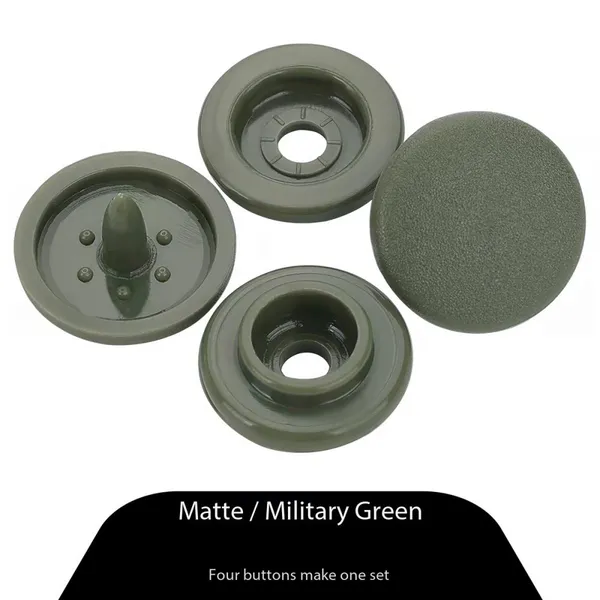 Read More
 -
Garment Accessories 101: How Buttons, Rivets, Eyelets and Clasps Work Together
September 29, 2026A finished jacket may carry eight buttons, four rivets, two eyelets and a hook, and each of those parts solves a different problem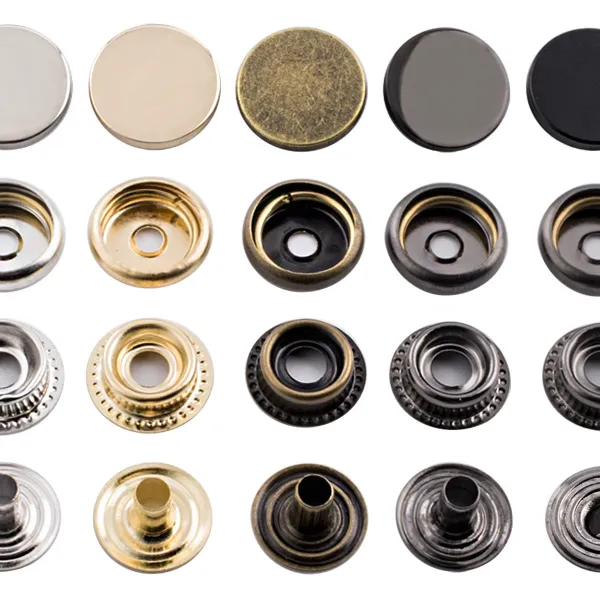 Read More

Contact Us
Recommended Products
-
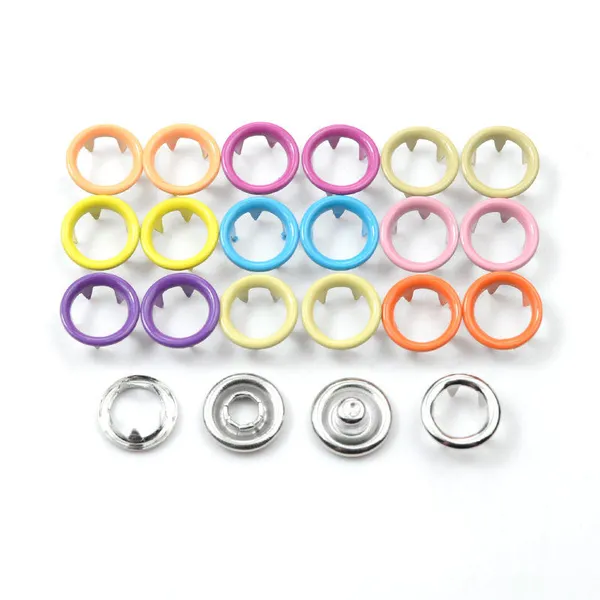
 Clothing Accessories Lead Free Brass Metal Ring Prong Snap Button With 4 Parts for Infant Baby Clothes Baby BibsUS$ 0.01 - 0.03MOQ: 5000 Sets
 -
Brass Metal Stainless Steel Material Ring Prong Snap Button With 4 Parts Lead Free & Nickel Free for Infant Baby Clothes Baby Bibs Baby SuitsUS$ 0.01 - 0.03MOQ: 5000 Sets
-
Metal Grommets Eyelets Gold Eyelet for Bag Shoes and Garment AccessoriesUS$ 0.01 - 0.03MOQ: 5000 Sets
-
Cheap Price Custom Jeans Button Metal Custom Logo Metal Button for JeansUS$ 0.01 - 0.03MOQ: 5000 Sets
-
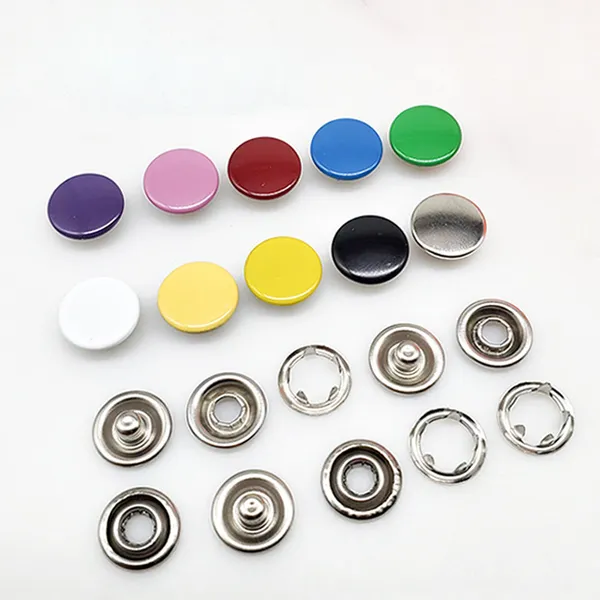
Factory Wholesale Hat Bag Clothing Press Snap Button Spring Snap Button Metal Snap ButtonsUS$ 0.03 - 0.06MOQ: 5000 Sets
-
Wholesale Plastic Round Coloured Snaps Button Press Fasteners for Baby Bibs/ Baby GarmentsUS$ 0.01 - 0.03MOQ: 50000 Sets
-
Custom EngravedCopper I Brass Metal Jeans Button Denim Clothes Jacket for Jeans DenimUS$ 0.01 - 0.03MOQ: 5000 Sets
-
17mm Open Hole Shank Button With Aluminum Nail With Logo for Jeans Jacket PantsUS$ 0.01 - 0.03MOQ: 5000 Sets
-
Eco-friendly Custom Size Plastic Snaps Plastic Snap Button for Baby Clothes, Baby BibsUS$ 0.01 - 0.03MOQ: 50000 Sets
-
12mm 15mm 17mm 20mm Four Parts Metal Brass Fastener Press Snap Button for Clothes JacketUS$ 0.03 - 0.06MOQ: 5000 Sets
-
Custom Logo Personalized High Quality Metal Press Snap Fastener Snap Buttons for Clothing Garments JacketUS$ 0.03 - 0.06MOQ: 5000 Sets
-
Custom Printing Round Press Spring Four Part Snap Button for Clothing Leather 405#17mmUS$ 0.03 - 0.06MOQ: 5000 Sets
-
OEM Garment Accessories Custom Baby Snap Button Press Metal Prong Pearl Ring Snap ButtonUS$ 0.01 - 0.03MOQ: 5000 Sets
-
Factory Stock Buttons Stainless Steel or Brass Material Colors Pearl Snap Button Prong Pearl Snap Button for Shirts ClothingUS$ 0.01 - 0.03MOQ: 5000 Sets
-
Resin Snap Buttons 9mm POM Heavy Duty Closure Parts for Baby Bibs and Textile Handmade Sewing ProductionNegotiableMOQ: 50000 Sets
-
13.8mm x 7.5mm Plastic Grommet Kit for Apparel and Garment Lacing, Lightweight and FlexibleNegotiableMOQ: 5000 Sets
-
Clear Plastic Eyelet and Washer Set Two‑piece Fastener for Tote Bags Canvas and Fabric Hole Reinforcement ApplicationsNegotiableMOQ: 5000 Sets
-
13.8mm x 7.5mm Clear Plastic Eyelet and Washer Set Durable Two‑part Hardware for Fabric Reinforcement and Bag Making ApplicationsNegotiableMOQ: 5000 Sets
-
Two‑Piece Plastic Grommet and Washer Set 13.8mm x 7.5mm Clear Hardware for Banner Craft Works and Light‑weight Textile ProductionNegotiableMOQ: 5000 Sets
-
Clear Plastic Eyelet and Washer Set 13.8mm x 7.5mm for Tarps, Banners, and Awning Fabric ReinforcementNegotiableMOQ: 5000 Sets