
 Business License
Building a Complete Trim Package from One Supplier
A garment needs buttons, a zip, a drawcord, a label and a set of rivets, and each of those parts may come from a different factory. Assembling them into one garment trim package sourcing exercise sounds like a paperwork saving and often turns into five separate approval cycles. The reason is that each family has its own tooling, its own colour standard and its own lead time, and consolidation does not remove any of them.
This guide sets out what a package brief has to contain, when a one stop trim supplier genuinely helps and when it adds a handoff, how a mixed trim order should be structured and priced, and the failures that make buyers return to separate sourcing after one season.
1. What a Garment Trim Package Sourcing Brief Contains
A garment trim package sourcing brief is a document that lists every trim on a garment together with the fields a supplier needs in order to quote and produce it. A brief that names parts without sizes, finishes and quantities produces a quotation that cannot be compared with any other, which defeats the purpose of buying from one source.
| Field | Why it belongs |
|---|---|
| Trim family and function | Sets the tooling and the process |
| Size in mm and ligne | Prevents a wrong part being quoted |
| Material and finish | Fixes strength, colour and corrosion |
| Colour standard reference | One baseline for every family |
| Quantity per garment | Drives the order and the MOQ |
| Care requirement | Narrows the available materials |
| Attachment method | Sets the tooling at the sewing line |
| Target ship date | Drives the sequence of approvals |
The colour standard reference is the field that holds a package together, because a single baseline lets one supplier match a metal button, a plastic buckle and a woven label against the same target. Where each family carries its own colour reference, the parts will disagree under daylight even though every one of them passed its own inspection.
The attachment method field is often left to the factory, and it should not be. A closure that is set with a rolling die needs a different machine position than one set with a claw die, and a package that mixes the two without saying so will slow the sewing line even when every part is correct.
2. Why Buyers Consolidate with a One Stop Trim Supplier
A one stop trim supplier reduces the number of colour references, the number of approvals and the number of shipments a buyer has to manage. Those three savings are real, and they are the reasons consolidation works when the supplier actually produces the families rather than passing them along.
The approval saving is the largest. Five families bought separately need five rounds of sample submission, five sets of comments and five sealed samples held on file. Bought together, they need one submission, one comment sheet and one sealed set, provided the supplier can produce all five against a single colour standard.
| Cost driver | Separate sourcing | One stop supplier |
|---|---|---|
| Sample rounds | 5 | 1 to 2 |
| Colour references | 1 per family | 1 shared |
| Shipments per order | 3 to 5 | 1 |
| Inspection visits | 3 to 5 | 1 to 2 |
| MOQ exposure | Per family | Per package |
The MOQ line is the one that can reverse the decision. A package consolidates freight but each family still carries its own minimum, so a buyer ordering 2,000 garments and needing 2,000 buttons and 2,000 rivets is well placed, while a buyer needing 500 pieces of a decorative trim may find the minimum on that one line decides the whole quotation.
Difei Button (Guangzhou) Co Ltd runs buttons, rivets and eyelets through one plating line at one site, so a mixed package carries a single colour band rather than three. Difei also states the minimum on each family separately, so a buyer can see which line is driving the order.
3. Putting Together a Mixed Trim Order
A mixed trim order should be structured by family rather than by garment, because the production sequence follows the tooling rather than the style. Grouping the order by family lets a supplier run the buttons in one pass, the rivets in another and the eyelets in a third, and it makes the yield and the reject rate visible on each line.
| Line | Content | Confirmed by |
|---|---|---|
| Family block | All parts sharing a tooling route | Tooling list |
| Size block | All sizes within a family | Size and band table |
| Finish block | All parts sharing a plating | Colour band |
| Packing block | Cartons per family | Packing list |
| Ship block | Consolidated delivery date | Booking confirmation |
The size block is where a mixed trim order saves the most time, because a package usually carries several sizes of the same closure across a size range of garments. Listing them together lets a supplier quote one tooling cost and one set-up for the whole range instead of treating each size as a separate job.
The packing block should state whether the parts travel separately or are combined into one carton per garment size. Combining cartons saves labour at the garment factory but complicates a partial shipment, and a buyer who needs a split delivery should say so before the packing plan is fixed rather than after the cartons are sealed.
4. Sourcing Trim Packages: The Bill of Materials
A bill of materials for a trim package has to reconcile three views of the same garment: what the design calls for, what the factory consumes and what the supplier ships. When those three drift apart, a buyer discovers the gap at the sewing line rather than at the quotation, and the correction costs air freight.
The design view counts trims on the finished piece. The consumption view adds the loss at the setting machine, which for a pierced closure runs between 1 and 3 percent on a stable panel and higher on a loose knit. The shipment view rounds up to the packing unit, which is usually a box of 1,000 or 5,000 pieces.
| View | What it counts | Typical uplift |
|---|---|---|
| Design | Parts on the finished garment | Base figure |
| Consumption | Design plus line loss | 1 - 5 percent |
| Shipment | Consumption rounded to a box | 0 - 3 percent |
Naming the loss figure in the brief removes the most common disagreement on a trim order, because a supplier quoting to the design view will always appear cheaper than one quoting to the consumption view. Stating that the consumption figure includes a 2 percent loss at the machine puts both quotations on the same basis.
Difei Button builds the consumption uplift into the quotation when the buyer supplies the garment size range, and Difei lists the assumed loss rate on the same sheet so the figure can be checked against the factory's own records after the first run.
5. One Stop Trim Supplier: What to Verify
A one stop trim supplier claims to cover several families, and the claim should be tested against three questions before a package is placed. The first is whether the supplier produces the families or buys them in. The second is whether the finishes are applied in house. The third is whether one quality system covers every family in the package.
Producing rather than trading matters because a trader adds a handoff and a margin without adding process control. When a button and a rivet are bought from two sources by a trader and shipped together, the buyer has gained one invoice and lost the ability to trace a colour failure back to a plating bath.
The in house plating question follows directly from that. A supplier that plates its own parts can match a colour band across families and can hold a thickness figure on the certificate. A supplier that outsources plating for one family will struggle to match it against another, and the mismatch shows up as a shade difference between the button and the eyelet on the same garment.
6. Mixed Trim Order Economics and Freight
The economics of a mixed trim order come down to whether the freight saving outweighs the minimum that each family brings with it. Consolidation pays when the order is large enough that every family clears its minimum comfortably, and it costs when one small line pulls the whole package up to a higher volume.
Three figures settle the comparison. Add the freight saved by shipping one carton instead of four, add the inspection and handling saved by one receiving check, then subtract any volume the buyer has to carry because a family minimum exceeded the requirement. Where the net figure is small, the package is still worth buying for the simpler approval, but the buyer should know which line produced the cost.
Payment terms also shift when the order is larger, and a buyer should check whether a consolidated invoice changes the deposit percentage or the balance trigger. A package quoted at a 30 percent deposit against four separate orders at the same terms is a real gain in cash flow, while a package that raises the deposit to 50 percent has given part of the freight saving back.
7. Garment Trim Package Sourcing: Sampling and Approval
Sampling in a garment trim package sourcing project should run in one round where the supplier can produce every family, and in two rounds where one family needs its own tooling. Approving the families separately defeats the purpose of the package, because the colour match between them is the property the buyer is paying for.
| Stage | What it covers | Timing |
|---|---|---|
| Tooling sample | New parts off a new die | 7 - 15 days |
| Package sample | All families, one colour band | 3 - 5 days |
| Sealed set | Approved reference for both sides | Same day |
| Pre-production | Process repeat across the run | 5 - 10 days |
The package sample is the stage that justifies consolidation, because it is the first point at which a button, a rivet and an eyelet can be judged against each other under the same light. A buyer who approves each family in isolation and assembles them later has skipped the one check that a package makes possible.
The sealed set should hold one part from every family in the package, not one part from the largest family. A sealed set that covers the buttons and omits the rivets leaves the second order with no baseline for the part most likely to change, since rivets are plated in the same bath as the buttons and drift with it.
8. Common Failures in a Garment Trim Package Sourcing Project
Most package failures come from four decisions that looked harmless at the time. All four are visible on the brief if a buyer knows where to look, and each one is cheaper to correct before the tooling is cut.
| Failure | Cause | Fix |
|---|---|---|
| Colour mismatch across families | Separate colour references | One baseline for the package |
| Wrong part at the line | Size in a single unit | State mm and ligne together |
| Short delivery on one family | Loss rate not stated | Name the loss percentage |
| Repeat order with no baseline | Sealed set covers one family | Seal one part per family |
The short delivery failure is the one that reaches the sewing line, because a package ships as one consignment and a shortfall on a single family holds the whole carton. Naming the loss rate and the box quantity in the brief gives the supplier the information needed to round each family up rather than down.
The colour failure is the more expensive of the two, because it cannot be corrected at goods-in. A button that is one shade off an eyelet on the same garment is a visible defect on the finished piece, and the reliable prevention is a single colour standard that every family is matched against during production rather than after.
9. Frequently Asked Questions
9.1 When is a garment trim package sourcing approach worthwhile?
It pays when the order is large enough that every family clears its own minimum comfortably, and when the supplier produces the families rather than trading them. The savings come from fewer sample rounds, one shared colour reference, one shipment and one receiving inspection. The cost comes from family minimums that can pull the whole order up to a higher volume, so a buyer should check which line is driving the quantity. Where the net gain is small the package still saves on approval work, and that is often reason enough.
9.2 How do I check that a one stop trim supplier is genuine?
Ask three questions and request evidence for each, starting with whether the supplier produces the families or buys them in and from how many sources. Is the plating applied in house, and can a thickness figure be certified on the delivery. Does one quality system cover every family in the package, or does each family follow a different process. A supplier that produces and plates its own parts can match a colour band across families, while a trader with several upstream sources cannot guarantee that the parts agree under the same light.
9.3 How should a mixed trim order be priced?
Price it by family and then compare the total, because each family carries its own tooling cost, minimum and lead time. Naming the loss rate on the brief puts a supplier quoting to the design view and a supplier quoting to the consumption view on the same basis. Add the freight saved by shipping one carton and the handling saved by one receiving check, then subtract any extra volume carried because of a family minimum. Payment terms should also be compared, since a package that raises the deposit percentage has given part of the saving back.
9.4 What should the approved sample set contain?
The sealed set should hold one part from every family in the package, not one part from the largest family alone. Rivets and buttons are often plated in the same bath and drift together, so a set that covers the buttons and omits the rivets leaves the repeat order with no baseline for the part most likely to move. The package sample is also the first point at which the families can be judged against each other under the same light, which is the check that consolidation makes possible. Three to five pieces per family is enough for a workable reference.
Recently Posted
-
Jeans Button Size Chart: Cap Diameters and Post Lengths
September 29, 2026A jeans button is bought by two figures, and a buyer who knows both can specify the part without a sample. The first is the cap di Read More
 -
Garment Accessories 101: How Buttons, Rivets, Eyelets and Clasps Work Together
September 29, 2026A finished jacket may carry eight buttons, four rivets, two eyelets and a hook, and each of those parts solves a different problem Read More
 -
Buttons for Bedding, Pillow Covers and Home Textiles
September 28, 2026A home textile button lives a harder life than a garment closure, because it is unfastened to wash and refastened when the item go Read More
 -
Specifying Button Tolerances on a Purchase Order
September 28, 2026Two shipments can both match the drawing and still fail to work together, because a nominal figure says nothing about where inside Read More

Contact Us
Recommended Products
-
 Clothing Accessories Lead Free Brass Metal Ring Prong Snap Button With 4 Parts for Infant Baby Clothes Baby BibsUS$ 0.01 - 0.03MOQ: 5000 Sets
 -
Brass Metal Stainless Steel Material Ring Prong Snap Button With 4 Parts Lead Free & Nickel Free for Infant Baby Clothes Baby Bibs Baby SuitsUS$ 0.01 - 0.03MOQ: 5000 Sets
-
Metal Grommets Eyelets Gold Eyelet for Bag Shoes and Garment AccessoriesUS$ 0.01 - 0.03MOQ: 5000 Sets
-
Cheap Price Custom Jeans Button Metal Custom Logo Metal Button for JeansUS$ 0.01 - 0.03MOQ: 5000 Sets
-
Factory Wholesale Hat Bag Clothing Press Snap Button Spring Snap Button Metal Snap ButtonsUS$ 0.03 - 0.06MOQ: 5000 Sets
-
Wholesale Plastic Round Coloured Snaps Button Press Fasteners for Baby Bibs/ Baby GarmentsUS$ 0.01 - 0.03MOQ: 50000 Sets
-
Custom EngravedCopper I Brass Metal Jeans Button Denim Clothes Jacket for Jeans DenimUS$ 0.01 - 0.03MOQ: 5000 Sets
-
17mm Open Hole Shank Button With Aluminum Nail With Logo for Jeans Jacket PantsUS$ 0.01 - 0.03MOQ: 5000 Sets
-
Eco-friendly Custom Size Plastic Snaps Plastic Snap Button for Baby Clothes, Baby BibsUS$ 0.01 - 0.03MOQ: 50000 Sets
-
12mm 15mm 17mm 20mm Four Parts Metal Brass Fastener Press Snap Button for Clothes JacketUS$ 0.03 - 0.06MOQ: 5000 Sets
-
Custom Logo Personalized High Quality Metal Press Snap Fastener Snap Buttons for Clothing Garments JacketUS$ 0.03 - 0.06MOQ: 5000 Sets
-
Custom Printing Round Press Spring Four Part Snap Button for Clothing Leather 405#17mmUS$ 0.03 - 0.06MOQ: 5000 Sets
-
OEM Garment Accessories Custom Baby Snap Button Press Metal Prong Pearl Ring Snap ButtonUS$ 0.01 - 0.03MOQ: 5000 Sets
-
Factory Stock Buttons Stainless Steel or Brass Material Colors Pearl Snap Button Prong Pearl Snap Button for Shirts ClothingUS$ 0.01 - 0.03MOQ: 5000 Sets
-
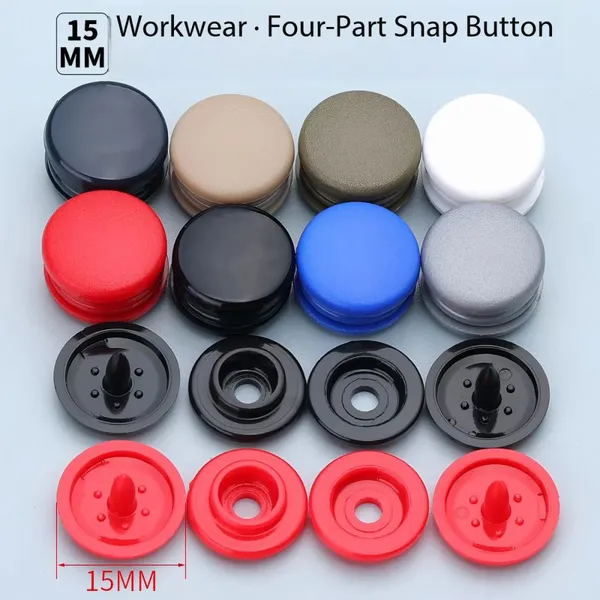
Resin Snap Buttons 9mm POM Heavy Duty Closure Parts for Baby Bibs and Textile Handmade Sewing ProductionNegotiableMOQ: 50000 Sets
-
13.8mm x 7.5mm Plastic Grommet Kit for Apparel and Garment Lacing, Lightweight and FlexibleNegotiableMOQ: 5000 Sets
-
Clear Plastic Eyelet and Washer Set Two‑piece Fastener for Tote Bags Canvas and Fabric Hole Reinforcement ApplicationsNegotiableMOQ: 5000 Sets
-
13.8mm x 7.5mm Clear Plastic Eyelet and Washer Set Durable Two‑part Hardware for Fabric Reinforcement and Bag Making ApplicationsNegotiableMOQ: 5000 Sets
-
Two‑Piece Plastic Grommet and Washer Set 13.8mm x 7.5mm Clear Hardware for Banner Craft Works and Light‑weight Textile ProductionNegotiableMOQ: 5000 Sets
-
Clear Plastic Eyelet and Washer Set 13.8mm x 7.5mm for Tarps, Banners, and Awning Fabric ReinforcementNegotiableMOQ: 5000 Sets