
 Business License
Eyelet Size and Washer Matching: Specifying the Right Pair
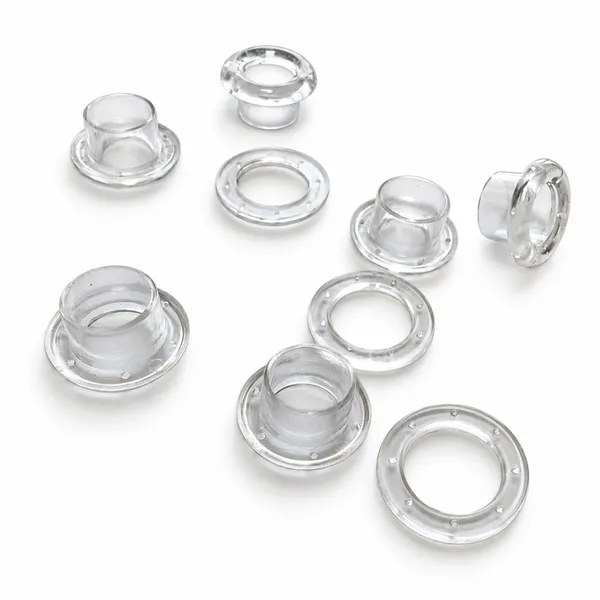
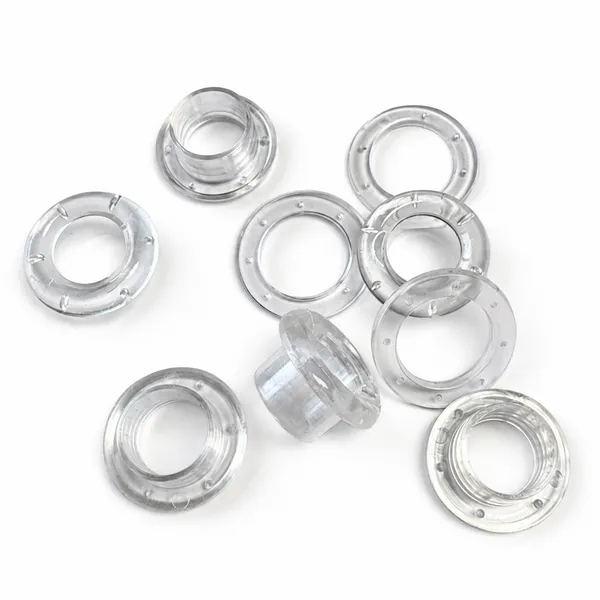
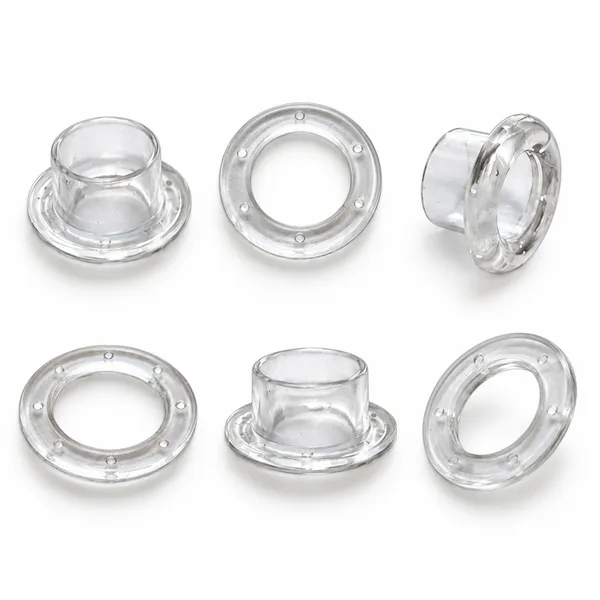
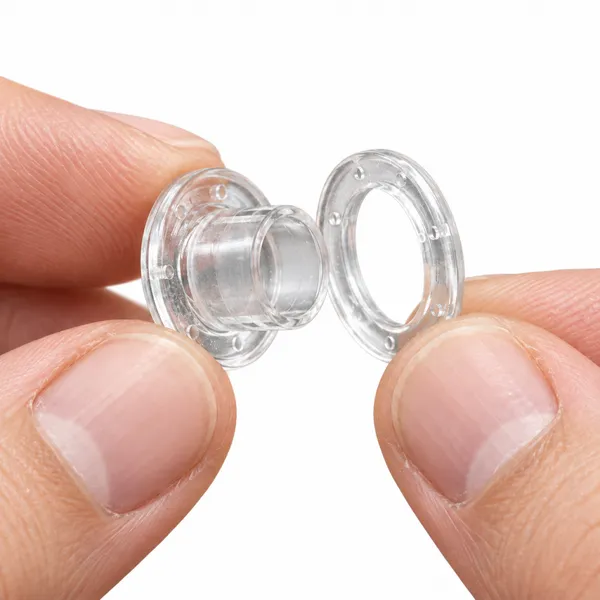
An eyelet is bought as a pair, and a pair that is specified one part at a time will not set correctly. The eyelet carries the barrel and the flange, and the washer closes the barrel on the reverse. Get the barrel length wrong and the eyelet either will not close or closes on air. Get the washer wrong and the flange lifts the first time the cord is pulled.
This guide covers what an eyelet size chart has to state, how eyelet washer matching follows the fabric stack, how to pick a grommet inner diameter from the cord it will carry, and the inspection figures that belong on the order rather than in a conversation.
1. What an Eyelet Size Chart Has to Include
An eyelet size chart is useful when it carries five figures rather than one, and the single figure most charts show is the least informative of them. The five are the flange outer diameter, the barrel length, the barrel outer diameter, the grommet inner diameter and the washer outer diameter.
| Figure | Range in production | What it controls |
|---|---|---|
| Flange outer diameter | 6 - 24 mm | Load spread on the face |
| Barrel length | 3 - 12 mm | Fit to the material stack |
| Barrel outer diameter | 4 - 20 mm | Hole size in the material |
| Grommet inner diameter | 3 - 18 mm | What the opening accepts |
| Washer outer diameter | 8 - 26 mm | Strength on the reverse |
A chart that lists a nominal size such as 12 mm without saying which of those five figures it refers to is not a specification. Two factories reading the same 12 mm figure can produce a flange of 12 mm and a bore of 12 mm, and the two parts will not fit the same hole.
The barrel length is the figure that decides whether the pair can be used at all. It has to exceed the material stack by an amount the washer can grip, so the chart is meaningless for a specific job until the stack thickness is known.
2. Eyelet Washer Matching: Barrel Length and Stack
Eyelet washer matching begins with one rule: the barrel must protrude past the underside of the material by enough for the washer to bite. That protrusion is usually between 1.0 mm and 2.0 mm, and it is the figure that links the eyelet to the washer rather than the two parts to each other.
| Material stack | Barrel length | Washer to match |
|---|---|---|
| 1.0 - 1.6 mm | 4 mm | 8 mm outer |
| 1.6 - 2.4 mm | 5 mm | 10 mm outer |
| 2.4 - 3.4 mm | 6 mm | 12 mm outer |
| 3.4 - 4.6 mm | 8 mm | 14 mm outer |
| 4.6 - 6.0 mm | 10 mm | 16 mm outer |
The washer should step up with the barrel rather than staying fixed, because a longer barrel rolls over a wider radius and needs more material underneath to hold it. A 10 mm barrel paired with an 8 mm washer runs out of surface before the roll closes, and the eyelet then crushes the material instead of seating.
The opposite mismatch is quieter and more common. A short barrel with a large washer sets cleanly and grips firmly, which is why it passes inspection, but the barrel does not reach through a thicker stack. The eyelet appears correct until the material settles and the flange lifts.
Difei Button (Guangzhou) Co Ltd lists the barrel length and the matching washer as a pair on every eyelet quotation, so a buyer orders one line rather than two that have to agree.
3. Grommet Inner Diameter: Choosing by the Cord
Grommet inner diameter is decided by what passes through the opening rather than by the size of the material, and this is the figure buyers most often get wrong by defaulting to a familiar size. A 12 mm bore is comfortable for a drawcord and oversized for a lace.
| Application | Cord or line | Inner diameter |
|---|---|---|
| Drawcord on a hood | 4 - 6 mm cord | 8 - 10 mm |
| Lacing on footwear | 3 - 4 mm lace | 6 - 8 mm |
| Banner and signage | Tie or hook | 14 - 18 mm |
| Tarpaulin | Rope 8 - 10 mm | 14 - 16 mm |
| Corset and fashion | Ribbon 6 - 10 mm | 10 - 12 mm |
The rule behind the table is that the opening should be roughly twice the cord diameter. A bore that is too tight holds the cord and wears the finish at the contact point, while a bore that is far too large lets the cord bunch and the eyelet loses its locating function.
Material thickness then sets the barrel, which is why the same application can need different pairs. A hood drawcord on a single layer of cotton takes a shorter barrel than the same cord on a padded jacket, even though the bore figure stays between 8 mm and 10 mm.
4. Eyelet Size Chart: Flange, Barrel and Washer
An eyelet size chart read properly shows three dimensions moving together, and treating them as independent choices is what produces a pair that does not set. The flange decides the load area on the face, the barrel decides the thickness the pair can span, and the washer decides how firmly the reverse holds.
The flange outer diameter usually measures between 1.8 and 2.2 times the barrel outer diameter. A pair that breaks that ratio badly looks wrong on the garment even when it functions, and the fault is visible as an oversized disc or a flange that disappears into the material.
The washer outer diameter typically runs between 1.4 and 1.8 times the flange diameter on a canvas or tarpaulin, and closer to 1.2 times on a light fabric. The heavier the load on the eyelet, the larger the ratio, because the washer is what prevents the eyelet from being pulled out of the material.
A chart that gives all three figures as a set lets a buyer move up one size without recalculating anything. Where the chart lists sizes independently, every change becomes a manual check against the material stack.
5. Eyelet Washer Matching for Bags and Leather
Eyelet washer matching on leather and heavy bag material follows the same rule with a different emphasis, because leather is stiff and does not compress. The barrel has to be longer relative to the stack, and the washer has to be larger to spread the load on a material that will not yield.
| Material | Stack | Barrel | Washer |
|---|---|---|---|
| Cotton canvas | 1.4 mm | 4 mm | 10 mm |
| Coated polyester | 1.8 mm | 5 mm | 12 mm |
| Split leather | 2.6 mm | 6 mm | 14 mm |
| Full grain leather | 3.4 mm | 8 mm | 16 mm |
| Bonded webbing | 4.4 mm | 10 mm | 18 mm |
A plain washer is usually enough on canvas, while a toothed or serrated washer does better on leather. The teeth bite into the surface rather than pressing against it, which resists rotation on a material that offers no natural grip to a smooth roll.
The hole in a leather panel should also be punched rather than cut with a blade, because a cut edge tears along the grain once the eyelet is under load. A clean punch leaves a compressed edge that holds the barrel without splitting the material. Difei Button supplies plain and toothed washers in matching sizes so the pair can be chosen against the material.
6. Grommet Inner Diameter and Wall Thickness
Grommet inner diameter and wall thickness move together, and the relationship sets how much load the eyelet can carry. For a given outer diameter, a thicker wall means a smaller bore, and the two cannot both be increased without stepping up the flange as well.
| Barrel outer | Wall | Inner diameter |
|---|---|---|
| 6 mm | 1.0 mm | 4 mm |
| 8 mm | 1.0 mm | 6 mm |
| 10 mm | 1.2 mm | 7.6 mm |
| 14 mm | 1.4 mm | 11.2 mm |
| 20 mm | 1.6 mm | 16.8 mm |
A thick wall resists deformation under load and holds the bore shape through washing, while a thin wall saves weight and cost and deforms first. On a tarpaulin that is tensioned hard, a wall under 1.2 mm will ovalise and the bore will stop being round.
The practical check is to measure the bore at three points after setting rather than before, because the rolling operation changes it. A barrel that measures 10.0 mm before setting can close to 9.7 mm after, and on an application with a tight clearance that difference decides whether the cord runs freely.
7. Eyelet Size Chart for Fabric and Canvas
An eyelet size chart for fabric work is dominated by two variables that metal charts often ignore: the weave and the finish. A loose weave compresses under the setting pressure and recovers afterwards, while a coated fabric does not recover and stays compressed.
A plain cotton canvas between 10 oz and 16 oz takes a 4 mm to 5 mm barrel for a single layer and a 5 mm to 6 mm barrel where the edge is folded double. A coated polyester of similar weight behaves like a thicker material because the coating does not compress, so it takes one size up.
Reinforcement is the usual answer on a light fabric that needs a large eyelet. A patch bonded behind the eyelet spreads the load across a wider area and lets a 4 mm barrel carry a load that would otherwise require an 8 mm barrel on the same material.
Where a programme uses several fabrics across a size range, the chart is most useful as a table of barrel lengths against stack thickness rather than a table of nominal sizes. That form lets a buyer read across from a measured stack and land on a pair without working through the flange and washer figures each time. Difei Button publishes its chart that way, by barrel length against stack thickness.
8. Grommet Inner Diameter: Tolerance and Inspection
Grommet inner diameter is the figure most often inspected and most often disputed, because it changes during setting and because two suppliers may measure it at different points. Naming the measuring point removes the argument before the first batch arrives.
| Figure | Typical band | Where measured |
|---|---|---|
| Inner diameter | Plus or minus 0.15 mm | After setting, at the narrowest point |
| Barrel outer diameter | Plus or minus 0.10 mm | Before setting, mid barrel |
| Barrel length | Plus or minus 0.25 mm | From the flange underside |
| Flange diameter | Plus or minus 0.20 mm | Across the widest point |
The barrel length reference surface is the second most common dispute, since one factory measures from the flange underside and another from the top of the roll. The two figures differ by roughly the flange thickness, which is larger than the tolerance band itself.
Difei Button (Guangzhou) Co Ltd names the reference surface next to each figure on the drawing and measures the bore after setting, so a buyer checking a delivery reproduces the same numbers with the same method.
9. Frequently Asked Questions
9.1 What should an eyelet size chart tell me?
Five figures are needed to specify a pair rather than one nominal size. The chart should state the flange outer diameter, the barrel length, the barrel outer diameter, the grommet inner diameter and the matching washer outer diameter. A chart that shows a single figure such as 12 mm without saying which dimension it describes cannot be used to order, because two factories reading it will produce parts that fit different holes. The barrel length becomes meaningful once the material stack is measured.
9.2 How do I match a washer to an eyelet?
Choose the barrel so it protrudes between 1.0 mm and 2.0 mm past the underside of the material, then choose a washer large enough to hold the roll that barrel will form. A longer barrel rolls over a wider radius and needs a wider washer underneath, which is why the washer steps up as the barrel grows. A 10 mm barrel paired with an 8 mm washer runs out of surface before the roll closes, and the eyelet crushes the material instead of seating.
9.3 How do I choose the grommet inner diameter?
Size the bore from what has to pass through it, then let the material thickness set the barrel. A workable rule is that the opening should be roughly twice the cord diameter, which puts a 4 mm to 6 mm hood drawcord at a bore of 8 mm to 10 mm. A bore that is too tight wears the finish where the cord bears, while a bore that is far too large lets the cord bunch and the eyelet stops locating it. Wall thickness then moves with the bore, so a thicker wall means a smaller opening for the same barrel outer diameter.
9.4 Why does the bore measure differently after setting?
Because the rolling operation deforms the barrel, and the bore is measured on the finished part rather than on the loose component. A barrel that reads 10.0 mm before setting can close to 9.7 mm afterwards, and on an application with a tight clearance that difference decides whether the cord runs freely. The practical answer is to state on the drawing that the bore is measured after setting at its narrowest point, and to name the reference surface for the barrel length at the same time. Naming both removes the two disputes that recur most often.
Recently Posted
-
Button Requirements by Export Market: What Buyers in Different Regions Specify
September 30, 2026Two identical buttons can clear customs in one market and be refused in another, and the difference is paperwork as often as it is Read More
 -
Trading Company or Button Factory: What Buyers Should Weigh
September 30, 2026The trading company vs factory question is usually framed as a price comparison, and price is the least interesting part of the an Read More
 -
Metal vs Plastic Jeans Buttons: Load, Finish and Wash Durability
September 30, 2026The choice between a metal jeans button and a moulded one looks like a question of appearance, and it is really a question of what Read More
 -
What Is a Jeans Button? Tack Button Construction and Denim Uses
September 30, 2026A jeans button is the metal closure at the top of a waistband, and it is a two piece assembly rather than a single part. A cap sit Read More

Contact Us
Recommended Products
-
 Clothing Accessories Lead Free Brass Metal Ring Prong Snap Button With 4 Parts for Infant Baby Clothes Baby BibsUS$ 0.01 - 0.03MOQ: 5000 Sets
 -
Brass Metal Stainless Steel Material Ring Prong Snap Button With 4 Parts Lead Free & Nickel Free for Infant Baby Clothes Baby Bibs Baby SuitsUS$ 0.01 - 0.03MOQ: 5000 Sets
-
Metal Grommets Eyelets Gold Eyelet for Bag Shoes and Garment AccessoriesUS$ 0.01 - 0.03MOQ: 5000 Sets
-
Cheap Price Custom Jeans Button Metal Custom Logo Metal Button for JeansUS$ 0.01 - 0.03MOQ: 5000 Sets
-
Factory Wholesale Hat Bag Clothing Press Snap Button Spring Snap Button Metal Snap ButtonsUS$ 0.03 - 0.06MOQ: 5000 Sets
-
Wholesale Plastic Round Coloured Snaps Button Press Fasteners for Baby Bibs/ Baby GarmentsUS$ 0.01 - 0.03MOQ: 50000 Sets
-
Custom EngravedCopper I Brass Metal Jeans Button Denim Clothes Jacket for Jeans DenimUS$ 0.01 - 0.03MOQ: 5000 Sets
-
17mm Open Hole Shank Button With Aluminum Nail With Logo for Jeans Jacket PantsUS$ 0.01 - 0.03MOQ: 5000 Sets
-
Eco-friendly Custom Size Plastic Snaps Plastic Snap Button for Baby Clothes, Baby BibsUS$ 0.01 - 0.03MOQ: 50000 Sets
-
12mm 15mm 17mm 20mm Four Parts Metal Brass Fastener Press Snap Button for Clothes JacketUS$ 0.03 - 0.06MOQ: 5000 Sets
-
Custom Logo Personalized High Quality Metal Press Snap Fastener Snap Buttons for Clothing Garments JacketUS$ 0.03 - 0.06MOQ: 5000 Sets
-
Custom Printing Round Press Spring Four Part Snap Button for Clothing Leather 405#17mmUS$ 0.03 - 0.06MOQ: 5000 Sets
-
OEM Garment Accessories Custom Baby Snap Button Press Metal Prong Pearl Ring Snap ButtonUS$ 0.01 - 0.03MOQ: 5000 Sets
-
Factory Stock Buttons Stainless Steel or Brass Material Colors Pearl Snap Button Prong Pearl Snap Button for Shirts ClothingUS$ 0.01 - 0.03MOQ: 5000 Sets
-
Resin Snap Buttons 9mm POM Heavy Duty Closure Parts for Baby Bibs and Textile Handmade Sewing ProductionNegotiableMOQ: 50000 Sets
-
13.8mm x 7.5mm Plastic Grommet Kit for Apparel and Garment Lacing, Lightweight and FlexibleNegotiableMOQ: 5000 Sets
-
Clear Plastic Eyelet and Washer Set Two‑piece Fastener for Tote Bags Canvas and Fabric Hole Reinforcement ApplicationsNegotiableMOQ: 5000 Sets
-
13.8mm x 7.5mm Clear Plastic Eyelet and Washer Set Durable Two‑part Hardware for Fabric Reinforcement and Bag Making ApplicationsNegotiableMOQ: 5000 Sets
-
Two‑Piece Plastic Grommet and Washer Set 13.8mm x 7.5mm Clear Hardware for Banner Craft Works and Light‑weight Textile ProductionNegotiableMOQ: 5000 Sets
-
Clear Plastic Eyelet and Washer Set 13.8mm x 7.5mm for Tarps, Banners, and Awning Fabric ReinforcementNegotiableMOQ: 5000 Sets