


 Business License
Blog Categories

Batch Consistency at Difei Button: Why Buyers Reorder
A buyer rarely changes supplier because of price. The usual reason is a second order that does not match the first, and by the time that is discovered the garment is already cut. Batch consistency is therefore a commercial property rather than a technical one, and it is what turns a first order into a repeat purchase button programme.
This article sets out what a batch consistency supplier has to record, where a repeat delivery usually drifts, and what a buyer should look for when judging whether a supplier can be a long term button supplier rather than a good one for a single season.
1. What Batch Consistency Means for a Snap Fastener
Batch consistency is measured on five properties, and a supplier that holds all five across years of production is doing something deliberate. Colour, dimensions, holding force, surface finish and material grade.
Each has a tolerance, and the tolerance is what makes the property useful. A colour that is measured against a physical chip with a stated allowance is a controlled property, while one judged by eye against a photograph is not controlled at all. The same applies to a dimension without a stated measuring point or a holding force without a stated test method.
| Property | Usual control | What breaks it |
|---|---|---|
| Colour | Physical chip, measured allowance | Resin lot change, masterbatch substitution |
| Dimensions | Stated measuring point and gauge | Tool wear, hold pressure drift |
| Holding force | Fixed test method and sample size | Tool wear, resin lot change |
| Surface finish | Approved sample under fixed light | Plating bath ageing, mould polishing |
| Material grade | Certificate per lot | Purchasing substitution at a low price |
The list is deliberately short. A supplier that can show a record for those five across several years is not relying on the memory of a technician, which is the thing that disappears when a person leaves.
2. Why a Repeat Purchase Button Order Drifts
A repeat purchase button order drifts for three reasons, and none of them is carelessness in the ordinary sense. Each is a decision that looks sensible in isolation.
The first is a resin lot change. A new lot from the same maker can shift colour slightly and can change shrinkage enough to move a dimension, and without a retained sample the change goes unnoticed until a buyer compares two shipments side by side.
The second is tool wear. Every moulding or stamping cycle removes a little material from the working surfaces, and after 200,000 shots a tool that was in specification when it was cut can be at the edge of the tolerance.
The third is a plating bath that has been run past its analysed life. The deposit still looks right, the thickness is still inside the range, and the colour has moved a step, which is enough to make two batches of the same part number visibly different in a shop.
3. Becoming a Long Term Button Supplier: What Has to Be Recorded
A long term button supplier is defined by its records rather than by its catalogue. The test is simple: hand the supplier a part number from three years ago and ask for the specification, and see whether the answer comes from a file or from an opinion.
Four records do most of the work: the approved sample, held physically and protected from light, the tool record with shot counts and the dates of refurbishment, the material certificates filed by lot against the orders they were used on, and the colour chip, which should be a production part rather than a painted card because a moulded surface and a painted one age differently.
Difei Button keeps all four against each part number, so a repeat order starts from a specification rather than from a new sample. That is the practical difference between a supplier that can repeat and one that can merely deliver.
4. Batch Consistency Supplier Records: Colour and Resin
A batch consistency supplier controls colour in two places, and the second is the one usually missed. The first is the masterbatch, which should be dosed by weight rather than by eye. The second is the base resin, whose own colour varies by lot even when the grade is unchanged.
Three practices keep colour stable. Hold a physical chip made from a production part and compare new batches against it under a fixed light rather than under whatever light the warehouse happens to have. Record the masterbatch lot against the order on the packing list. And when a resin lot changes, run a short trial of 20 parts and compare them against the chip before releasing the lot to production.
An allowance should be written rather than assumed. Saying that a colour must sit within a stated deviation of the chip turns an argument into a measurement, and it protects the supplier as much as the buyer because a shade that is inside the allowance is no longer a defect.
A chip that has been kept in a drawer for three years is not a reliable reference either. Moulded surfaces yellow slightly under light, so the chip itself should be replaced from a production run on a stated cycle rather than kept until it cracks.
5. Repeat Purchase Button Tooling and Wear
Tooling is the second place a repeat purchase button order drifts, and wear is invisible from the outside. A worn punch leaves a burr, a worn die curls the barrel less, and a worn mould grows flash at the parting line, and all three can sit inside a generous tolerance until they suddenly do not.
Three practices control it. Record the shot count against every production run, so that wear is measured in numbers rather than in years. Inspect the working surfaces on a schedule, which for a high volume snap tool is usually each 100,000 shots. And keep a spare set of the parts that wear most quickly, because a tool that stops for a replacement ordered from overseas costs more than the replacement itself.
The buyer's protection is a clause in the specification that ties a repeat order to the approved sample rather than to the drawing alone. A drawing tolerates wear until the limit is crossed, while a sample comparison catches the drift while it is still small.
Spare parts are worth listing at the point of approval. A supplier that names the punches and dies it holds in stock makes a tool repair a same-week event, while one that has to order a replacement from the toolmaker turns it into a six-week one.
6. Long Term Button Supplier Practice: Sampling on Reorder
A long term button supplier samples on every reorder, and the practice costs very little. The value is not in the sample itself but in the fact that someone has to compare it with the retained original.
A workable routine has three steps. Pull 10 parts from the new run. Compare them with the retained sample for colour, surface and holding force. And record the result against the order, including a note when a resin or plating lot change has occurred.
The comparison takes about 15 minutes and it answers the question a buyer will ask six weeks later. Where a difference is found, the record shows whether the cause was a lot change, a tool, or a process setting, and that is what allows the supplier to correct it rather than to explain it.
The 15 minutes is worth protecting on the calendar. A reorder that is released without a sample comparison is a reorder that cannot be defended, and the comparison is the one step in the process that costs almost nothing and prevents almost everything.
7. Batch Consistency Supplier Checks at Goods In
A batch consistency supplier is also judged on what it checks before the carton is closed. Goods in inspection is the last point at which a drift can be caught without a claim, and it is cheap compared with the cost of a recall.
Four checks cover the ground: a colour comparison against the chip under fixed light, a dimensional check at the points named in the specification rather than at whatever is easiest to reach, a holding force test on 5 sets from each carton, and a visual scan of the plating or moulding finish against the approved sample.
Recording the four results per batch produces a run chart over time, and a run chart is what shows a slow drift before it becomes a defect. That chart is also the most convincing document a supplier can send when a buyer asks whether two years of deliveries will match.
8. Long Term Button Supplier Partnerships and Price Stability
Batch consistency has a commercial cost and a commercial return, and both are worth stating plainly. Holding a retained sample, a tool record and a lot history costs administrative time, and it protects the supplier against the price pressure that follows a claim.
The return appears in the second and third year. A buyer who has reordered four times without a colour dispute is unlikely to reopen the price on the strength of a quotation from an unknown source, because the risk of a mismatch is now a known quantity against an unknown one.
The commercial value of that record shows up in the fourth or fifth order. By then the buyer has stopped comparing samples and started relying on the supplier, and the record is what makes that reliance reasonable rather than hopeful.
Difei Button (Guangzhou) Co Ltd works on that basis, which is why the records kept against each part number are treated as part of the product rather than as paperwork. A repeat purchase button order that arrives two years after the first is set up from those records, and the buyer's protection is that the same file answers the question both times.
9. Frequently Asked Questions
9.1 What does a batch consistency supplier actually control?
Five properties, each with a stated tolerance, starting with colour, which is compared against a physical chip made from a production part under fixed light. Dimensions are checked at the measuring points named in the specification, and holding force is tested by a fixed method on a fixed sample size. Surface finish is judged against the approved sample, while material grade is supported by a certificate for every lot. A supplier that can show a record for those five across several years is not relying on the memory of a technician, which is what disappears when a person leaves the business.
9.2 Why does a repeat purchase button order not match the first one?
Three causes account for most of it, the first being a resin lot change that shifts colour slightly and can alter shrinkage enough to move a dimension, and without a retained sample the change goes unseen until two shipments sit side by side. Tool wear removes material from the working surfaces, so a tool that was inside tolerance when it was cut can reach the edge after 200,000 shots. A plating bath run past its analysed life also produces a deposit that still meets thickness while the colour has moved a step, and none of the three is negligence, which is why the record matters more than the intention.
9.3 What makes a long term button supplier different?
Its records rather than its catalogue. Hand a long term button supplier a part number from three years ago and the specification should come from a file rather than from an opinion. Four records do most of the work: the approved sample held physically and away from light, the tool record with shot counts and refurbishment dates, material certificates filed by lot against the orders they went into, and a colour chip that is a production part rather than a painted card. Those four turn a repeat order into a specification rather than a new sample round.
9.4 How should a buyer check consistency on a reorder?
Pull 10 parts from the new run and compare them with the retained sample for colour, surface and holding force, then record the result against the order. The comparison takes about 15 minutes and it answers the question that will be asked six weeks later, when the garment is already cut. Ask the supplier for a run chart of goods in inspection results, because a chart shows a slow drift before it becomes a defect. And tie the reorder to the approved sample rather than to the drawing, since a drawing tolerates wear until the limit is crossed while a sample comparison catches drift early.
Recently Posted
-
Injection Molding Parameters for Plastic Snap Buttons
October 15, 2026An injection molding snap button is not a difficult part to make. It is a small part with a thin spring section, and that spring s Read More
 -
Eyelet Rust and Washer Loss in Wet-Wash Garments
October 15, 2026Two faults arrive together on wet-wash programmes, and they are usually reported as one. Eyelet rusting shows as a brown bloom aro Read More
 -
Badge Plating Wear and Adhesive Failure: Quality Checks
October 15, 2026Two faults decide whether a badge programme survives its first year. Badge plating wear appears at the high points of the relief, Read More
 -
Snap Buttons for Maternity and Nursing Wear: Comfort and Access
October 15, 2026A plastic snap button for nursing wear carries a set of demands that no ordinary closure is asked to meet. It has to open with one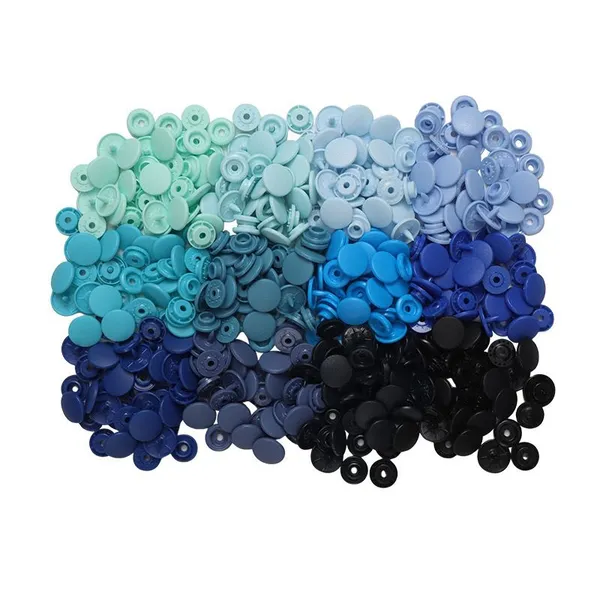 Read More

Contact Us
Recommended Products
-
 Clothing Accessories Lead Free Brass Metal Ring Prong Snap Button With 4 Parts for Infant Baby Clothes Baby BibsUS$ 0.01 - 0.03MOQ: 5000 Sets
 -
Brass Metal Stainless Steel Material Ring Prong Snap Button With 4 Parts Lead Free & Nickel Free for Infant Baby Clothes Baby Bibs Baby SuitsUS$ 0.01 - 0.03MOQ: 5000 Sets
-
Metal Grommets Eyelets Gold Eyelet for Bag Shoes and Garment AccessoriesUS$ 0.01 - 0.03MOQ: 5000 Sets
-
Cheap Price Custom Jeans Button Metal Custom Logo Metal Button for JeansUS$ 0.01 - 0.03MOQ: 5000 Sets
-
Factory Wholesale Hat Bag Clothing Press Snap Button Spring Snap Button Metal Snap ButtonsUS$ 0.03 - 0.06MOQ: 5000 Sets





-
Wholesale Plastic Round Coloured Snaps Button Press Fasteners for Baby Bibs/ Baby GarmentsUS$ 0.01 - 0.03MOQ: 50000 Sets
-
Custom EngravedCopper I Brass Metal Jeans Button Denim Clothes Jacket for Jeans DenimUS$ 0.01 - 0.03MOQ: 5000 Sets
-
17mm Open Hole Shank Button With Aluminum Nail With Logo for Jeans Jacket PantsUS$ 0.01 - 0.03MOQ: 5000 Sets
-
Eco-friendly Custom Size Plastic Snaps Plastic Snap Button for Baby Clothes, Baby BibsUS$ 0.01 - 0.03MOQ: 50000 Sets
-
12mm 15mm 17mm 20mm Four Parts Metal Brass Fastener Press Snap Button for Clothes JacketUS$ 0.03 - 0.06MOQ: 5000 Sets





-
Custom Logo Personalized High Quality Metal Press Snap Fastener Snap Buttons for Clothing Garments JacketUS$ 0.03 - 0.06MOQ: 5000 Sets
-
Custom Printing Round Press Spring Four Part Snap Button for Clothing Leather 405#17mmUS$ 0.03 - 0.06MOQ: 5000 Sets
-
OEM Garment Accessories Custom Baby Snap Button Press Metal Prong Pearl Ring Snap ButtonUS$ 0.01 - 0.03MOQ: 5000 Sets
-
Factory Stock Buttons Stainless Steel or Brass Material Colors Pearl Snap Button Prong Pearl Snap Button for Shirts ClothingUS$ 0.01 - 0.03MOQ: 5000 Sets
-
Apparel Hardware 222# Cap Prong Ring Snap Fastener 10mm for Coat FasteningNegotiableMOQ: 50000 Pieces





-
Open Hole Prong Ring Snap Button 222# 10mm for Leather Sewing ProjectsNegotiableMOQ: 50000 Pieces
-
Zinc Alloy 222# 10mm Open Hole Prong Ring Snap Button Wholesale for Clothing Factory UseNegotiableMOQ: 50000 Pieces
-
222# 10mm Open Hole Prong Ring Snap Fastener for Clothing Sewing and LeatherNegotiableMOQ: 50000 Pieces
-
Antique Bronze 222# 10mm Open Hole Cap Prong Ring Snap Buttons for Denim and Canvas GarmentsNegotiableMOQ: 50000 Pieces
-
New Style 222# 10mm Snap Buttons Cap Type for Bag DecorationNegotiableMOQ: 50000 Pieces





