
 Business License
Blog Categories
Injection Molded Zipper Teeth: Tooling, Cycle Time and Colour
Injection molded zipper teeth are formed one row at a time on a strip of tape, and the process is closer to plastics moulding than to metal stamping. A mould closes over the tape, resin fills the cavity, the part cools, and the mould opens to index the tape forward by one pitch. Three settings decide the result: the tool, the cycle and the colour.
This article covers the three together, because a change in one moves the other two. It explains what molded zipper teeth tooling has to control, how a zipper injection molding cycle time is built up, and how colour is held in resin zipper production. It closes with the checks that keep a moulded chain within the approved standard.
1. Molded Zipper Teeth Tooling: An Overview
Molded zipper teeth tooling is built around a tape that indexes through the mould rather than a loose part that is fed in. The mould has a row of cavities cut to the tooth shape, and the tape is positioned so each shot forms a set of teeth across the width.
The tool has to locate the tape precisely, because the teeth are formed directly on it. A tape that sits a fraction off centre will produce a chain with a staggered row, and the two sides will not close. The locating pins and the tape guide are therefore the parts that set the quality of the chain as much as the cavity does.
A mould is quoted by the number of cavities and the size of the chain. A small trial tool may carry 4 cavities, while a production tool for a common size may carry 32 or more, because the cavity count sets how many teeth are formed in one shot.
The tape for a moulded chain is made to a tolerance in both width and thickness, because the mould locates on the tape rather than on a loose part. A tape of about 12 mm width and a controlled thickness is common. A tape outside that window will not sit in the guide, and the row will then stagger.
2. Zipper Injection Molding Cycle Time
A zipper injection molding cycle has five steps, and each one adds to the total time. The mould closes, the resin is injected, the part is held under pressure while it cools, the mould opens, and the tape indexes forward.
The cooling step usually takes the largest share. A tooth wall of about 1.5 mm will cool in a few seconds, and the cycle time then sits near 20 seconds to 30 seconds for a standard size. A thicker tooth adds cooling time rather than injection time.
The index step is short but it cannot be rushed. If the tape is moved before the tooth has set, the tooth will drag and deform. The index timing is tied to the cooling time, so the two are set as a pair rather than separately.
3. Resin Zipper Production and Colour Matching
Resin zipper production uses a moulding grade of resin, and the grade decides both the strength of the tooth and how the colour behaves. POM is a common choice because it is stiff, it has a low friction surface, and it holds a colour well across a long run.
Colour is matched from a physical chip rather than from a screen. A masterbatch is weighed into the resin at a fixed ratio, and a plaque is moulded and compared with the approved chip under a fixed lamp. The ratio is recorded so the next run starts from the same figure.
The colour has to survive the cycle as well as the match. A resin that is held too long at temperature will shift the shade, so the barrel residence time is watched along with the masterbatch ratio. A shift of a fraction of a shade unit is enough to fail a matched part.
A drying step sits between the moulding and the packing. A moulded chain carries a small amount of moisture from the cooling, and that moisture is driven off before the chain is coiled. A chain packed wet will show a bloom on the tooth face after a few weeks in a carton.
4. Molded Zipper Teeth Tooling: Cavity and Gate Design
Molded zipper teeth tooling is judged on the cavity and the gate, because the two decide how the resin fills each tooth. A gate that is too small will starve the cavity and leave a short tooth, while a gate that is too large leaves a stub that has to be trimmed.
The cavity has to balance across the row as well. If the outer cavities fill before the centre, the chain will show a size difference across its width. A balanced runner is the usual answer, and the balance is confirmed by weighing the teeth from a shot.
The cooling layout follows the same logic. A water line that is closer to one cavity than another will cool the outer teeth faster, and the uneven shrink shows as a pitch error along the chain. Even cooling across the row is what holds the pitch.
5. Zipper Injection Molding Defects and Fixes
Zipper injection molding faults fall into a small number of groups, and each group points at a different setting. Reading the fault correctly saves a tool from being stripped for no reason.
| Fault seen | Likely cause | First fix |
|---|---|---|
| Short tooth, unfilled | Gate too small or cold | Raise gate size or melt heat |
| Flash on the tape edge | Clamp force too low | Raise clamp or clean faces |
| Staggered row | Tape off centre | Reset locating pins |
| Pitch error along chain | Uneven cooling | Balance water lines |
A short tooth and a flash are opposite faults, so they are treated in opposite ways. A short tooth points at a cavity that could not fill, while a flash points at a mould that could not close against the pressure.
A staggered row is a handling fault rather than a moulding fault. Where the tape has moved in the guide, the teeth are formed off centre and the chain will not close, even though every tooth is a good shape. Resetting the guide is the first action.
6. Resin Zipper Production Runs and Lot Size
Resin zipper production is planned by run rather than by piece, because the mould has a set-up cost that a short run cannot absorb. A run of a few thousand metres is the usual minimum before a custom colour is economic.
The lot size is decided by the colour route. A stock colour can be run in a small lot, while a matched colour needs a masterbatch batch that is weighed and proved first. That proving step is what sets the practical minimum.
A repeat run follows the same route as the first. The masterbatch ratio, the barrel temperature and the cycle time are carried over, so the second run starts from a known point rather than a fresh trial.
A run is opened with a short warm-up rather than straight into production. The first shots set the barrel temperature and the colour, so they are checked before the chain is coiled. Difei records those opening shots with the lot, because they explain most of the small differences seen at the end of a run.
7. Tool Wear in Molded Zipper Teeth Tooling
Molded zipper teeth tooling wears at two points, and both are tied to the number of shots. The cavity wears as the resin rubs the steel, and the locating pins wear as the tape passes over them.
The cavity wear shows first on the tooth edge, where the sharp form that the slider needs is lost. A tooth with a rounded edge will still close, but it will release under a pull sooner than a sharp one. The mould is measured against the approved sample before the wear becomes visible to the eye.
A production tool is usually reworked after a set number of shots, often around 100,000, rather than run until a fault appears. The rework restores the tooth edge and the gate, and the tool is proved again against the retained sample.
A tool record is kept for every mould. The record lists the shots run, the last rework and the last gauge check, so wear is tracked against a number rather than a memory. A mould that reaches its shot limit is pulled for rework before it drifts out of the approved standard.
8. Quality Control in Resin Zipper Production
Quality control in resin zipper production rests on a retained sample of the finished chain. The sample holds the tooth shape, the pitch, the shade and the closure force, and it is compared with every lot under the same lamp.
The closure force is the figure that catches a slow drift. A chain is pulled while closed, and the force at which it opens is recorded against the lot. A force that falls over time points at cavity wear rather than at the resin. Difei Button (Guangzhou) Co Ltd keeps that figure with the lot number, so a question raised later can be answered from the record.
Difei also checks the tape position after the first shot of every run, because a guide that has moved will spoil a whole run before anyone notices. Difei treats that first shot as a check point rather than as a warm-up.
9. Frequently Asked Questions
9.1 What does molded zipper teeth tooling have to control?
Molded zipper teeth tooling has to control three things at once: the cavity that forms the tooth, the gate that fills it, and the guide that positions the tape. A cavity that is balanced across the row gives teeth of an even size, while a gate that is sized correctly fills the tooth without leaving a stub. The tape guide sets the alignment, and a tape that sits off centre produces a staggered row that will not close. Cooling lines are part of the same design, because uneven cooling shows as a pitch error along the chain.
9.2 How long is a zipper injection molding cycle?
A zipper injection molding cycle is built from five steps, and it usually lands near 20 seconds to 30 seconds for a standard size. The mould closes, the resin is injected, the part is held while it cools, the mould opens, and the tape indexes forward by one pitch. Cooling takes the largest share, because a tooth wall of about 1.5 mm has to set before the tape moves. A thicker tooth adds cooling time rather than injection time, so the cycle is set by the wall section rather than by the shot size.
9.3 How is colour held in resin zipper production?
Colour in resin zipper production is held by a masterbatch ratio that is weighed into the resin and recorded for the run. A plaque is moulded from the mix and compared with the approved chip under a fixed lamp, and the ratio is filed so the next run starts from the same figure. The colour also has to survive the cycle, because a resin held too long at temperature will shift the shade. The barrel residence time is therefore watched along with the ratio, and a shift of a fraction of a shade unit is enough to fail a matched part.
9.4 When does molded zipper teeth tooling need rework?
Molded zipper teeth tooling usually needs rework after a set number of shots rather than when a fault appears, and that figure often sits around 100,000 shots for a production tool. Wear shows first on the tooth edge, where the sharp form that the slider needs becomes rounded, and a rounded tooth releases under a pull sooner than a sharp one. The locating pins wear at the same time as the tape passes over them. The tool is measured against the retained sample before the wear is visible, and it is reworked and proved again.
Recently Posted
-
Inspecting a Zipper Shipment: Checks Before Loading
November 5, 2026Inspecting a zipper shipment is the last point at which a fault can be caught while the goods are still in the factory. Once the c Read More
-
Nylon Zipper Production: Coil Winding, Dyeing and Stitch Attachment
November 4, 2026Nylon zipper production begins with a spool of monofilament and ends with a finished chain that will be stitched into a bag or a g Read More
-
Nylon Zipper Chain Breakage and Stitching Faults
November 4, 2026A nylon zipper breakage rarely starts at the point where the chain finally parts. The break is usually the last event in a chain o Read More
-
Zippers for Footwear and Boots: Sizes, Sliders and Corrosion
November 3, 2026A zipper for boots works under conditions that a garment zip never meets. It is loaded every time the foot is forced down the shaf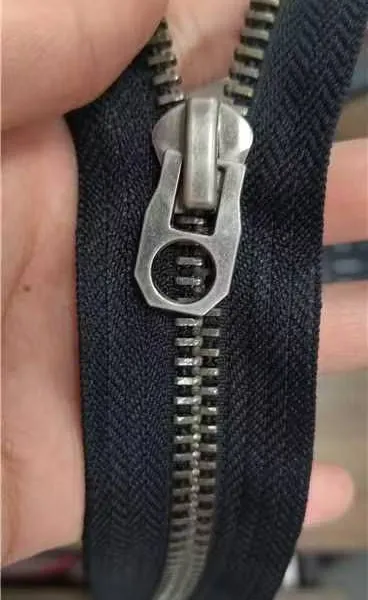 Read More

Contact Us
Recommended Products
-
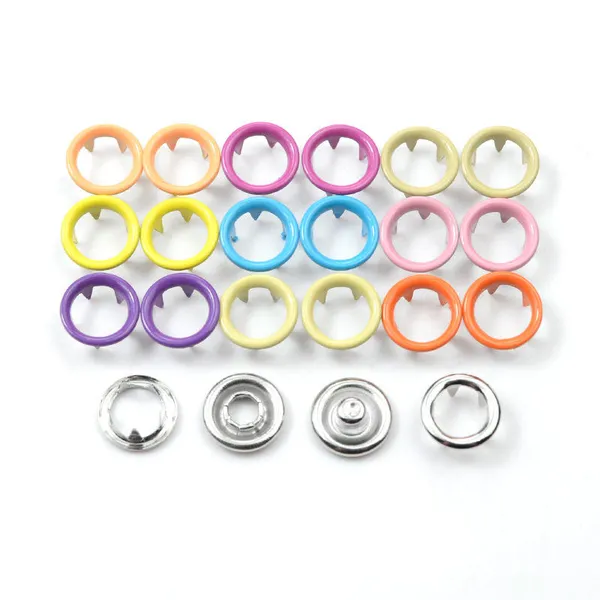
 Clothing Accessories Lead Free Brass Metal Ring Prong Snap Button With 4 Parts for Infant Baby Clothes Baby BibsUS$ 0.01 - 0.03MOQ: 5000 Sets
-
Brass Metal Stainless Steel Material Ring Prong Snap Button With 4 Parts Lead Free & Nickel Free for Infant Baby Clothes Baby Bibs Baby SuitsUS$ 0.01 - 0.03MOQ: 5000 Sets
-
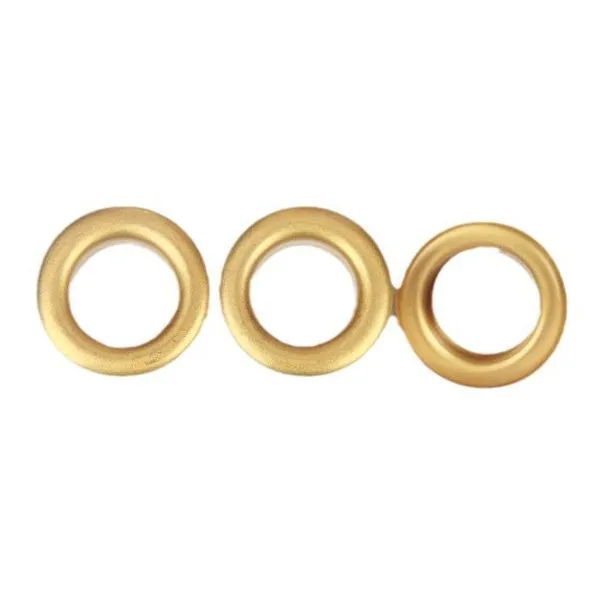
Metal Grommets Eyelets Gold Eyelet for Bag Shoes and Garment AccessoriesUS$ 0.01 - 0.03MOQ: 5000 Sets
-
Cheap Price Custom Jeans Button Metal Custom Logo Metal Button for JeansUS$ 0.01 - 0.03MOQ: 5000 Sets
-
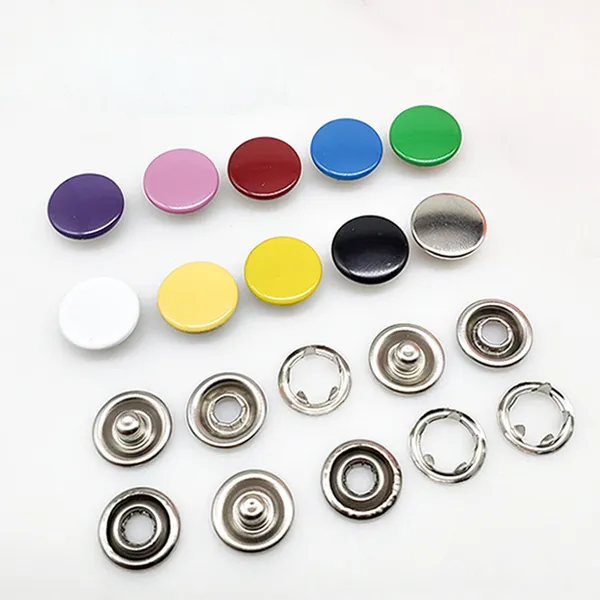
Factory Wholesale Hat Bag Clothing Press Snap Button Spring Snap Button Metal Snap ButtonsUS$ 0.03 - 0.06MOQ: 5000 Sets
-
Wholesale Plastic Round Coloured Snaps Button Press Fasteners for Baby Bibs/ Baby GarmentsUS$ 0.01 - 0.03MOQ: 50000 Sets
-
Custom EngravedCopper I Brass Metal Jeans Button Denim Clothes Jacket for Jeans DenimUS$ 0.01 - 0.03MOQ: 5000 Sets
-
17mm Open Hole Shank Button With Aluminum Nail With Logo for Jeans Jacket PantsUS$ 0.01 - 0.03MOQ: 5000 Sets
-
Eco-friendly Custom Size Plastic Snaps Plastic Snap Button for Baby Clothes, Baby BibsUS$ 0.01 - 0.03MOQ: 50000 Sets
-
12mm 15mm 17mm 20mm Four Parts Metal Brass Fastener Press Snap Button for Clothes JacketUS$ 0.03 - 0.06MOQ: 5000 Sets
-
Custom Logo Personalized High Quality Metal Press Snap Fastener Snap Buttons for Clothing Garments JacketUS$ 0.03 - 0.06MOQ: 5000 Sets
-
Custom Printing Round Press Spring Four Part Snap Button for Clothing Leather 405#17mmUS$ 0.03 - 0.06MOQ: 5000 Sets
-
OEM Garment Accessories Custom Baby Snap Button Press Metal Prong Pearl Ring Snap ButtonUS$ 0.01 - 0.03MOQ: 5000 Sets
-
Factory Stock Buttons Stainless Steel or Brass Material Colors Pearl Snap Button Prong Pearl Snap Button for Shirts ClothingUS$ 0.01 - 0.03MOQ: 5000 Sets
-
Factory Direct Easy Press 0910 T09F3 Plastic Snap Button 9mm for Baby Hats and BootiesNegotiableMOQ: 50000 Pieces
-
Bulk Supply OEM Custom 0910 T90 POM Snap Button 9mm for DIY Crafts and Baby GiftsNegotiableMOQ: 50000 Pieces
-
Factory Direct Colorfast T3 POM Snap Fastener 10.5mm for Kids Tees and PlaywearNegotiableMOQ: 50000 Pieces
-
Custom Color OEM Supply 1515 T15 POM Snap Button 15mm for Parkas and Down JacketsNegotiableMOQ: 50000 Pieces
-
Soft Touch Washable 1010 Plastic Snap Button 10mm POM for Toddler Clothing and PlaysuitsNegotiableMOQ: 50000 Pieces
-
Eco Friendly Non Toxic 0910 T90 Plastic Snap Button 9mm for Infant Bodysuits and RompersNegotiableMOQ: 50000 Pieces