
 Business License
Blog Categories
Zipper Lead Time and Production Scheduling: Cutting to Dispatch
A zipper lead time is not a single figure held in a database. It is the sum of several stages that run in sequence, and each one moves when a material, a shade or a size changes. A buyer who can read those stages can see where a date is won or lost.
This article breaks the run from cutting to dispatch into its parts. It shows how a zipper production schedule is built around a bottleneck rather than around a total, how a zipper lead time differs by order type, and how zipper dispatch planning handles a booking cut off. It closes with the rules that hold a date when an order changes.
1. How Zipper Lead Time Is Built
A zipper lead time is built by adding the stages rather than by quoting a single standard figure. Material preparation, cutting, forming, dyeing or moulding, assembly, and inspection and packing each take their own time, and the total is the sum.
The stages do not all run at the same rate, so the sum is not the schedule. A material that arrives in three days can still sit behind a dye bath that runs in batches of a fixed size, and that batch is what sets the date.
The useful way to read the figure is to ask which stage is the long item for this order. On a standard chain in a stocked colour the answer is the assembly line, while on a new shade it is the dye bath. That single question tells a buyer where to push.
A lead time can also be read from the other end. Where a buyer has a fixed launch date, the useful question is the latest date on which the shade can be confirmed, because everything downstream moves with it. A buyer who confirms a shade four days late has moved the shipping date by four days without changing anything else. A planner publishes that date with the schedule, so the deadline is visible rather than implied.
2. Zipper Production Schedule: The Cutting Date
A zipper production schedule is worked back from the shipping date rather than forward from the order date. The planner sets the dispatch day first, subtracts the loading and booking days, and then places the cutting date so the run lands in time.
The cutting date is the anchor of the whole schedule. Once the tape is cut, the material is committed, so the date is not fixed until the shade and the size are confirmed. A cut that has to be undone is a loss of material rather than a loss of time.
The schedule is published in working days rather than in calendar weeks, because a public holiday or a plant stop moves a calendar week without moving the plan. A buyer reading a schedule in working days can see exactly how many production days sit ahead of the order.
3. Zipper Lead Time by Order Type
A zipper lead time differs by order type, and the difference sits in one or two stages rather than across the whole run. The table below shows typical stage times for three common cases, quoted in working days.
| Stage | Stocked shade | New shade | New size |
|---|---|---|---|
| Material preparation | 2 | 3 | 3 |
| Cutting and forming | 4 | 4 | 6 |
| Dyeing or moulding | 2 | 7 | 5 |
| Assembly and packing | 4 | 4 | 4 |
| Total working days | 12 | 18 | 18 |
The new shade column is the longest at the dye stage, while the new size is the longest at forming, because a size change needs a fresh set up on the forming line. Both reach a similar total for different reasons, which is why reading the total alone hides where the work sits.
A repeat order on an established part is the shortest case of all, because the shade is stocked and the line is already set. A repeat is scheduled into whatever slot is free rather than into a fresh plan.
A quoted total should also state what it leaves out. Waiting for a buyer's colour approval, a public holiday or a vessel change all sit outside the production figure, and a quotation that hides them reads shorter than the plan behind it. Difei states the excluded items beside the working day figure, so two offers are compared on the same basis. That habit removes most of the surprises that appear after an order is placed.
4. Zipper Production Schedule and Changeover Loss
A zipper production schedule has to carry the changeover loss inside it rather than around it. A size change on an assembly line takes about 3 hours including the first article check, and a tape change alone takes about 40 minutes.
The loss is managed by grouping rather than by hurrying. Where the plan runs all the size 5 work in one block and all the size 8 work in another, the line changes over twice instead of six times, and the recovered hours go back into the schedule.
A planner also keeps a small buffer between two sizes so that a slow changeover does not push the next order. A buffer of half a day absorbs an ordinary overrun without moving a shipping date.
5. Zipper Dispatch Planning and the Booking Cut Off
Zipper dispatch planning starts from the booking cut off rather than from the finish date. A vessel closes its booking about 5 working days before the sailing, and the container has to be at the yard a day or two before that.
The cut off sets a hard wall that production cannot move. A run that finishes one day after the cut off does not ship, so the schedule is planned to land the goods at the yard with a margin rather than exactly on the cut off.
The margin is stated in the plan rather than left implicit. A dispatch plan that carries two working days of slack between the packing date and the yard date can absorb a short delay without a reselection of the vessel, which is far cheaper than a missed sailing.
6. Zipper Lead Time and the Bottleneck
A zipper lead time is set by the bottleneck rather than by the average stage. Where a dye bath runs in fixed batch sizes, the batch release dates set the pace for every dyed order on the plan, and the other stages wait on it.
Knowing the bottleneck changes how a date is negotiated. A buyer who needs a shade earlier can be offered a place in an earlier batch, while a buyer who needs a size earlier is offered an earlier forming slot. The two are different queues and they move at different speeds.
The bottleneck also explains why a small order can be slow. A lot smaller than the batch minimum still waits for a batch to be made, so a short run does not shorten the wait at the dye stage.
A bottleneck is worth confirming at the enquiry rather than at the order. Where two suppliers quote the same total but different bottlenecks, the faster answer belongs to the one whose constraint the order does not touch. Difei tells a buyer which stage is the long item on the enquiry, so the date can be judged before a deposit is paid. That single figure explains why a small order can take as long as a large one.
7. Zipper Production Schedule When an Order Changes
A zipper production schedule handles a change by replacing a slot rather than by inserting one. A confirmed order holds a named slot, and a change takes that slot away and places the order in a later one.
The rule protects the other orders on the plan. Where a change is allowed to jump the queue, every order behind it moves by the same number of days, and the plan loses its meaning within a week.
A change is quoted with its cost in days rather than with a yes or a no. A buyer who is told that moving a shade forward costs four days can decide whether the change is worth it, and the decision is recorded against the order.
8. Zipper Dispatch Planning for a Part Shipment
Zipper dispatch planning for a part shipment splits a finished quantity from a pending one, so the finished goods can travel while the balance is still in production. That split is agreed before the loading date rather than at the yard.
The split has to be practical on the packing line. A part shipment is easiest where the finished quantity is a whole number of cartons, because a half carton cannot be loaded on its own. The split is therefore set in cartons rather than in pieces.
The balance then carries its own schedule and its own booking. Difei Button (Guangzhou) Co Ltd records the two shipments against one order number, so the second booking is not lost behind the first. Difei also keeps the packing list of the first lot with the order, so a claim on the balance can be read against the same standard.
A part shipment is common on a large order with a tight window, and it is worth planning rather than improvising. Deciding the split at the enquiry stage turns two bookings into one clean plan. A split that is agreed late usually costs a second booking fee and a second set of documents.
9. Frequently Asked Questions
9.1 How is a zipper lead time calculated?
A zipper lead time is calculated by adding the stages of the run rather than by quoting one standard figure. Material preparation, cutting and forming, dyeing or moulding, assembly, and inspection and packing each take their own number of working days, and the total is the sum for that order type. A stocked shade on a standard chain can run to about 12 working days, while a new shade adds roughly a week at the dye stage and a new size adds roughly two days at forming. The bottleneck stage, not the average, sets the date.
9.2 What anchors a zipper production schedule?
A zipper production schedule is worked back from the shipping date, and the cutting date is the anchor that holds it together. The planner sets the dispatch day first, subtracts the loading and booking days, and then places the cut so the run lands in time. The cutting date is not fixed until the shade and the size are confirmed, because once the tape is cut the material is committed and a cut that has to be undone is a loss of material. The plan is published in working days so a holiday does not move it.
9.3 Why does a zipper production schedule carry changeover time?
A zipper production schedule carries changeover time inside it because a size change on an assembly line takes about 3 hours including the first article check, while a tape change alone takes about 40 minutes. That loss is managed by grouping work rather than by hurrying: running all the size 5 orders in one block and all the size 8 orders in another changes the line over twice instead of six times. A planner also keeps a half day buffer between sizes, so an ordinary overrun does not push the next order out of its slot.
9.4 How does zipper dispatch planning handle a booking cut off?
Zipper dispatch planning starts from the booking cut off, because a vessel closes its booking about 5 working days before sailing and the container has to be at the yard a day or two before that. The cut off is a wall that production cannot move, so a run finishing one day late does not ship, and the plan is set to land the goods at the yard with a margin rather than exactly on the date. Two working days of slack between packing and the yard absorbs a short delay far more cheaply than reselecting a vessel.
Recently Posted
-
Zipper Claims and Rework at Difei Button: How Issues Are Closed
November 6, 2026A zipper quality claim is not settled by an argument about what the buyer saw. It is settled by a case number, a reference part an Read More
-
Zipper Slider Die Casting and Surface Finishing
November 6, 2026A zipper slider begins as a shot of molten alloy injected into a steel mould, and it ends as a plated part that runs on a chain. T
Read More -
Inspecting a Zipper Shipment: Checks Before Loading
November 5, 2026Inspecting a zipper shipment is the last point at which a fault can be caught while the goods are still in the factory. Once the c Read More
-
Zipper Selection for Tents, Sleeping Bags and Camping Gear
November 5, 2026A tent zipper is asked to work in the dark, with cold hands, on a panel that is under tension from the poles. A sleeping bag zippe Read More

Contact Us
Recommended Products
-
 Clothing Accessories Lead Free Brass Metal Ring Prong Snap Button With 4 Parts for Infant Baby Clothes Baby BibsUS$ 0.01 - 0.03MOQ: 5000 Sets
-
Brass Metal Stainless Steel Material Ring Prong Snap Button With 4 Parts Lead Free & Nickel Free for Infant Baby Clothes Baby Bibs Baby SuitsUS$ 0.01 - 0.03MOQ: 5000 Sets
-
Metal Grommets Eyelets Gold Eyelet for Bag Shoes and Garment AccessoriesUS$ 0.01 - 0.03MOQ: 5000 Sets
-
Cheap Price Custom Jeans Button Metal Custom Logo Metal Button for JeansUS$ 0.01 - 0.03MOQ: 5000 Sets
-
Factory Wholesale Hat Bag Clothing Press Snap Button Spring Snap Button Metal Snap ButtonsUS$ 0.03 - 0.06MOQ: 5000 Sets
-
Wholesale Plastic Round Coloured Snaps Button Press Fasteners for Baby Bibs/ Baby GarmentsUS$ 0.01 - 0.03MOQ: 50000 Sets
-
Custom EngravedCopper I Brass Metal Jeans Button Denim Clothes Jacket for Jeans DenimUS$ 0.01 - 0.03MOQ: 5000 Sets
-
17mm Open Hole Shank Button With Aluminum Nail With Logo for Jeans Jacket PantsUS$ 0.01 - 0.03MOQ: 5000 Sets
-
Eco-friendly Custom Size Plastic Snaps Plastic Snap Button for Baby Clothes, Baby BibsUS$ 0.01 - 0.03MOQ: 50000 Sets
-
12mm 15mm 17mm 20mm Four Parts Metal Brass Fastener Press Snap Button for Clothes JacketUS$ 0.03 - 0.06MOQ: 5000 Sets
-
Custom Logo Personalized High Quality Metal Press Snap Fastener Snap Buttons for Clothing Garments JacketUS$ 0.03 - 0.06MOQ: 5000 Sets
-
Custom Printing Round Press Spring Four Part Snap Button for Clothing Leather 405#17mmUS$ 0.03 - 0.06MOQ: 5000 Sets
-
OEM Garment Accessories Custom Baby Snap Button Press Metal Prong Pearl Ring Snap ButtonUS$ 0.01 - 0.03MOQ: 5000 Sets
-
Factory Stock Buttons Stainless Steel or Brass Material Colors Pearl Snap Button Prong Pearl Snap Button for Shirts ClothingUS$ 0.01 - 0.03MOQ: 5000 Sets
-
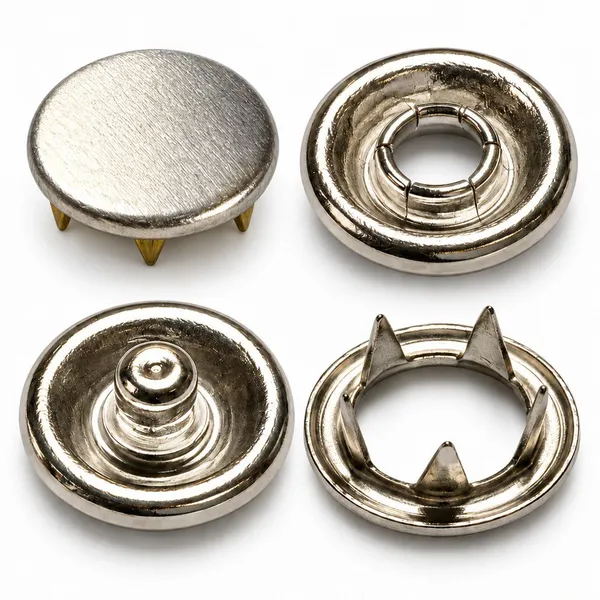
333# 11.5mm Cap Prong Ring Snap Button Metal Snap Closure for Leather Jackets and BagsNegotiableMOQ: 5000 Pieces
-
222# 9mm Open Hole Ring Snap Button Brass Fastener for Denim Jackets and Trucker CoatsNegotiableMOQ: 5000 Pieces
-
222# 10mm Cap Prong Ring Snap Button Metal Press Fastener for Workwear and Chef ApronsNegotiableMOQ: 5000 Pieces
-
333# 11.7mm Pearl Prong Ring Snap Button Round Snap for Quilted Coats and GiletsNegotiableMOQ: 5000 Pieces
-
333# 10mm Open Hole Ring Snap Button Solid Brass Snap for Denim Jeans and Bib OverallsNegotiableMOQ: 5000 Pieces
-
222# 10mm Pearl Prong Ring Snap Button Round Fastener for Wool Coats and CapesNegotiableMOQ: 5000 Pieces