
 Business License
Buttons for Bedding, Pillow Covers and Home Textiles
A home textile button lives a harder life than a garment closure, because it is unfastened to wash and refastened when the item goes back on the bed, week after week, for years. It also sits inside a wash cycle at temperatures a shirt never meets and comes out into a tumble dryer that a coat would never enter. The closure that survives that routine is a plumbing problem more than a design one, and the specification follows from the washing regime rather than from the look.
This guide covers what a pillow cover button and a bedding fastener have to survive, the materials and closure types that hold up, the tests worth running before a production order, and the safety limits that apply where children sleep.
1. Home Textile Button Requirements: Wash, Heat and Load
A home textile button has to satisfy three requirements at once, and each one rules out a different class of product. Washing at temperature removes finishes that are bonded rather than plated. Tumble drying removes parts that soften below the drying temperature. Repeated opening and closing removes closures that rely on a fine spring or a thin hinge.
| Requirement | Typical condition | What it rules out |
|---|---|---|
| Washing | 40 - 60 C domestic, 90 C industrial | Painted faces, adhesives |
| Tumble drying | 60 - 80 C for 30 - 60 minutes | Low-grade plastics above 70 C |
| Ironing | 150 - 200 C contact | Thin coatings, soft resin faces |
| Repeated action | 200 - 500 cycles per year | Fine springs, delicate hinges |
| Load | Duvet weight, 1 - 3 kg per corner | Light garment-grade fixings |
Ironing catches buyers out more often than the wash cycle, because a closure that survives washing can still mark the fabric or deform under a hot iron. A plastic disc that softens at 70 C will flatten against an iron set to 180 C, and the flattened face then sits proud of the fabric on the finished item. A material that keeps its shape at 120 C covers the domestic ironing range comfortably.
The load figure matters most on a duvet cover, where a single corner fixing holds a share of the insert weight. A closure rated for a garment placket carries a few hundred grams, while a bedding fastener at a duvet corner may hold a kilogram or more whenever the item is lifted. Difei Button (Guangzhou) Co Ltd quotes the load figure together with the wash temperature for home textile closures, because the two requirements pull the material choice in different directions.
2. Pillow Cover Button Options: Snap, Sew-Through and Hidden
A pillow cover button has to open wide enough for the insert to pass and close firmly enough to keep it in place, and those two demands sit in tension. Three closure approaches cover almost every pillow design, and each one trades a different way between access, appearance and wash durability.
| Type | How it closes | Wash behaviour | Suits |
|---|---|---|---|
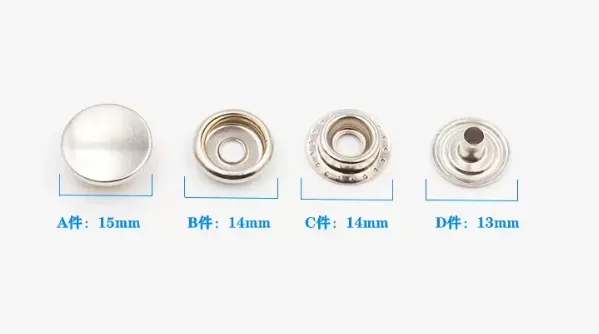
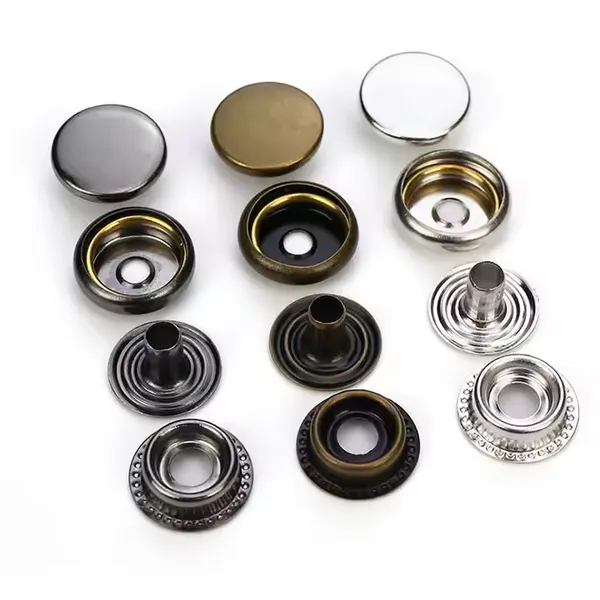
| Snap fastener | Pressed metal or plastic pair | Excellent, no thread to wear | Duvets, thick covers |
| Sew-through button | Threaded through a buttonhole | Good if the thread is polyester | Decorative covers, shams |
| Hidden placket | Buttons concealed inside a flap | Good, closure is protected | Hotel and retail bedding |
| Envelope overlap | No fixing at all | Excellent | Simple covers, low cost |
The snap fastener dominates bedding for one reason, which is that it has no thread involved in the working action. A sewn button on a pillow cover is opened and closed hundreds of times over its life, and the thread at the hole edge wears against the buttonhole on every pass. A snap pair carries the load through a metal or moulded interface that does not thin with use.
A hidden placket gives the neatest result and costs the most in making time, because the flap has to be cut, folded and stitched before the closure is set. Retail bedding and hotel programmes accept that cost because a visible row of buttons on a pillow front is a design statement, and many buyers prefer the plainer face.
3. Bedding Fastener Selection for Duvet and Quilt Covers
A bedding fastener on a duvet cover works under a load that a pillow closure never sees, because the insert has to be held at the corners while the cover is shaken and lifted. A closure that holds a pillow insert comfortably can release at a duvet corner within a few weeks, and the failure shows up as an insert that shifts to one end of the cover.
Two design responses solve most of that problem. Spacing the closures more closely along the opening, at 100 mm to 150 mm centres rather than 200 mm, spreads the load across more fixings. Adding a corner tie or an internal loop takes the main load off the closure entirely, which lets a lighter and less expensive part be used along the opening.
Size follows the same logic. A duvet closure usually sits between 15 mm and 22 mm, larger than a pillow fixing, because the panel is thicker and the opening has to pass an insert. A closure below 12 mm on a duvet cover tends to pull free under a shake, while one above 25 mm becomes uncomfortable if the wearer rolls onto it during the night.
4. Home Textile Button Materials Under Repeated Washing
Material selection for a home textile button follows the wash temperature first and the appearance second, because a part that deforms in the dryer cannot be rescued by a good finish. Four materials cover the range, and the choice between them narrows quickly once the industrial wash temperature is known.
| Material | Heat resistance | Wash life | Suits |
|---|---|---|---|
| POM | Up to about 100 C | Excellent | Domestic bedding, duvets |
| Nylon | Up to about 120 C | Very good | Higher-temperature laundering |
| Stainless steel | Unaffected | Excellent | Hospital and hotel programmes |
| Plated brass | Unaffected to 200 C | Good if plating holds | Decorative covers |
| Polyester resin | Up to about 70 C | Moderate | Light domestic use |
Plated brass is the material that behaves differently from what buyers expect. The metal itself takes any domestic heat without complaint, but the plating can dull or discolour after repeated exposure to detergent at high temperature, and an antique finish may lighten in a way that reads as wear. Stainless steel removes that variable entirely at a higher cost, which is why it dominates healthcare laundering programmes.
Detergent chemistry matters as much as temperature. A chlorine bleach cycle attacks a plated surface quickly and a plastic part hardly at all, so a bedding programme that uses bleach should specify a material that does not depend on a coating. Difei Button asks for the wash regime before quoting a home textile closure, because the same part can be adequate for a domestic programme and unsuitable for a commercial one.
5. Pillow Cover Button Placement and Closure Types
Placement on a pillow cover button row follows the insert size rather than the cover size, because the opening has to pass the widest part of the pillow. A standard 50 by 70 cm pillow needs an opening of at least 40 cm, and closures spaced at 80 mm to 100 mm centres along that opening give a neat row without an excessive number of parts.
| Item | Opening length | Closure spacing | Closure size |
|---|---|---|---|
| Standard pillow | 400 - 450 mm | 80 - 100 mm | 12 - 16 mm |
| Euro sham | 450 - 500 mm | 90 - 110 mm | 14 - 18 mm |
| Duvet cover | 1,200 - 1,600 mm | 100 - 150 mm | 15 - 22 mm |
| Cushion cover | 300 - 400 mm | 70 - 90 mm | 12 - 15 mm |
The closure row also has to sit far enough from the fabric edge to avoid pulling the seam. A fixing placed within 15 mm of a seam concentrates the load on the stitching and can open the seam under a hard pull, while one placed 30 mm to 40 mm inboard spreads the load into the panel. That margin matters more on a laundered item than on a garment, because the seam has already been weakened by washing.
A hotel programme that placed closures 12 mm from the seam replaced a batch of duvet covers after the seams opened within a season. Moving the row to 35 mm from the edge resolved it without changing the closure, the spacing or the fabric.
6. Bedding Fastener Test Methods: Wash, Pull and Heat
Testing a bedding fastener means reproducing the conditions it will actually meet, which is a wash cycle, a drying cycle and a pull on the finished item. Three tests cover the requirement, and each one should be run on the assembled product rather than on a loose part.
| Test | Method | Target |
|---|---|---|
| Wash cycle | 50 cycles at the stated temperature | No deformation, no colour shift |
| Tumble dry | 20 cycles at the stated temperature | Face keeps its shape |
| Pull test | Pull the closure apart on the finished item | Meets the agreed release figure |
| Load hold | Suspend the insert weight from one closure | No release over 24 hours |
| Heat contact | Iron at the stated setting over the closure | No mark, no softening |
The wash cycle count deserves attention, because a closure that survives ten cycles can still fail at forty. Fifty cycles is a reasonable floor for a domestic programme and a low figure for a commercial one, where an item may be laundered weekly for several years. Testing at the number the product will actually meet is the way to make the result meaningful.
Difei Button (Guangzhou) Co Ltd runs the wash and pull tests on a finished sample at the client's stated regime, and reports the cycle count alongside the result so the figure can be judged against the intended service life.
7. Home Textile Button Colour and Finish Retention
Colour retention on a home textile button is judged across a pair rather than on a single piece, because a cover is laundered as a set and a shade shift on one closure is more visible than the same shift across all of them. A closure that fades evenly can pass, while one that fades unevenly produces a mismatched row that a customer returns.
Moulded parts hold colour through the material and fade slowly and evenly, which makes them predictable. Plated parts depend on a coating and can wear through at the high points, producing a bright spot on a matte finish. Keeping the row out of direct iron contact and specifying a thicker decorative coating both reduce that risk substantially.
Testing for colour retention needs a stated light source and a stated number of cycles, because a shade that looks acceptable in a shop can read differently in daylight. Comparing a washed sample against an unwashed reference under the same lamp, and recording the difference rather than describing it, gives a buyer a figure to accept or reject.
8. Bedding Fastener Safety for Children and Pets
A bedding fastener on a child's item falls under a stricter regime than an adult one, because a small detached part is a choking risk and a sharp edge is an injury risk. The general rule across major markets is that a closure on children's bedding has to resist a defined pull without detaching, and that no component may separate into a small part under that test.
Two design choices satisfy that requirement. A moulded closure with no separable small component removes the choking route entirely, since the part either stays attached or fails as a whole. A rolled metal closure with a fully formed edge removes the sharp-edge route. Both are measurable, and both belong in the specification rather than in a general note about safety.
Pet bedding carries a different profile, because the item is chewed rather than handled. A plastic closure is preferable there, since a chewed plastic part produces rounded fragments while a chewed plated part can expose a metal edge. Testing on a pet programme usually focuses on attachment strength rather than on small-part rules, and the two regimes should be specified separately. Difei Button quotes children's bedding and pet bedding closures against separate criteria, since the two programmes are judged by different tests.
9. Frequently Asked Questions
9.1 What should I look for in a home textile button?
Start with the wash regime, because the temperature decides more of the specification than the appearance does. A domestic programme at 40 C to 60 C suits moulded POM, while a commercial laundry at 90 C points toward nylon or stainless steel. Then check the heat resistance against the tumble dryer and the iron, since a part that softens at 70 C will flatten under an iron set far higher. The load at a duvet corner is worth checking as well, because it runs far above anything a garment closure is asked to hold.
9.2 Are snaps better than sewn buttons for pillow covers?
A snap pair usually holds up better on a pillow cover, because the working load passes through a metal or moulded interface rather than through a thread that thins with every pass through a buttonhole. A sewn button remains a reasonable choice on a decorative sham that is opened a few times a year. An envelope overlap avoids the question entirely and is common on simple covers where cost matters. Spacing the row at 80 mm to 100 mm centres along the opening keeps the insert supported without crowding the front.
9.3 How do I choose a bedding fastener for a duvet cover?
Size the closure between 15 mm and 22 mm and space the row at 100 mm to 150 mm centres, then add a corner tie so the insert weight does not hang on the closures alone. A duvet corner can carry a kilogram or more when the cover is lifted, which is far more than a pillow fixing ever sees. A closure below 12 mm tends to pull free under a shake. Testing the assembled cover by lifting it with the insert in place is the quickest way to confirm that the spacing is adequate.
9.4 What tests apply to buttons on children's bedding?
A closure on children's bedding has to resist a defined pull without detaching or separating into a small part, and the edge condition has to be free of sharp rims. Specifying a moulded part with no separable component removes the choking route, while a rolled metal edge removes the injury route. Both conditions are measurable and belong in the written specification rather than in a general safety note. A pull test on the finished item is the practical check, and the result should be recorded with the cycle count and the method used.
Recently Posted
-
Specifying Button Tolerances on a Purchase Order
September 28, 2026Two shipments can both match the drawing and still fail to work together, because a nominal figure says nothing about where inside Read More
 -
Ordering Custom Badges: Tooling, Backing and Approval Steps
September 28, 2026A custom metal badge order fails for one of three reasons, and none of them is the price of the metal. The artwork is approved bef Read More
 -
Shank Button vs Flat Button: Matching Construction to Garment Weight
September 28, 2026The shank button vs flat button decision looks like a styling question and behaves like a structural one, because the two parts ha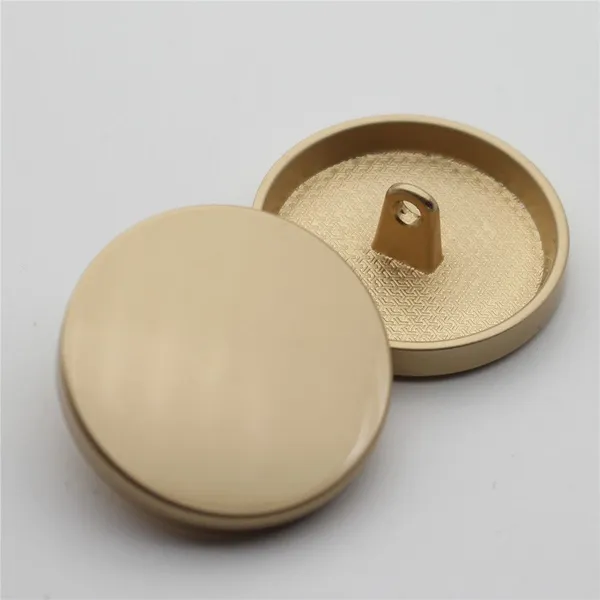 Read More
 -
Two-Hole and Four-Hole Buttons: The Overlooked Workhorses of Garment Trims
September 28, 2026A four hole button is the most common closure in the world and the least discussed, because it does a quiet job and never becomes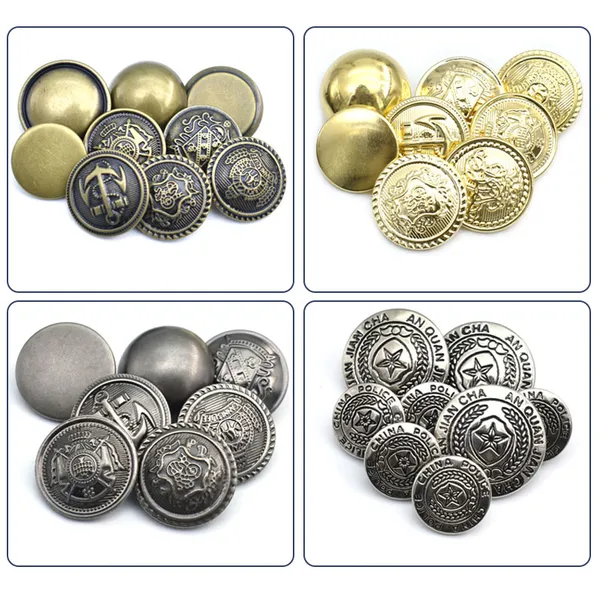 Read More

Contact Us
Recommended Products
-
 Clothing Accessories Lead Free Brass Metal Ring Prong Snap Button With 4 Parts for Infant Baby Clothes Baby BibsUS$ 0.01 - 0.03MOQ: 5000 Sets
 -
Brass Metal Stainless Steel Material Ring Prong Snap Button With 4 Parts Lead Free & Nickel Free for Infant Baby Clothes Baby Bibs Baby SuitsUS$ 0.01 - 0.03MOQ: 5000 Sets
-
Metal Grommets Eyelets Gold Eyelet for Bag Shoes and Garment AccessoriesUS$ 0.01 - 0.03MOQ: 5000 Sets
-
Cheap Price Custom Jeans Button Metal Custom Logo Metal Button for JeansUS$ 0.01 - 0.03MOQ: 5000 Sets
-
Factory Wholesale Hat Bag Clothing Press Snap Button Spring Snap Button Metal Snap ButtonsUS$ 0.03 - 0.06MOQ: 5000 Sets
-
Wholesale Plastic Round Coloured Snaps Button Press Fasteners for Baby Bibs/ Baby GarmentsUS$ 0.01 - 0.03MOQ: 50000 Sets
-
Custom EngravedCopper I Brass Metal Jeans Button Denim Clothes Jacket for Jeans DenimUS$ 0.01 - 0.03MOQ: 5000 Sets
-
17mm Open Hole Shank Button With Aluminum Nail With Logo for Jeans Jacket PantsUS$ 0.01 - 0.03MOQ: 5000 Sets
-
Eco-friendly Custom Size Plastic Snaps Plastic Snap Button for Baby Clothes, Baby BibsUS$ 0.01 - 0.03MOQ: 50000 Sets
-
12mm 15mm 17mm 20mm Four Parts Metal Brass Fastener Press Snap Button for Clothes JacketUS$ 0.03 - 0.06MOQ: 5000 Sets
-
Custom Logo Personalized High Quality Metal Press Snap Fastener Snap Buttons for Clothing Garments JacketUS$ 0.03 - 0.06MOQ: 5000 Sets
-
Custom Printing Round Press Spring Four Part Snap Button for Clothing Leather 405#17mmUS$ 0.03 - 0.06MOQ: 5000 Sets
-
OEM Garment Accessories Custom Baby Snap Button Press Metal Prong Pearl Ring Snap ButtonUS$ 0.01 - 0.03MOQ: 5000 Sets
-
Factory Stock Buttons Stainless Steel or Brass Material Colors Pearl Snap Button Prong Pearl Snap Button for Shirts ClothingUS$ 0.01 - 0.03MOQ: 5000 Sets
-
Resin Snap Buttons 9mm POM Heavy Duty Closure Parts for Baby Bibs and Textile Handmade Sewing ProductionNegotiableMOQ: 50000 Sets
-
13.8mm x 7.5mm Plastic Grommet Kit for Apparel and Garment Lacing, Lightweight and FlexibleNegotiableMOQ: 5000 Sets
-
Clear Plastic Eyelet and Washer Set Two‑piece Fastener for Tote Bags Canvas and Fabric Hole Reinforcement ApplicationsNegotiableMOQ: 5000 Sets
-
13.8mm x 7.5mm Clear Plastic Eyelet and Washer Set Durable Two‑part Hardware for Fabric Reinforcement and Bag Making ApplicationsNegotiableMOQ: 5000 Sets
-
Two‑Piece Plastic Grommet and Washer Set 13.8mm x 7.5mm Clear Hardware for Banner Craft Works and Light‑weight Textile ProductionNegotiableMOQ: 5000 Sets
-
Clear Plastic Eyelet and Washer Set 13.8mm x 7.5mm for Tarps, Banners, and Awning Fabric ReinforcementNegotiableMOQ: 5000 Sets