
 Business License
Snap Button Size Chart: Common Diameters and Fabric Limits
A snap button size chart answers one question well and several badly if it is read too quickly: which diameter belongs on which fabric. Diameter is the figure buyers quote first, but post length and cap height decide whether the closure actually holds once it is set into a real fabric stack.
This reference sets out the diameters that cover most garment orders, the trade designations used for them, and the fabric weight ranges each one suits. It also covers the mismatch between metric and imperial sizing, and the specification mistakes that account for most complaints about a snap button that pulls through or fails to close cleanly.
1. Why a Snap Button Size Chart Drives the Whole Specification
Size is the first number fixed in a closure specification, and three later decisions follow from it. Post length has to suit the diameter, the socket and stud pair have to match it, and the fabric weight range narrows once the diameter is chosen.
That chain is why a snap button size chart works better as a starting point than as a look-up table. A buyer who picks 15 mm because it looks right on a drawing then has to reverse-engineer the post length, and the same departure happens on the factory side when a component has to be selected to fit.
Working in the other direction removes that problem. Measuring the fabric stack first and reading the snap button size chart second usually produces a specification that samples correctly the first time. The T3 T5 T8 snap button designations exist to make that conversation shorter, and they are worth knowing even when the order is quoted in millimetres.
2. Snap Button Sizes Explained: Diameter, Cap and Post
Three measurements describe a snap button, and just one of them is the number normally quoted. Confusing them is the root of most sizing errors.
Diameter is the width across the visible cap. Post length is the length of the stem that passes through the fabric before it is flared or crimped. Cap height is how far the assembled closure stands proud of the cloth.
| Measurement | What it controls | Typical range |
|---|---|---|
| Cap diameter | Visual weight and pull distribution | 8 - 20 mm |
| Post length | How much fabric can be clamped | 3 - 7 mm |
| Cap height | How far the closure stands proud | 1.5 - 4 mm |
| Inner ring diameter | Grip on the fabric once set | Depends on the size designation |
A specification that quotes a snap button size but omits the post length is incomplete, because two closures of the same diameter can be built for very different fabric stacks. That omission is the single most common reason a sample arrives that cannot be set properly.
3. The T3 T5 T8 Snap Button Designations in Practice
The T3 T5 T8 snap button designations come from the trade rather than from a standard body, and they describe a family of sizes by the inner ring rather than by the visible cap. Buyers meeting them for the first time often assume the digits are millimetres, which they are not.
The numbers are a series, not a measurement. A T3 T5 T8 snap button range therefore covers three steps in the same family, and the cap diameter quoted for each step varies a little between manufacturers because the cap can be drawn in several profiles over the same ring.
| Designation | Typical cap diameter | Common use |
|---|---|---|
| T3 | 8 - 10 mm | Babywear, light knitwear, small plackets |
| T5 | 11 - 13 mm | Shirts, blouses, childrenswear |
| T8 | 14 - 17 mm | Jackets, bags, medium outerwear |
| T12 and above | 18 - 20 mm and up | Coats, luggage, heavy outerwear |
Two practical points follow. The first is that a T3 T5 T8 snap button quotation should always be accompanied by the cap diameter and post length in millimetres, because the designation alone leaves both open. The second is that mixing designations inside one range is normal, while mixing them inside one closure position is not.
4. Snap Button Size for Fabric: Matching Diameter to Cloth Weight
The snap button size for fabric is set by how much load the cloth can carry around the fixing point, not by the visual scale of the garment. A light fabric cannot support a large cap, because the pull is concentrated at the ring and the cloth tears before the closure fails.
Fabric weight gives a usable first approximation. Heavier cloth carries a larger diameter, and a finer weave carries a smaller one, with the post length rising as the stack gets thicker.
| Fabric weight | Suggested cap diameter | Suggested post length |
|---|---|---|
| 60 - 120 gsm, light knit or voile | 8 - 10 mm | 3 - 4 mm |
| 120 - 200 gsm, shirting and blouse | 11 - 13 mm | 4 mm |
| 200 - 320 gsm, jacket and denim | 14 - 17 mm | 4 - 6 mm |
| 320 - 500 gsm, coating and bonded | 18 - 20 mm | 5 - 7 mm |
| Above 500 gsm, luggage and strap | 20 mm and above | 6 - 7 mm with reinforcement |
Reinforcement changes the answer more than weight does in some cases. A 150 gsm fabric with a fused interlining behind the fixing point behaves like a heavier cloth, and the snap button size for fabric should be read from the reinforced figure rather than from the loom state figure.
5. A Practical Snap Button Size Chart for Garment Orders
The chart below combines the diameter, post length and finish notes that a factory needs in order to quote without asking a follow-up question. It is written for common garment positions rather than for a specific product line.
| Garment position | Cap diameter | Post length | Note |
|---|---|---|---|
| Babywear front | 8 - 10 mm | 3 - 4 mm | Rounded cap, no sharp edge |
| Shirt placket | 11 - 13 mm | 4 mm | Single or double layer |
| Knitwear cardigan | 11 - 15 mm | 4 - 5 mm | Backing disc often required |
| Jacket front | 14 - 17 mm | 5 - 6 mm | Faced placket adds a layer |
| Bag flap | 15 - 18 mm | 5 - 6 mm | Reinforced behind the fixing |
| Luggage panel | 18 - 20 mm | 6 - 7 mm | Load spread with a plate |
Reading a snap button size chart this way turns it into a specification tool rather than a reference page. Each row already contains four linked decisions, and moving between rows without rechecking all four is where mismatches appear. Difei Button (Guangzhou) Co Ltd issues quotations with all four figures on one line, so a row can be read as a complete specification rather than as a starting point.
6. Post Length and the Snap Button Size for Fabric Stack
Post length is the measurement that closes the gap between a size chart and a working closure, because it decides how much fabric the fixing can clamp.
A post that is too short cannot be flared properly, so the closure sits loose from the start and works its way free. A post that is too long leaves a stub standing inside the garment, which abrades the fabric from behind and collects lint. Both faults show up within a few weeks of wear rather than at inspection.
The working rule is to measure the compressed fabric stack at the fixing point and add roughly 0.5 mm to 1 mm. Compressed rather than relaxed, because the closing force of the snap compresses the cloth slightly and the post has to suit that state.
Where several fabrics are used in one range, the snap button size for fabric should be specified per fabric rather than per style. A jacket built from a 260 gsm shell and a 180 gsm lining needs one post length for the shell panels and another for the lining plackets. Difei holds those as separate line items, so the cut sheet carries the right post to each panel instead of one figure for the whole garment.
7. Metric and Imperial Snap Button Sizes Without a Mismatch
Metric and imperial sizing run in parallel across the trade, and the same closure can be described as 15 mm in one quotation and as a fractional inch in another. The two are close enough to look interchangeable and far enough apart to cause a refusal at inspection.
Rounding is where the error enters. A nominal quarter inch is about 6.35 mm, which is often written as 6 mm, and a chain of roundings across a specification can shift the effective diameter by several tenths of a millimetre. That is enough to change how a cap seats in a die.
The reliable practice is to fix one unit for the order and treat every other figure as a reference. Difei Button (Guangzhou) issues quotations in millimetres and lists the nearest imperial equivalent beside it, so the working figure is never in doubt.
A buyer confirming from an existing garment should measure the cap across its widest point with a caliper rather than reading a size off a label. Labels frequently carry the designation or the trade series, while the die needs the actual measurement.
8. Where a Snap Button Size Chart Gets Misread
Most sizing complaints trace back to one of a small number of misreadings, and each one is avoidable with a single extra question at the quotation stage.
| Mistake | What happens | Correction |
|---|---|---|
| Quoting diameter without post length | Closure cannot be set on the intended cloth | State both figures together |
| Reading the T series as millimetres | Cap arrives noticeably the wrong size | Ask for the millimetre figure |
| Sizing from the label rather than the part | Die does not match the existing garment | Measure the cap with a caliper |
| Ignoring interlining | Pull-through on a reinforced panel | Measure the compressed stack |
| Rounding imperial to metric | Small but repeated dimensional drift | Fix one unit for the order |
A bag manufacturer some time ago specified a 12 mm cap across a range of canvas totes, and the first production run pulled through at the handle anchors where the canvas was doubled and bonded. The snap button size for fabric had been read from the single-layer figure, so the post was about 1.5 mm too short for the actual stack at that position.
Moving those positions to a 15 mm cap with a longer post solved it, and the rest of the range stayed on the original size. Difei Button supplied both sizes from stock moulds, so the correction did not require new tooling.
9. Frequently Asked Questions
9.1 What is the most common snap button size?
Across garment orders the 11 mm to 13 mm range carries the highest volume, because it covers shirting, blouses and most childrenswear. The 15 mm size is next, since it suits jacket fronts and bag flaps where a larger pull distribution is needed. Babywear and fine knitwear sit below at 8 mm to 10 mm, and heavy outerwear above at 18 mm to 20 mm. A range that uses two adjacent sizes usually covers more garments than one that tries to standardise on a single diameter, and it keeps the post length flexible at both ends of the range.
9.2 What do the T3 T5 T8 snap button designations mean?
They are a trade series rather than a measured dimension, describing a family of closures by size step instead of by millimetre. Each step can be produced with several cap profiles, so the visible diameter varies a little between manufacturers even when the designation matches. That is why a T3 T5 T8 snap button quotation should always carry the cap diameter and post length in millimetres alongside the designation. Treating the digits as millimetres is the most frequent misreading, and it usually surfaces at sampling rather than at quotation.
9.3 How do I choose the snap button size for fabric that is reinforced?
Measure the compressed stack including the interlining or backing rather than the loom state fabric, then read the size chart from that figure. A fused interlining can add the equivalent of one full weight grade, so a light shell with backing may need the diameter and post length of a medium cloth. Sampling with the real stack is the reliable confirmation, because the fused layer compresses differently from a loose one. When a garment uses several fabrics, specify the snap button size for fabric per panel rather than per style.
9.4 Can one snap button size cover a whole garment range?
Usually two sizes cover a full range better than one. A single diameter forces the post length to carry all the variation, and post length alone cannot compensate when the fabric weights differ by more than about one grade. Splitting the range into a light-fabric size and a heavy-fabric size keeps the tooling small while letting each garment sit correctly. Reviewing the fabric weights across the range before fixing sizes is the point at which that decision is still inexpensive to make.
Recently Posted
-
Snap Buttons for Bags, Luggage and Leather Goods
September 22, 2026A bag snap button works under a load pattern that clothing never produces. A closure on a garment faces a pull along the fabric pl Read More
 -
Custom Snap Buttons with Your Logo: Tooling and Approval Workflow
September 22, 2026A custom snap button is a standard closure carrying the buyer's own mark, and nearly all of the work sits in the tooling and the a
Read More -
Brass vs Stainless Steel vs Zinc Alloy: Metal Snap Button Materials Compared
September 22, 2026A metal snap button material settles four questions at once: how much pull the closure takes before it deforms, how it behaves in Read More
 -
What Is a Shank Button? Construction, Types and Sewing Applications
September 22, 2026A shank button sits on a raised stem instead of lying flat against the cloth, and that single detail decides where it belongs. The Read More

Contact Us
Recommended Products
-
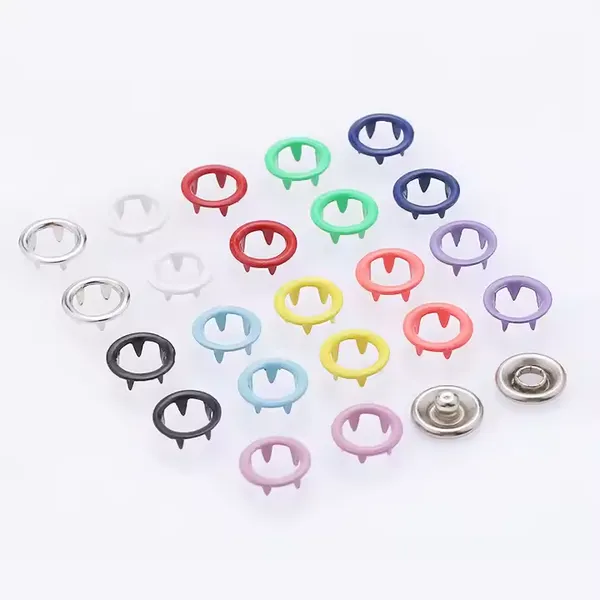
 Clothing Accessories Lead Free Brass Metal Ring Prong Snap Button With 4 Parts for Infant Baby Clothes Baby BibsUS$ 0.01 - 0.03MOQ: 5000 Sets
 -
Brass Metal Stainless Steel Material Ring Prong Snap Button With 4 Parts Lead Free & Nickel Free for Infant Baby Clothes Baby Bibs Baby SuitsUS$ 0.01 - 0.03MOQ: 5000 Sets
-
Metal Grommets Eyelets Gold Eyelet for Bag Shoes and Garment AccessoriesUS$ 0.01 - 0.03MOQ: 5000 Sets
-
Cheap Price Custom Jeans Button Metal Custom Logo Metal Button for JeansUS$ 0.01 - 0.03MOQ: 5000 Sets
-
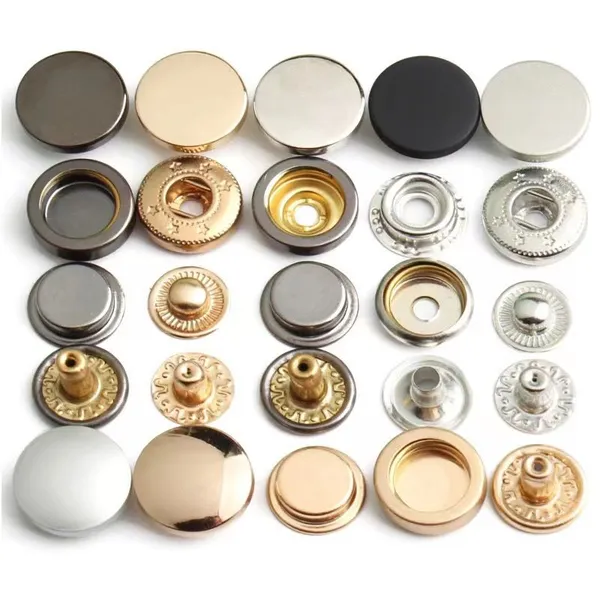
Factory Wholesale Hat Bag Clothing Press Snap Button Spring Snap Button Metal Snap ButtonsUS$ 0.03 - 0.06MOQ: 5000 Sets
-
Wholesale Plastic Round Coloured Snaps Button Press Fasteners for Baby Bibs/ Baby GarmentsUS$ 0.01 - 0.03MOQ: 50000 Sets
-
Custom EngravedCopper I Brass Metal Jeans Button Denim Clothes Jacket for Jeans DenimUS$ 0.01 - 0.03MOQ: 5000 Sets
-
17mm Open Hole Shank Button With Aluminum Nail With Logo for Jeans Jacket PantsUS$ 0.01 - 0.03MOQ: 5000 Sets
-
Eco-friendly Custom Size Plastic Snaps Plastic Snap Button for Baby Clothes, Baby BibsUS$ 0.01 - 0.03MOQ: 50000 Sets
-
12mm 15mm 17mm 20mm Four Parts Metal Brass Fastener Press Snap Button for Clothes JacketUS$ 0.03 - 0.06MOQ: 5000 Sets
-
Custom Logo Personalized High Quality Metal Press Snap Fastener Snap Buttons for Clothing Garments JacketUS$ 0.03 - 0.06MOQ: 5000 Sets
-
Custom Printing Round Press Spring Four Part Snap Button for Clothing Leather 405#17mmUS$ 0.03 - 0.06MOQ: 5000 Sets
-
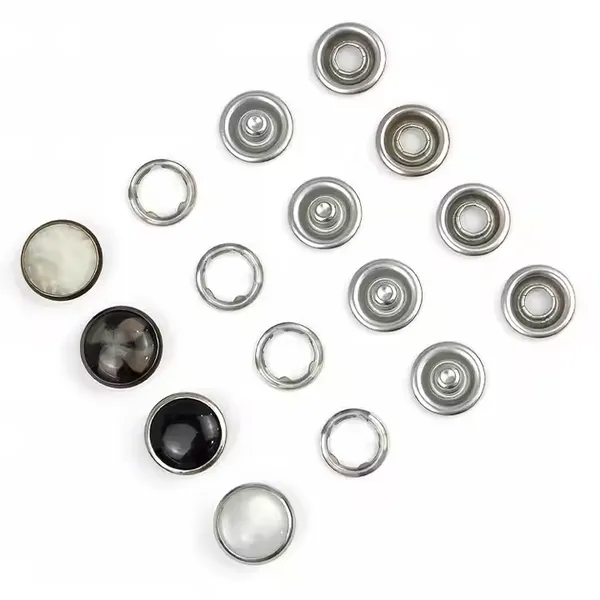
OEM Garment Accessories Custom Baby Snap Button Press Metal Prong Pearl Ring Snap ButtonUS$ 0.01 - 0.03MOQ: 5000 Sets
-
Factory Stock Buttons Stainless Steel or Brass Material Colors Pearl Snap Button Prong Pearl Snap Button for Shirts ClothingUS$ 0.01 - 0.03MOQ: 5000 Sets
-
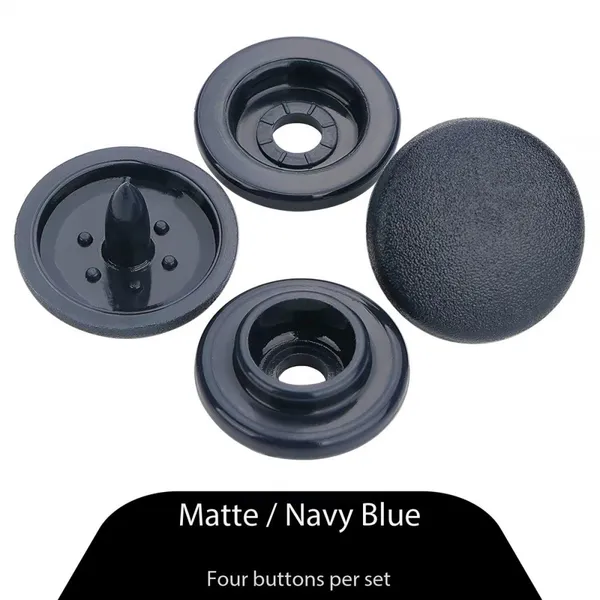
Durable 9mm POM Four Part Plastic Snap Buttons Lead Nickel Free Safe Fasteners for Baby Bibs and Children ApparelNegotiableMOQ: 50000 Sets
-
Plastic Snap Fasteners 9mm POM Lead Nickel Free Hardware for Baby Bibs Children Apparel Sewing ProjectsNegotiableMOQ: 50000 Sets
-
Four Part Plastic Snap Buttons 9mm POM, Custom Color OEM ODM for Apparel and Bed SheetsNegotiableMOQ: 50000 Sets
-
Automatic Feeding Compatible Four Part Plastic Snap Buttons for High-speed AssemblyNegotiableMOQ: 50000 Sets
-
Resin Snap Buttons 9mm POM Eco Friendly Garment Closures for Bed Sheets Outerwear Infant TextilesNegotiableMOQ: 50000 Sets
-
Eco‑friendly POM Made Four Part Plastic Snap Buttons 9mm Garment Snaps for Infant Textile ManufacturingNegotiableMOQ: 50000 Sets