
 Business License
Resin, Plastic and Acrylic Buttons: Sorting Out the Terminology
A resin button, a plastic button and an acrylic button can arrive from three different suppliers with three different specifications and still be the same article in the warehouse. The vocabulary in this trade grew around appearance and selling language rather than around chemistry, and it has never been standardised. Buyers who inherit a specification sheet written a decade ago often find that the material name on it means something narrower today than it did when the sheet was typed.
This article separates the words into the two families they actually belong to, explains what an acrylic button material delivers and where it breaks down, and shows how a polyester button differs from both. It ends with the tests a buyer can request when a supplier's terminology cannot be taken at face value.
1. Resin and Plastic Button Terminology: Why Four Words Cover One Family
The confusion starts with chemistry, because resin and plastic are not parallel categories. A resin is the reactive raw material before it is cured, while plastic is the finished article that a resin or a polymer becomes. Marketing language then flattened the two, and resin button became an umbrella term in supplier catalogues for anything that is not metal, wood or shell.
The second layer of confusion is that the family splits into two groups with opposite behaviour under heat. Thermoset materials cure into a cross-linked structure that will not soften again, while thermoplastic materials melt and can be re-moulded. Polyester, urea, melamine and casein sit in the first group, and POM, PBT, ABS, acrylic and nylon sit in the second.
Almost every disagreement about buttons that are not metal comes down to which of those two groups the supplier has in mind, because the groups differ in heat resistance, solvent resistance and the shapes they can hold.
| Word used | Chemical reality | Group | Seen most often on |
|---|---|---|---|
| Resin button | Umbrella term, often unsaturated polyester or urea | Mostly thermoset | Shirt and blouse buttons, fashion trims |
| Plastic button | Any moulded polymer, including POM and PBT | Mostly thermoplastic | Snap button bodies, garment hardware |
| Acrylic button material | PMMA, a clear thermoplastic | Thermoplastic | Imitation crystal, decorative trims |
| Polyester button | Unsaturated polyester resin, cured in a mould | Thermoset | Shirt buttons, imitation horn and wood |
2. Resin Button: What the Word Actually Covers
In most Chinese supplier catalogues a resin button means a moulded button made from an unsaturated polyester resin or a urea resin, produced by pouring or compressing the material into a cavity and letting it cure at roughly 130 to 150 degrees Celsius for several minutes. The surface can take a marble or horn effect by mixing pigments unevenly, which is why this family dominates imitation natural looks. The cured part resists heat and most dry cleaning solvents well, which suits garments that will be pressed at high temperature.
Its weakness is brittleness. A thin section in a polyester or urea button chips at the rim, so the material suits a flat two-hole or four-hole button better than a snap fastener that carries a load through a spring. That single mechanical difference is why closure hardware moved to POM and PBT.
A buyer writing a specification should therefore treat resin button as a family name rather than a material call, and add the resin type and the supplier's grade code next to it.
3. Acrylic Button Material: Clarity, Weight and Finish
An acrylic button material is polymethyl methacrylate, a clear thermoplastic that can be dyed to a deep colour or left transparent. It polishes to a high gloss and takes a facet cut cleanly, which makes it the usual choice for a decorative button that imitates a gemstone or crystal. It is also lighter than glass or metal at the same diameter, which matters on a garment that carries many trims.
The trade-offs follow from the same properties. Acrylic scratches more readily than polyester, so a button that rubs against a metal zip or a bag clasp dulls over a season. It softens at around 100 degrees Celsius and dissolves in some solvents, so a factory that tumbles garments or uses aggressive stain removers can damage it. Adhesives and some fabric finishes also attack the surface.
| Property | Acrylic button material | Polyester button |
|---|---|---|
| Clarity and gloss | High, near crystal | Opaque or swirled |
| Scratch resistance | Moderate | Good |
| Heat resistance | Softens at a lower temperature | Holds shape under pressing |
| Solvent resistance | Poor against some solvents | Good against dry cleaning fluids |
| Typical use | Decorative, fashion trims | Shirting, imitation horn and wood |
4. Polyester Button and the Thermoset Route
A polyester button is cured rather than moulded under pressure alone, which is why it holds fine detail and a stable shape. The uncured resin is poured into a cavity or formed into a sheet, then heat and a catalyst set the cross-linked network. Because the network cannot re-melt, the button keeps its dimensions through repeated pressing and dry cleaning.
Colour options are broad. Pigments can be mixed through the body for a solid shade, or laid in bands to imitate horn, tortoise or wood grain. Marbling run in one direction gives a wood look and marbling run in two gives a horn look, which is why the same base resin carries several product names.
The limits are mechanical and dimensional. Polyester buttons are harder than acrylic but also more brittle than a thermoplastic, and they cannot be snapped together into a closure the way a POM part can. Cured polyester shrinks roughly 0.5 per cent as it sets, while a moulded POM part shrinks nearer 2 per cent, which is one reason a closure designed in one cannot simply be re-cut in the other. Recognising that boundary prevents a specification that asks a thermoset to do a spring's job.
5. POM, PBT and Polyester Button Resins: Where Each One Sits
Closure hardware in plastic belongs to the thermoplastic side of the family, and POM leads it. Polyoxymethylene, usually written POM, is a crystalline polymer with high stiffness, low friction and excellent fatigue resistance, and its density sits near 1.41 grams per cubic centimetre with a melting point close to 165 degrees Celsius. That combination is what a snap button needs, because the spring flexes every time the closure opens and has to recover its shape thousands of times. PBT sits alongside as a tough polyester-family thermoplastic used where a slightly different feel or finish is wanted.
The naming trap here is that PBT is chemically a polyester, so a supplier can describe a PBT part as a polyester button without being wrong. That description tells a buyer nothing about the mechanical behaviour, because a moulded PBT part and a cured polyester resin button behave differently under load and heat.
Specifying the polymer abbreviation plus the grade removes the ambiguity, and it is the one habit that prevents most material disputes in a plastic trim order.
6. Telling Acrylic Button Material from Resin: Tests a Buyer Can Ask For
When a supplier's material description cannot be relied on, four simple checks separate the families. A solvent wipe with acetone will dull or dissolve a thermoplastic surface while leaving a cured thermoset largely unaffected. Warming a sample gently shows the difference in behaviour, since a thermoplastic softens gradually while a thermoset holds until it chars.
A cut through the body reveals structure, because a thermoset tends to break with a clean conchoidal shell and a thermoplastic tends to stretch before it parts. Density in water separates the heavier filled resins from the lighter unfilled polymers, and a burn test on a small offcut gives a smell and flame signature that narrows the family further.
| Check | Thermoset result | Thermoplastic result |
|---|---|---|
| Acetone wipe | Surface largely unchanged | Dulls, softens or dissolves |
| Gentle warming | Holds until it chars | Softens progressively |
| Cut edge | Clean break, shell-like | Stretches before parting |
| Load on a thin section | Chips | Flexes and recovers |
7. Property Comparison: Resin, Acrylic and Polyester Button Material
Set side by side, the three names that buyers treat as interchangeable separate along four axes. Heat resistance favours the cured thermosets, appearance favours acrylic, mechanical toughness favours the engineering thermoplastics, and cost sits differently in each case depending on the finish and the tooling.
None of the three is a general answer. A decorative placket wants gloss and colour depth, a shirt button wants press resistance and a natural-looking grain, and a closure wants fatigue strength and a predictable pull figure. Selecting on the name alone skips all four axes, which is why Difei Button keeps a material reference card for each polymer grade it runs.
| Consideration | Resin button | Acrylic button material | Polyester button |
|---|---|---|---|
| Heat under pressing | Holds | Softens first | Holds |
| Gloss and clarity | Moderate | High | Low, opaque |
| Toughness in thin sections | Chips | Moderate | Chips |
| Natural-look imitations | Good | Poor | Good |
| Suits a closure | No | No | No |
8. Matching a Resin or Polyester Button to the Application
Choosing between the names becomes straightforward once the garment is described in terms of heat, solvents and load. A shirt that will be pressed at high temperature and dry cleaned suits a cured polyester button with a horn or wood effect. A fashion blouse that needs a bright faceted trim suits acrylic, provided the garment is not tumbled or treated with aggressive solvents.
A closure on a jacket, a bag flap or a piece of workwear suits none of them, and belongs to POM or PBT on the thermoplastic side. Writing that distinction into the bill of materials is what stops a seasonal design team from specifying a decorative material where a mechanical part is needed.
A childrenswear buyer once asked Difei Button (Guangzhou) Co Ltd to quote a jacket closure in the same resin as the decorative buttons on the front panel, because the sample looked consistent and the price looked lower. The sampling round showed the resin rim chipping at the pull figure the jacket needed, and the closure moved to a POM body with the decorative face kept in resin. The mixed build cost slightly more and solved both the appearance and the load in one pass, and the buyer adopted it as the standing specification.
A separate uniform programme took the opposite route for its non-load-bearing buttons and replaced acrylic with cured polyester, which stopped the dulling that had appeared after industrial pressing. Difei Button holds both the polymer grade and the finish reference on file for those orders so a repeat season matches without a fresh sampling round.
9. Frequently Asked Questions
9.1 Is a resin button the same as a plastic button?
Not exactly, although suppliers use the words loosely. Resin refers to the reactive material before curing, while plastic describes the finished polymer article, so a resin button and a plastic button can be the same object described at two stages. In practice resin button in a catalogue usually means a cured thermoset button, while plastic button covers moulded thermoplastics such as POM, PBT and ABS. Asking for the polymer abbreviation and the grade settles the question faster than debating the words.
9.2 What is acrylic button material made of, and where does it fail?
An acrylic button material is polymethyl methacrylate, a clear thermoplastic chosen for gloss, colour depth and light weight. It performs well on decorative trims that need a faceted or crystal-like look and are not exposed to heavy abrasion. It fails in three conditions, namely scratching against harder trim, softening under high pressing heat, and contact with solvents that attack the surface. It also suits a flat decorative button far better than a load-bearing closure, because it has no mechanism for storing the energy a spring needs.
9.3 How can I tell a polyester button from an acrylic one?
An acetone wipe is the quickest field test, because it dulls acrylic while leaving a cured polyester button largely unchanged. Warming a sample gently shows the same split, since the acrylic softens progressively while the polyester holds until it chars. A cut edge also differs, with polyester breaking cleanly and acrylic tending to stretch. Where a specification matters, sending the sample to a lab for a polymer identification costs less than a claim, and it produces a document that can be referenced later.
9.4 Which material should a plastic snap button use?
A plastic snap button normally uses POM, and sometimes PBT, because a closure needs fatigue strength rather than appearance. The spring in a snap button flexes every time the closure opens and closes, so the material has to recover its shape through thousands of cycles without cracking, which is what a crystalline thermoplastic does well. Decorative thermosets chip in the same thin sections. Difei Button tests the assembled closure rather than the polymer alone, because the pull figure depends on the whole part rather than on the material name.
Recently Posted
-
Button Requirements by Export Market: What Buyers in Different Regions Specify
September 30, 2026Two identical buttons can clear customs in one market and be refused in another, and the difference is paperwork as often as it is Read More
 -
Eyelet Size and Washer Matching: Specifying the Right Pair
September 30, 2026An eyelet is bought as a pair, and a pair that is specified one part at a time will not set correctly. The eyelet carries the barr Read More
 -
Trading Company or Button Factory: What Buyers Should Weigh
September 30, 2026The trading company vs factory question is usually framed as a price comparison, and price is the least interesting part of the an Read More
 -
Metal vs Plastic Jeans Buttons: Load, Finish and Wash Durability
September 30, 2026The choice between a metal jeans button and a moulded one looks like a question of appearance, and it is really a question of what Read More

Contact Us
Recommended Products
-
 Clothing Accessories Lead Free Brass Metal Ring Prong Snap Button With 4 Parts for Infant Baby Clothes Baby BibsUS$ 0.01 - 0.03MOQ: 5000 Sets
 -
Brass Metal Stainless Steel Material Ring Prong Snap Button With 4 Parts Lead Free & Nickel Free for Infant Baby Clothes Baby Bibs Baby SuitsUS$ 0.01 - 0.03MOQ: 5000 Sets
-
Metal Grommets Eyelets Gold Eyelet for Bag Shoes and Garment AccessoriesUS$ 0.01 - 0.03MOQ: 5000 Sets
-
Cheap Price Custom Jeans Button Metal Custom Logo Metal Button for JeansUS$ 0.01 - 0.03MOQ: 5000 Sets
-
Factory Wholesale Hat Bag Clothing Press Snap Button Spring Snap Button Metal Snap ButtonsUS$ 0.03 - 0.06MOQ: 5000 Sets
-
Wholesale Plastic Round Coloured Snaps Button Press Fasteners for Baby Bibs/ Baby GarmentsUS$ 0.01 - 0.03MOQ: 50000 Sets
-
Custom EngravedCopper I Brass Metal Jeans Button Denim Clothes Jacket for Jeans DenimUS$ 0.01 - 0.03MOQ: 5000 Sets
-
17mm Open Hole Shank Button With Aluminum Nail With Logo for Jeans Jacket PantsUS$ 0.01 - 0.03MOQ: 5000 Sets
-
Eco-friendly Custom Size Plastic Snaps Plastic Snap Button for Baby Clothes, Baby BibsUS$ 0.01 - 0.03MOQ: 50000 Sets
-
12mm 15mm 17mm 20mm Four Parts Metal Brass Fastener Press Snap Button for Clothes JacketUS$ 0.03 - 0.06MOQ: 5000 Sets
-
Custom Logo Personalized High Quality Metal Press Snap Fastener Snap Buttons for Clothing Garments JacketUS$ 0.03 - 0.06MOQ: 5000 Sets
-
Custom Printing Round Press Spring Four Part Snap Button for Clothing Leather 405#17mmUS$ 0.03 - 0.06MOQ: 5000 Sets
-
OEM Garment Accessories Custom Baby Snap Button Press Metal Prong Pearl Ring Snap ButtonUS$ 0.01 - 0.03MOQ: 5000 Sets
-
Factory Stock Buttons Stainless Steel or Brass Material Colors Pearl Snap Button Prong Pearl Snap Button for Shirts ClothingUS$ 0.01 - 0.03MOQ: 5000 Sets
-
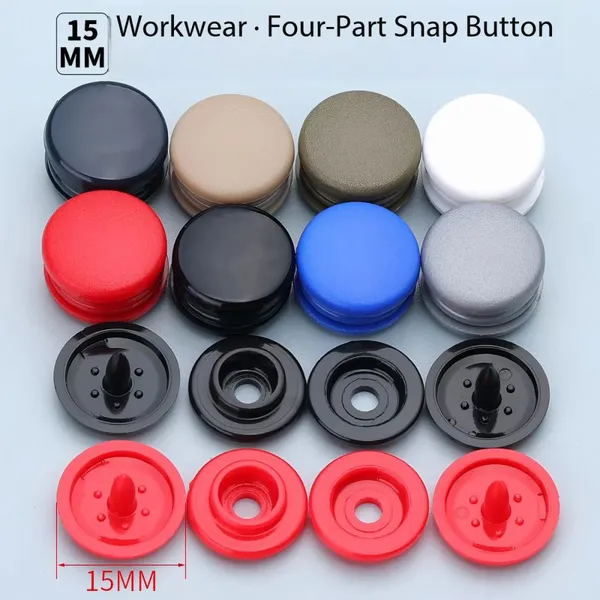
Resin Snap Buttons 9mm POM Heavy Duty Closure Parts for Baby Bibs and Textile Handmade Sewing ProductionNegotiableMOQ: 50000 Sets
-
13.8mm x 7.5mm Plastic Grommet Kit for Apparel and Garment Lacing, Lightweight and FlexibleNegotiableMOQ: 5000 Sets
-
Clear Plastic Eyelet and Washer Set Two‑piece Fastener for Tote Bags Canvas and Fabric Hole Reinforcement ApplicationsNegotiableMOQ: 5000 Sets
-
13.8mm x 7.5mm Clear Plastic Eyelet and Washer Set Durable Two‑part Hardware for Fabric Reinforcement and Bag Making ApplicationsNegotiableMOQ: 5000 Sets
-
Two‑Piece Plastic Grommet and Washer Set 13.8mm x 7.5mm Clear Hardware for Banner Craft Works and Light‑weight Textile ProductionNegotiableMOQ: 5000 Sets
-
Clear Plastic Eyelet and Washer Set 13.8mm x 7.5mm for Tarps, Banners, and Awning Fabric ReinforcementNegotiableMOQ: 5000 Sets