
 Business License
Eyelets and Grommets: How Metal Eyelets Are Used in Garments and Bags
The eyelet vs grommet question comes up in almost every first order for metal hardware, and the answer is less about the metal than about trade vocabulary. A garment factory in Guangzhou calls the same small ring an eyelet, while a bag maker in the same city calls it a grommet, and both orders arrive at the same press with the same die. What changes is the size convention, the number of parts and the way the buyer writes it on a purchase order.
This guide sorts out where the two words came from, how a grommet size chart is read, and what an eyelet installation tool needs to deliver so the hardware holds for the life of the garment or bag rather than for the first season.
1. Eyelet vs Grommet: Where the Two Words Come From
An eyelet began as a small eye, meaning a hole for a cord, lace or hook to pass through. The word entered garment making through corsetry and footwear, where metal rings protected a punched hole in leather or heavy cloth from tearing. A grommet arrived through sail making and later industrial canvas work, where the same function was needed on tarpaulins and awnings that took far heavier loads.
Two differences survive in current use. A plain eyelet is usually a single piece that folds back on itself, while a grommet is normally two pieces, the ring plus a washer that sits behind the fabric. The size convention also splits, because garment eyelets are quoted by inner diameter in millimetres or by a lace size while grommets are often quoted by a trade number such as 2, 3 or 4. That trade number corresponds to a nominal inner diameter rather than to a standardised one.
A buyer moving between the two trades therefore has to translate twice, once for the vocabulary and once for the numbering. Confirming the inner diameter in millimetres before quoting removes most of that risk, because the eyelet vs grommet wording itself rarely causes a wrong shipment while the numbering behind it often does.
| Term | What it normally means | Typical trade |
|---|---|---|
| Eyelet | Small metal ring protecting a punched hole, often single piece | Footwear, corsetry, apparel, knitwear |
| Grommet | Ring plus washer, set through heavier material | Bags, luggage, canvas, tarpaulin |
| Eyelet vs grommet in practice | Same function, different part count and size labelling | Both, depending on the supplier |
2. Where Metal Eyelets and Grommets Appear in Garments and Bags
Apparel uses eyelets where a cord has to pass through cloth repeatedly without wearing a hole larger each season. Hood openings on parkas and rain shells rely on them, as do lace panels on boots and fashion sneakers, and the adjustable sides of a corset-style bodice. Waist drawcords on activewear and hem drawcords on windbreakers take a smaller diameter and a lighter finish.
Bags and leather goods use the heavier version. Shoulder straps on canvas totes take a grommet at each attachment point, backpacks use them at the top drawcord, and duffel bags use a row along the flap. Leather belts, camera straps and notebook covers use them as much for appearance as for strength.
The load direction differs between the two groups, and that difference decides the specification. A hood eyelet resists a cord pulling sideways, while a strap grommet resists a load pulling straight out of the panel. The second case needs the washer and a higher barrel.
3. Reading a Grommet Size Chart: The Three Numbers That Matter
A grommet size chart looks like a simple table of numbers, but three of them decide whether the hardware works. The inner diameter is the clear opening, which must clear the cord, strap or wire with a little room to move. The outer diameter is the flange that rests on the fabric and spreads the load. The barrel length is the depth of the tube that will be rolled, which must match the thickness of the material stack.
Buyers new to the category often order on the trade number alone. That works within one supplier's range and breaks as soon as a second supplier is added, because trade numbers are not standardised across factories. The workable habit is to write all three figures on the purchase order. A grommet size chart that lists barrel length alongside diameter is worth more to a buyer than one that lists trade numbers alone.
| Trade size | Inner diameter | Outer diameter | Typical use |
|---|---|---|---|
| Small, around 3 mm | 3 mm | 7 - 8 mm | Fine drawcords, lingerie, light knitwear |
| Medium, around 5 mm | 5 mm | 10 - 12 mm | Hood cords, waist drawcords, thin belts |
| Large, around 8 mm | 8 mm | 14 - 16 mm | Boot lacing, tote handles, apron ties |
| Extra large, 10 - 12 mm | 10 - 12 mm | 18 - 22 mm | Luggage straps, canvas panels, banners |
4. Eyelet and Grommet Styles: Rolled Rim, Plain, Washer and Self-Piercing
Four constructions cover most orders, and the choice follows the material rather than the design. A rolled rim eyelet has a curved edge that sits above the fabric, which protects the cord and gives a finished look. A plain eyelet sits flatter, which suits a panel that will be ironed or laminated afterwards.
A washer-backed grommet adds a separate plate behind the material, which is the usual answer for canvas, coated fabric and leather. A self-piercing eyelet cuts its own hole during setting, which saves a punching step on soft material but tears woven fabric if the setting force runs high.
| Style | Parts | Suits | Watch for |
|---|---|---|---|
| Rolled rim eyelet | 1 | Knitwear, shirting, light canvas | Rim height blocking a flat seam |
| Plain eyelet | 1 | Panels to be pressed or bonded | Lower cord protection |
| Washer grommet | 2 | Canvas, leather, coated material | Alignment of ring and washer |
| Self-piercing eyelet | 1 | Soft non-woven and felt | Tearing on tight weaves |
5. Choosing an Eyelet Installation Tool
An eyelet installation tool is chosen by volume first and by access second. Sample rooms and small runs use a hand press or a pair of setting pliers with interchangeable dies, which suits a few hundred pieces a day and lets a maker switch sizes in minutes. Production lines move to a foot press or a pneumatic machine, where the die stays mounted and the operator simply positions the panel.
An eyelet installation tool bought for one job often outlives the job, so the die range matters as much as the press itself. Two details decide whether the tool does its job. The die must match both the inner diameter and the barrel length, because a die for a 3 mm eyelet will crush a 5 mm ring and a die set on the wrong barrel depth will leave the roll loose. The anvil also needs to be concentric with the punch, since a small offset shows up as an unevenly rolled edge and a torn hole after a few washes.
For buyers comparing quotations, asking which setting method the factory will use is worth more than asking for a tool price. A quotation built on a hand press for a production volume of fifty thousand pieces usually carries a hidden second process, and Difei Button writes the setting method onto the sample sheet so a repeat order does not change process quietly.
6. Metal and Finish for Eyelet and Grommet Hardware
Brass is the default for plated eyelets because it forms cleanly and takes a smooth coating. Stainless steel suits markets with high humidity and marine exposure, since it holds up without any plating at all. Aluminium is lighter and costs less, which suits decorative use and light fashion where the load stays low.
Finish is where most complaints originate. Nickel, nickel-free, antique brass, black nickel and painted finishes all behave differently under repeated abrasion from a cord. For anything that will be laundered often, a nickel-free passivated finish on stainless steel removes the plating question altogether. Difei Button (Guangzhou) finishes eyelet hardware on the same plating lines used for its snap button range, which keeps colour consistent across a mixed trim order.
7. When a Grommet or Eyelet Pulls Through: Failure Modes and Prevention
Most grommet failures on a production line trace back to one of four conditions, and all four are visible in the first hundred pieces if someone looks. A torn panel around the hole means the barrel was too short for the stack or the flange too small for the load. A losing grip, where the ring turns freely in the hole, points to a setting force below the requirement.
A dented or split barrel comes from a worn die or an off-centre anvil, and a rusted ring after washing points to an unplated steel core or a plating thickness that was never specified.
| Symptom | Usual cause | Preventive change |
|---|---|---|
| Fabric tears around the hole | Flange too small for the load or barrel too short | Step up one outer diameter, add a washer |
| Ring rotates or lifts | Setting force under specification | Recalibrate the press, check the die |
| Barrel splits or dents | Worn die, off-centre anvil | Replace the die, re-align the anvil |
| Corrosion after laundering | Unplated core, thin coating | Specify stainless steel or a salt spray figure |
8. Eyelet and Grommet Quality Checks Before a Run Is Released
Four checks cover the risk on a metal eyelet order and take a few minutes per batch. Confirm the inner diameter with a pin gauge rather than a ruler, since a rolled rim closes the opening by a fraction of a millimetre. Pull one set piece from each thousand and try to rotate the ring by hand, which catches a weak setting before it becomes a claim.
Then check the hole edge under a lamp for torn fibres, and run a salt spray test on a finished part rather than on the raw material, because the plating result depends on the coating and not on the alloy beneath it. Difei Button holds the die record and the sealed sample for each order, so a repeat run matches without a fresh approval round.
A bag maker came to Difei Button (Guangzhou) Co Ltd some time ago with a claim on shoulder-strap grommets that had torn their panels after a few weeks of use. The rings themselves were fine and the diameter matched the drawing, so the cause sat in the panel rather than in the hardware. The material was a coated polyester that had stretched under the strap, which left the flange carrying the load on a thinning surface. Adding a washer behind the panel and stepping the outer diameter up by 3 mm solved it, and the lesson was that a hardware specification has to account for the material it is set into rather than for the hardware alone.
9. Frequently Asked Questions
9.1 What is the difference between an eyelet and a grommet?
An eyelet is usually a single metal ring that folds back on itself, while a grommet is normally two pieces, the ring plus a washer fitted behind the material. The eyelet vs grommet distinction is partly one of trade habit, since garment suppliers tend to say eyelet and bag or canvas suppliers tend to say grommet for hardware that performs the same job. The practical difference lies in part count and load capacity, because a washer spreads the strain over a wider area and suits heavier material. When a drawing specifies one term, it is worth confirming the inner diameter in millimetres before ordering.
9.2 How do I use a grommet size chart to pick the right size?
A grommet size chart gives three figures, and all three have to be matched. Choose the inner diameter from the cord or strap that will pass through, then choose the outer diameter from the load the panel will carry, and finally match the barrel length to the thickness of the material stack. Trade numbers such as 2 or 4 are useful within one supplier's catalogue but vary between factories, so writing the millimetre figures on the purchase order removes the ambiguity. A quick test on the real fabric stack confirms the choice better than any table.
9.3 Which eyelet installation tool suits a small production run?
For a few hundred pieces a day, the eyelet vs grommet vocabulary does not change the tooling, and a hand press or a pair of setting pliers with interchangeable dies is the practical answer, because the operator can switch between two sizes without a tooling change. An eyelet installation tool used at that volume should still have a properly matched die and a concentric anvil, since those two details decide whether the roll comes out even. Above a few thousand pieces a week, a foot press or pneumatic machine pays for itself in consistent setting force. Ask the factory which method they plan to use before comparing prices.
9.4 Can eyelets be used on thin or stretchy fabric?
Yes, with a small flange and a light setting force, which is why fine knitwear uses a 3 mm eyelet rather than a heavier size. Thin fabric needs either a washer behind the panel or a fused reinforcement patch around the hole, since the metal cannot spread a load that the cloth cannot carry. Stretch material is the harder case, because a panel that extends under tension will thin around the ring over time. Specifying the reinforcement at the sampling stage is far less expensive than correcting a claim later.
Recently Posted
-
Snap Buttons for Knitwear and Lightweight Fabrics
September 24, 2026Choosing a knitwear snap button is a different exercise from specifying one for a woven shirt, because the material around the fix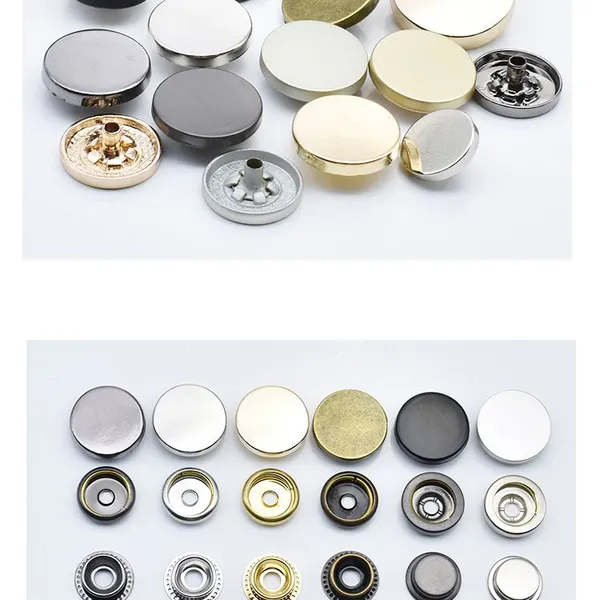 Read More
 -
Oeko-Tex Standard 100 and Button Compliance: What to Verify
September 24, 2026Compliance questions arrive late in most trim orders, usually after a garment buyer has been asked for a certificate that nobody o
Read More -
Packaging, Carton Configuration and Shipping Terms for Button Orders
September 24, 2026A button order is small in value and heavy in handling, which makes button packaging the part of the transaction that most often p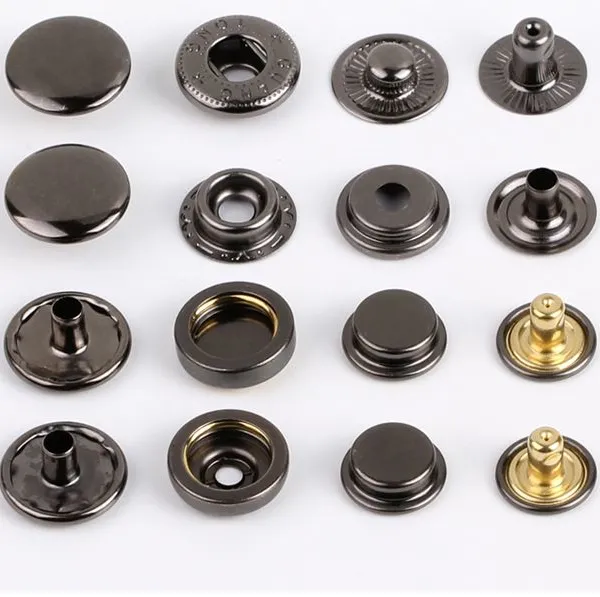 Read More
 -
Plating and Coating Options for Metal Snap Buttons
September 24, 2026Two orders can use identical brass underneath and behave completely differently after a year of wear, because the snap button surf Read More

Contact Us
Recommended Products
-
 Clothing Accessories Lead Free Brass Metal Ring Prong Snap Button With 4 Parts for Infant Baby Clothes Baby BibsUS$ 0.01 - 0.03MOQ: 5000 Sets
 -
Brass Metal Stainless Steel Material Ring Prong Snap Button With 4 Parts Lead Free & Nickel Free for Infant Baby Clothes Baby Bibs Baby SuitsUS$ 0.01 - 0.03MOQ: 5000 Sets
-
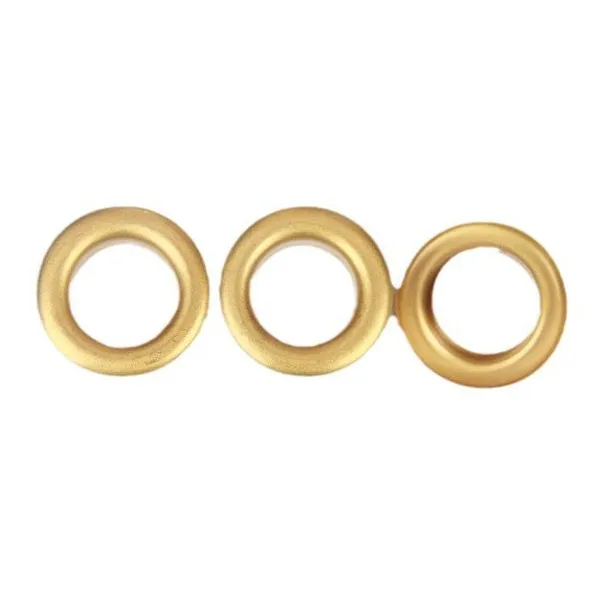
Metal Grommets Eyelets Gold Eyelet for Bag Shoes and Garment AccessoriesUS$ 0.01 - 0.03MOQ: 5000 Sets
-
Cheap Price Custom Jeans Button Metal Custom Logo Metal Button for JeansUS$ 0.01 - 0.03MOQ: 5000 Sets
-
Factory Wholesale Hat Bag Clothing Press Snap Button Spring Snap Button Metal Snap ButtonsUS$ 0.03 - 0.06MOQ: 5000 Sets
-
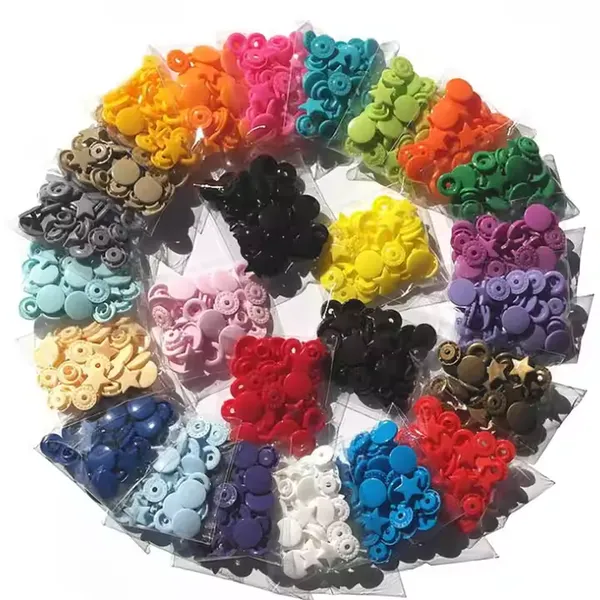
Wholesale Plastic Round Coloured Snaps Button Press Fasteners for Baby Bibs/ Baby GarmentsUS$ 0.01 - 0.03MOQ: 50000 Sets
-
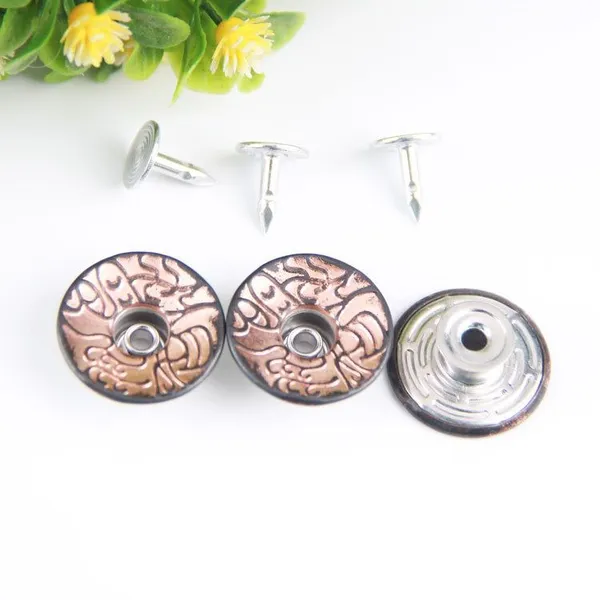
Custom EngravedCopper I Brass Metal Jeans Button Denim Clothes Jacket for Jeans DenimUS$ 0.01 - 0.03MOQ: 5000 Sets
-
17mm Open Hole Shank Button With Aluminum Nail With Logo for Jeans Jacket PantsUS$ 0.01 - 0.03MOQ: 5000 Sets
-
Eco-friendly Custom Size Plastic Snaps Plastic Snap Button for Baby Clothes, Baby BibsUS$ 0.01 - 0.03MOQ: 50000 Sets
-
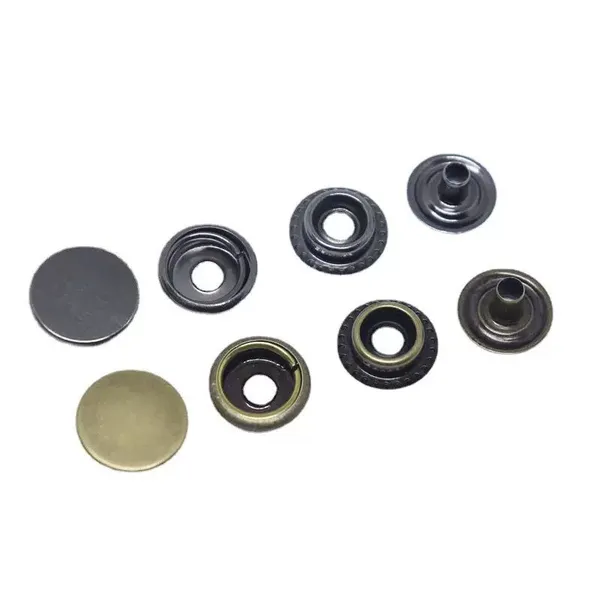
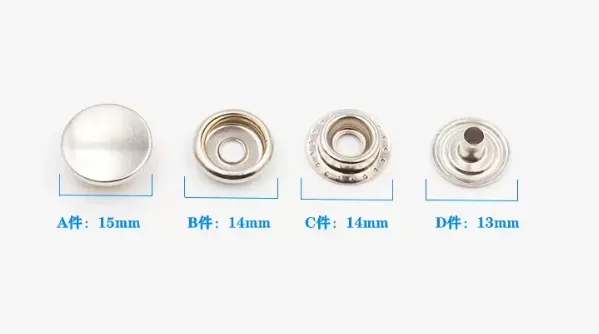
12mm 15mm 17mm 20mm Four Parts Metal Brass Fastener Press Snap Button for Clothes JacketUS$ 0.03 - 0.06MOQ: 5000 Sets
-
Custom Logo Personalized High Quality Metal Press Snap Fastener Snap Buttons for Clothing Garments JacketUS$ 0.03 - 0.06MOQ: 5000 Sets
-
Custom Printing Round Press Spring Four Part Snap Button for Clothing Leather 405#17mmUS$ 0.03 - 0.06MOQ: 5000 Sets
-
OEM Garment Accessories Custom Baby Snap Button Press Metal Prong Pearl Ring Snap ButtonUS$ 0.01 - 0.03MOQ: 5000 Sets
-
Factory Stock Buttons Stainless Steel or Brass Material Colors Pearl Snap Button Prong Pearl Snap Button for Shirts ClothingUS$ 0.01 - 0.03MOQ: 5000 Sets
-
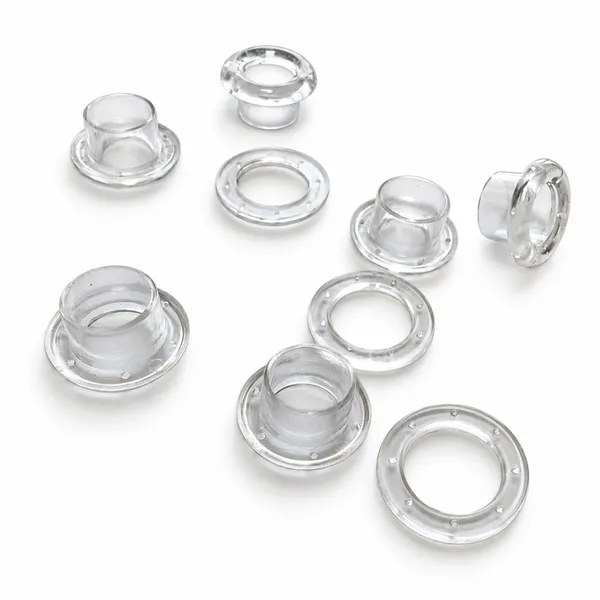
13.8mm x 7.5mm Plastic Grommet Kit for Apparel and Garment Lacing, Lightweight and FlexibleNegotiableMOQ: 5000 Sets
-
Clear Plastic Eyelet and Washer Set Two‑piece Fastener for Tote Bags Canvas and Fabric Hole Reinforcement ApplicationsNegotiableMOQ: 5000 Sets
-
13.8mm x 7.5mm Clear Plastic Eyelet and Washer Set Durable Two‑part Hardware for Fabric Reinforcement and Bag Making ApplicationsNegotiableMOQ: 5000 Sets
-
Two‑Piece Plastic Grommet and Washer Set 13.8mm x 7.5mm Clear Hardware for Banner Craft Works and Light‑weight Textile ProductionNegotiableMOQ: 5000 Sets
-
Clear Plastic Eyelet and Washer Set 13.8mm x 7.5mm for Tarps, Banners, and Awning Fabric ReinforcementNegotiableMOQ: 5000 Sets
-
Clear Plastic Eyelet and Washer Set Snap‑together Grommet Assembly Suited for Sewing Accessory and Finished Bag ManufacturingNegotiableMOQ: 5000 Sets