
 Business License
Blog Categories
Zipper Tape and Teeth Materials: What Each Layer Is Made Of
A zipper is built from 4 material layers that are chosen together: the woven tape, the teeth, the sewing thread and the coating applied to the tape. The zipper tape material decides how the chain behaves in the wash, while the zipper teeth material decides how it wears in service. Neither layer can be judged on its own, because a stiff tape changes how the teeth interlock and a soft tape lets the chain curl.
This article sets out what each layer is made of, explains why polyester zipper tape has become the default choice, and compares the main tooth options in use today. It closes with the figures a buyer should ask for on a material sheet before an order is confirmed.
1. What a Zipper Tape Material Has to Do
A zipper tape material carries 3 duties at once: it holds the teeth or the coil at a fixed pitch, it takes a sewing needle without splitting, and it keeps its width after dyeing and washing. A tape that fails on any one of those duties shows up as a wavy chain or a skipped tooth rather than as a tape fault. The material is therefore specified before the teeth are chosen.
Woven tape is the standard construction, with a warp of about 40 to 60 polyester yarns and a weft that crosses them. The weave sets the stiffness, and stiffness is what keeps the chain flat under a seam. A tape that is too soft will curl along the seam line, and a tape that is too stiff will stand away from the garment.
The zipper tape material also decides the width tolerance that can be held. A good tape holds its width to about 0.3 mm over a full roll, and that figure is what a slider depends on. Difei Button (Guangzhou) Co Ltd records the tape width and the material code together, so a repeat order is matched against the same specification rather than against a written description.
2. Polyester Zipper Tape and Its Properties
Polyester zipper tape has replaced cotton in most applications because it resists rot, holds colour and shrinks less in the wash. A polyester tape typically shrinks by about 1 percent after 3 washes at 40 degrees, against 3 to 5 percent for cotton. That stability is why the same tape can be dyed to a deep shade and still hold its width.
The yarn count sets the hand of the tape. A 300 denier warp gives a firm tape for a size 5 chain, while a 150 denier warp gives a lighter tape for a size 3 invisible zip. Denier is the weight in grams of 9,000 metres of yarn, so a higher figure means a heavier and stiffer tape.
Polyester also accepts a coating, which is where water repellent and taped waterproof finishes begin. The coating is applied to one face of the tape and cured, and it adds about 0.05 mm to the thickness. A coated polyester zipper tape is what keeps water out of the stitch line on outdoor gear.
3. Zipper Teeth Material: Metal, Coil and Molded Resin
Zipper teeth material falls into 3 families, and each one is formed by a different process. Metal teeth are stamped and crimped from wire, nylon teeth are formed as a continuous coil that is sewn to the tape, and molded teeth are injected onto the tape one element at a time. The material decides the process, not the other way round.
Metal teeth are usually brass, aluminum or nickel, with brass offering a good balance of strength and finish. A brass tooth on a size 5 chain stands about 1.5 mm proud of the tape. Aluminum is lighter but softer, and nickel is chosen where a bright silver finish is asked for.
| Layer | Common material | Key figure |
|---|---|---|
| Woven tape | Polyester | 300 denier warp |
| Coil tooth | Nylon 6 or 66 | 0.6 mm monofilament |
| Molded tooth | POM resin | 1.2 mm pitch |
| Metal tooth | Brass wire | 1.5 mm height |
Coil teeth are made from a monofilament, normally nylon 6 or nylon 66, wound into a spiral and heat set so that it holds its shape. Molded teeth are made from POM or a similar resin, chosen because it takes a moulded form and holds colour well. The zipper teeth material is quoted on the material sheet beside the size number, and the 2 travel as one record.
4. Woven Tape Construction: Yarn Count and Zipper Tape Material
Woven tape construction begins on a narrow fabric loom, where the warp yarns run lengthwise and the weft is inserted across them. A zipper tape is woven as a strip about 12 to 32 mm wide, with a bead on one edge that the teeth sit against. The bead is a thicker cord woven into the edge, and it is what the slider grips on a coil chain.
The yarn count and the pick density together set the strength. A tape woven at 40 picks per centimetre is firmer than one at 30, and the firmer tape holds a straighter chain under tension. The zipper tape material is checked for tensile strength on a sample, usually by pulling a 20 mm strip until it breaks.
Weave faults are the reason a tape is inspected under light before it is wound onto a roll. A missing warp yarn shows as a thin line, and a thin line becomes a split once the needle passes through it. Difei rejects a roll that shows a repeating fault rather than cutting around the faulty length and shipping the rest.
5. Coating, Stiffness and Shrinkage in Zipper Tape Material
Coating changes how a zipper tape material behaves in 3 ways: it adds water resistance, it reduces fraying and it adds stiffness. A polyurethane coating of about 0.05 mm is the usual water repellent finish. A heavier coating is used on a taped waterproof zip, where a film is bonded across the teeth as well as the tape.
Stiffness is measured as the force needed to bend a tape through a set angle, and the figure is quoted in newtons per centimetre of width. A garment tape and a bag tape sit at different points on that scale. A soft tape of about 0.3 newtons per centimetre suits a dress, while a bag tape of 1.2 newtons per centimetre holds a curved seam.
Shrinkage is the figure that most often causes a claim, because a tape that shrinks after the garment is sewn pulls the seam out of line. A polyester tape is pre shrunk at the mill, and a residual shrink of about 1 percent is normal. The figure belongs on the material sheet, because it sets the cut allowance added at the cutting table.
6. Matching Zipper Teeth Material to Tape
Matching zipper teeth material to tape is a question of stiffness, colour and the way the tooth is fixed to the edge. A metal tooth is crimped onto the bead, so it needs a firm tape that will not crush. A coil tooth is sewn through the tape, so it needs a tape that takes a stitch without splitting. A molded tooth is injected through the tape, so it needs a tape that holds position inside the mould.
Colour is the second match. A molded tooth is coloured in the same cycle that feeds the tape through, so the 2 shades have to be set together rather than separately. A metal tooth is plated, so the tape is dyed to a shade that sits beside the plating rather than matching it exactly.
The third match is the finish. A water repellent tape is usually paired with a coil or a molded tooth, because a metal tooth is harder to seal around. Difei writes the pairing on the part record, so a reorder keeps the same tape and tooth combination without a fresh discussion.
7. Polyester Zipper Tape: Colour and Dyeing
Polyester zipper tape is dyed in a package dyeing machine, where the yarn is wound onto a perforated tube and dye is pumped through the package. Dyeing the yarn before weaving gives a deeper and more even shade than dyeing the finished tape. A batch of about 200 kilograms is the normal minimum for a custom shade.
Colour is matched under a light box against a buyer swatch, and each shade is given a number. A polyester tape holds its shade better than cotton, with a light fastness of about 4 to 5 on the grey scale. That is why a tape dyed to a deep navy stays dark after many washes rather than fading to a lighter blue.
The tape and the teeth are matched as a pair, because a customer sees both at once when the garment is worn. A molded tooth is colour matched to the tape in the same light box, and the 2 shades are approved together. A metal tooth is matched to the tape by choosing a plating that sits beside the dyed shade.
8. Checking Tape and Teeth Material Before Ordering
A material check before ordering covers 6 figures, and they are the tape material, the yarn count, the tape width, the tooth material, the size number and the surface finish. A quote that lists a size number alone leaves the other 5 open to assumption. Each figure is confirmed against a sample rather than against a written description.
The sample is then washed and pulled, because the material sheet describes the input rather than the result. A wash at 40 degrees for 3 cycles shows the shrinkage and the colour shift on one page. A pull test to breaking point shows whether the tape or the tooth is the weaker line.
The last check is the coating and the stiffness, because those 2 decide how the zip behaves on a sewing machine. Difei Button (Guangzhou) Co Ltd supplies a material sheet with each part number, and the sheet travels with the order so the factory floor reads the same figures as the buyer.
9. Frequently Asked Questions
9.1 What is a zipper tape material usually made of?
A zipper tape material is usually a woven polyester strip, with a warp of about 40 to 60 yarns and a bead woven into one edge. Polyester has largely replaced cotton because it resists rot, holds colour and shrinks less in the wash, typically about 1 percent after 3 cycles at 40 degrees. The weave sets the stiffness, and a 300 denier warp gives a firm tape for a size 5 chain. A coating of about 0.05 mm is added where water repellence is needed, and Difei keeps that figure on the material sheet.
9.2 Why is polyester zipper tape so widely used?
Polyester tape is widely used because it holds its width and its colour through dyeing, sewing and washing. The yarn is dyed before weaving, which gives a deeper shade than dyeing the finished tape, and the shade holds about 4 to 5 on the grey scale. Its residual shrink of about 1 percent is what lets a maker cut a seam allowance with confidence. Cotton shrinks 3 to 5 percent, which is why it has largely given way on garment zips and bag panels alike across the trade.
9.3 What is the difference between coil and molded zipper teeth material?
Both are plastics, but the zipper teeth material and the forming process differ. A coil tooth is wound from a nylon 6 or 66 monofilament of about 0.6 mm and sewn to the tape as a spiral, which gives a flexible chain that follows a curve. A molded tooth is injected onto the tape from POM or a similar resin, one element at a time, which gives a firmer tooth that takes colour well. Metal teeth are a third family, stamped and crimped from brass wire.
9.4 How do you match zipper teeth material to tape?
Matching zipper teeth material to tape comes down to stiffness, colour and the way the tooth is fixed to the edge. A metal tooth is crimped onto the bead and needs a firm tape, a coil tooth is sewn and needs a tape that takes a stitch, and a molded tooth is injected through the tape and needs one that holds position in the mould. Colour is set in the same light box for a molded pair, while a metal tooth is matched by choosing a plating that sits beside the dyed shade. The combination is written on the part record so a reorder keeps it.
Recently Posted
-
Nylon Zipper Variants: Coil, Invisible and Water-Repellent Tapes
October 29, 2026Almost every zip sold as a nylon zip is built on the same coil chain, and the differences between products sit in the tape rather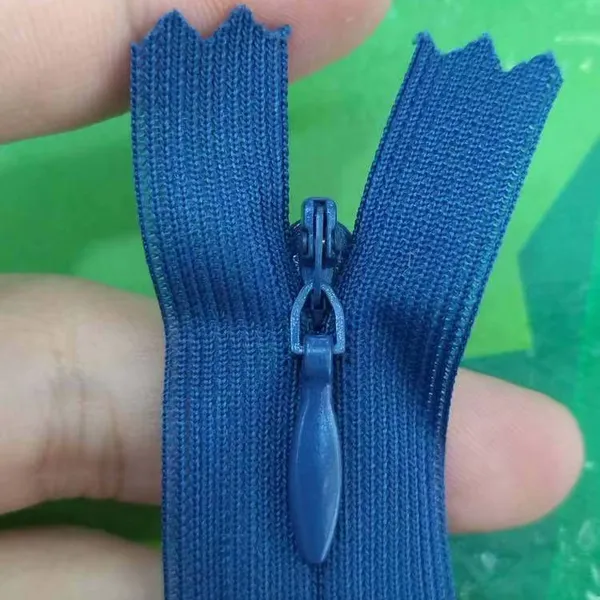 Read More
-
Metal Zipper Manufacturing: Wire Forming, Teeth Stamping and Assembly
October 29, 2026Metal zipper manufacturing turns a coil of brass or aluminium wire into a finished chain in 4 main stages. The wire is formed into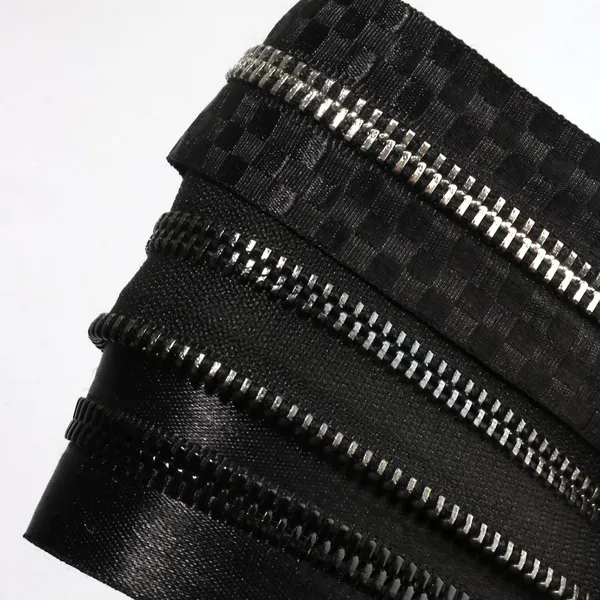 Read More
-
Zipper Strength Testing: Pull Apart, Holding and Slider Lock Tests
October 28, 2026A zipper strength test measures how much load a chain can take before it separates, and how well a slider holds that chain closed. Read More
-
Packing, Carton Loading and Incoterms for Zipper Orders
October 28, 2026Zipper export packing is the part of an order that a buyer sees last and remembers longest, because a crushed carton is the first Read More

Contact Us
Recommended Products
-
 Clothing Accessories Lead Free Brass Metal Ring Prong Snap Button With 4 Parts for Infant Baby Clothes Baby BibsUS$ 0.01 - 0.03MOQ: 5000 Sets
-
Brass Metal Stainless Steel Material Ring Prong Snap Button With 4 Parts Lead Free & Nickel Free for Infant Baby Clothes Baby Bibs Baby SuitsUS$ 0.01 - 0.03MOQ: 5000 Sets
-
Metal Grommets Eyelets Gold Eyelet for Bag Shoes and Garment AccessoriesUS$ 0.01 - 0.03MOQ: 5000 Sets
-
Cheap Price Custom Jeans Button Metal Custom Logo Metal Button for JeansUS$ 0.01 - 0.03MOQ: 5000 Sets
-
Factory Wholesale Hat Bag Clothing Press Snap Button Spring Snap Button Metal Snap ButtonsUS$ 0.03 - 0.06MOQ: 5000 Sets
-
Wholesale Plastic Round Coloured Snaps Button Press Fasteners for Baby Bibs/ Baby GarmentsUS$ 0.01 - 0.03MOQ: 50000 Sets
-
Custom EngravedCopper I Brass Metal Jeans Button Denim Clothes Jacket for Jeans DenimUS$ 0.01 - 0.03MOQ: 5000 Sets
-
17mm Open Hole Shank Button With Aluminum Nail With Logo for Jeans Jacket PantsUS$ 0.01 - 0.03MOQ: 5000 Sets
-
Eco-friendly Custom Size Plastic Snaps Plastic Snap Button for Baby Clothes, Baby BibsUS$ 0.01 - 0.03MOQ: 50000 Sets
-
12mm 15mm 17mm 20mm Four Parts Metal Brass Fastener Press Snap Button for Clothes JacketUS$ 0.03 - 0.06MOQ: 5000 Sets
-
Custom Logo Personalized High Quality Metal Press Snap Fastener Snap Buttons for Clothing Garments JacketUS$ 0.03 - 0.06MOQ: 5000 Sets
-
Custom Printing Round Press Spring Four Part Snap Button for Clothing Leather 405#17mmUS$ 0.03 - 0.06MOQ: 5000 Sets
-
OEM Garment Accessories Custom Baby Snap Button Press Metal Prong Pearl Ring Snap ButtonUS$ 0.01 - 0.03MOQ: 5000 Sets
-
Factory Stock Buttons Stainless Steel or Brass Material Colors Pearl Snap Button Prong Pearl Snap Button for Shirts ClothingUS$ 0.01 - 0.03MOQ: 5000 Sets
-
Easy Installation 12.3mm Plastic Snap Button Custom Engraved Logo For Fabric Closure HardwareNegotiableMOQ: 50000 Pieces
-
Impact Resistant 1311 T5 Plastic Snap Fastener 12.3mm Factory OEM For Fabric Closure PartsNegotiableMOQ: 50000 Pieces
-
Factory Direct Wholesale Plastic Snap Button12.3mm POM for Bed Sheets and Duvet CoversNegotiableMOQ: 50000 Pieces
-
Square Plastic Snap Button 8.5mm for Baby Garments, Soft Edge Non-Scratch, Steam Disinfection SafeNegotiableMOQ: 50000 Pieces
-
Impact Resistant Square Snap Fastener 8.5x8.5mm Plastic POM for Outer Apparel and WorkwearNegotiableMOQ: 50000 Pieces
-
Matte Finish Reinforced Plastic Snap Fastener 1311 T5 12.3mm for Bags and LuggageNegotiableMOQ: 50000 Pieces