
 Business License
Blog Categories
Nylon Zippers for Children's Wear: Safety and Small Parts
A zipper on adult clothing is a fastener, and a zipper on children's clothing is a fastener with a safety file attached to it. A nylon zipper for kids wear is chosen because the chain is soft, the tooth is plastic and the part count is low, yet those advantages have to be proved against a test rather than asserted. The buyer usually asks for the test record before the price.
This article explains what makes a child safe zipper, sets out what a zipper small parts test measures and at what figures, and lists the points a factory has to control on a children's wear order. It closes with the documents a buyer should hold for a shipment.
1. Why a Nylon Zipper for Kids Wear Is Specified Differently
A nylon zipper for kids wear is specified differently because the failure that matters is not a broken zip but a detached part. A slider or a puller that comes away from a garment can be swallowed, and the regulations that govern that risk apply to a zip as they do to a button. The test therefore looks at attachment rather than at strength in use.
The 3 qualities that make a coil zip suitable are softness, a plastic tooth and a short part list. A coil chain bends away under a fall where a metal chain would hold a sharp edge. A molded or coil tooth has no plating to flake, and the assembly carries fewer separate parts than a metal chain of the same size.
The zip still has to pass the same test as any other small part on the garment, which is why a supplier is asked for a test report rather than a statement. Difei Button (Guangzhou) Co Ltd keeps a small parts report against each children's wear part number, so the figure is available at the quotation stage rather than after an order.
2. What Makes a Child Safe Zipper
A child safe zipper meets 4 conditions, and they are attachment, edge finish, chemical release and part size. The slider and the puller must stay attached under a set pull and a set torque, the finished part must have no sharp point or cutting edge, and any metal component must pass a nickel release test. Part size is controlled by the garment design rather than by the zip itself.
Attachment is proved by the 2 mechanical tests described in the next section. Edge finish is proved by inspection and by a feel test with a probe. Chemical release is proved by a laboratory test on the plated parts, and the figure is quoted as a release rate per unit area per week rather than as a content figure.
Part size matters where the zip sits on a garment for a small child. A puller long enough for an adult hand can be a hazard on a garment for a child under 3 years. A shorter tab or a fabric pull is used instead, and the change is written on the specification rather than left to the factory.
3. The Zipper Small Parts Test: What It Measures
A zipper small parts test measures 2 things: the force needed to pull a part away and the torque needed to twist it off. A part that survives both is judged attached, and a part that comes away is judged a small part and has to fit a size gauge. The gauge is a cylinder that represents a child's throat, and a part that fits inside it fails.
| Test | Figure applied | Duration |
|---|---|---|
| Tension | 70 newtons | 10 seconds |
| Torque | 0.34 newton metre | 10 seconds |
| Nickel release | 0.5 microgram per square centimetre per week | 7 days |
| Lead in substrate | 100 parts per million | Not applicable |
The tension test is applied along the axis of the pull, which is the direction a child would pull. The torque test is applied about the same axis and is the one that catches a puller fitted on a hinge that was not closed properly. Both are run on a sample of finished garments rather than on loose parts.
The figures above are the ones used in the main children's product rules in Europe, the United States and China. A buyer who names a market is naming a set of figures, so the 2 should be quoted together on the order. A test report that does not name the market is hard to use in a claim.
4. Puller Detachment and the Zipper Small Parts Test
The puller is the part most often caught by a zipper small parts test, because it hangs on a hinge with a clearance that has to allow movement. A hinge that is too tight will not let the tab swing, and one that is too loose will release the tab under a pull of about 40 newtons. The clearance is measured in tenths of a millimetre and is set at the die.
The slider body is the second part at risk, and it fails less often because it is closed onto the chain by the machine. A slider that has been fitted by hand and not fully crimped can be lifted off with a firm pull. That fault shows at once when the tension test is applied to the finished garment.
The stop is the third part, and a crimped metal top stop on a soft coil is the failure point on a cheap build. A moulded stop on a coil holds better because it forms around the cord as well as the coil. On a children's wear order the stop type is confirmed against the test record rather than chosen on price.
5. Test Figures: What a Zipper Small Parts Test Requires
The figures a zipper small parts test requires depend on the age group the garment is intended for, because the rules separate children under 3 years from those at 3 years and above. A garment for a child under 3 years is treated as a toy in several markets and carries the full set of tests. A garment for an older child carries a lighter set.
The 3 year line also decides whether a small part has to fit the gauge. A part that detaches from a garment for an older child is still a hazard, yet it is judged against a different rule. That is why a buyer has to state the age group on the order rather than leave it to be inferred from the style.
The number of pieces tested is set by the standard, and a normal draw is 3 to 5 garments from a production lot. A failure on any one piece fails the lot, so the draw is taken after the line has settled rather than from the first pieces. A test on first off samples is used to prove the design rather than to release a lot. Difei files the result against the part number for every lot tested.
6. Nickel, Sharp Edges and a Child Safe Zipper
A child safe zipper also has to control release from metal parts, and the figure quoted is the rate at which nickel leaves the surface. The limit is 0.5 microgram per square centimetre per week, measured on the plated component rather than on the whole zip. A slider that is plated to that figure is marked as nickel free on the specification.
Sharp edges and points are checked by inspection and by a probe test on the finished part. A coil chain usually passes easily, because the tooth is rounded and the tape covers the ends. A metal chain can leave a burr on the tooth where it was sheared at the stamping press, and a burr is a sharp edge under the rule.
The stops are checked in the same pass, because a crimped metal stop can leave a small tag of metal at the fold. A tag of about 0.2 mm will fail a probe test. A moulded stop has no such tag, which is a second reason to prefer it on a children's wear order.
7. Nylon Coil and a Nylon Zipper for Kids Wear
A nylon coil chain suits a nylon zipper for kids wear for 4 practical reasons, and they are softness, low mass, no plating and quiet running. The chain flexes under a hand rather than holding an edge, and the assembly weighs about half what a metal chain of the same size weighs. That last point matters on a light fabric that would otherwise be pulled out of shape.
The coil also takes a moulded stop that forms over the cord and the coil together, which is the strongest of the stop builds. There is no plating to flake, so the nickel release question is answered by the slider alone rather than by the chain. The slider is then specified as nickel free if the style needs it.
The chain runs quietly, which is a small point on a garment and a real one on a sleeping bag or a padded jacket. A metal chain on a lightweight padded garment clicks against the tape as it moves. Difei notes the chain type on the part record so the same build is repeated on a reorder.
8. Documenting a Child Safe Zipper for a Buyer
Documenting a child safe zipper is a matter of holding 3 records: the small parts report, the material declaration and the approved sample. The small parts report names the figures applied and the market they come from, and it is issued per part number. The material declaration covers the plating and the colorants used on the tape.
The approved sample is kept for reference against the report, because a report describes a part that was tested rather than a part that will ship. A change of slider supplier or a change of plating invalidates the report, and the change has to be notified. A buyer who holds both can compare an incoming lot against them.
The records are then matched to each shipment by lot number. Difei keeps the report, the declaration and the approved sample together for 12 months, and the file is referenced on the packing list. A buyer who needs the file for a customs or retail audit can pull it by part number.
9. Frequently Asked Questions
9.1 Why is a nylon zipper for kids wear preferred?
A nylon zipper for kids wear is preferred because the chain is soft, light and free of plating. The coil flexes under a hand rather than holding a sharp edge, and the assembly weighs about half what a metal chain of the same size weighs, which matters on a light fabric. A moulded stop forms over the cord and the coil together, so it holds better than a crimped stop on a soft chain. There is also no plated chain surface to release nickel.
9.2 What is a child safe zipper required to pass?
A child safe zipper is required to pass tests on attachment, edge finish, chemical release and part size. The slider and puller must survive a tension pull of 70 newtons and a torque of 0.34 newton metre, each held for 10 seconds, without coming away. The finished part must have no sharp point or cutting edge, and any plated part must release no more than 0.5 microgram of nickel per square centimetre per week. A detached part also has to fit a size gauge.
9.3 What does a zipper small parts test involve?
A zipper small parts test applies a measured pull and a measured twist to any part that could detach. The pull is 70 newtons along the axis of the part and the twist is 0.34 newton metre, each held for 10 seconds on a sample of finished garments. A part that comes away is then checked against a size gauge that represents a child's throat. A normal draw is 3 to 5 finished garments taken from a production lot once the line has settled into its rhythm.
9.4 Which part of a zipper fails a small parts test most often?
The puller fails a small parts test most often, because it hangs on a hinge with a clearance that has to allow movement. A hinge that is too loose releases the tab under a pull of about 40 newtons, while one that is too tight stops the tab swinging. A slider that was crimped by hand rather than by machine is the second most common failure. A crimped metal top stop on a soft coil is the third, which is why a moulded stop is used instead.
Recently Posted
-
Zipper Sliders That Jam or Skip: Causes and Prevention
October 30, 2026Two faults account for most zipper complaints on a sewn product: the slider that will not travel, and the chain that opens behind Read More
-
Zipper Length Tolerance: Specifying Cut Length on a Purchase Order
October 30, 2026A zipper is bought by length, and the length on the bag is rarely the length the maker wrote on the purchase order. The gap betwee Read More
-
Nylon Zipper Variants: Coil, Invisible and Water-Repellent Tapes
October 29, 2026Almost every zip sold as a nylon zip is built on the same coil chain, and the differences between products sit in the tape rather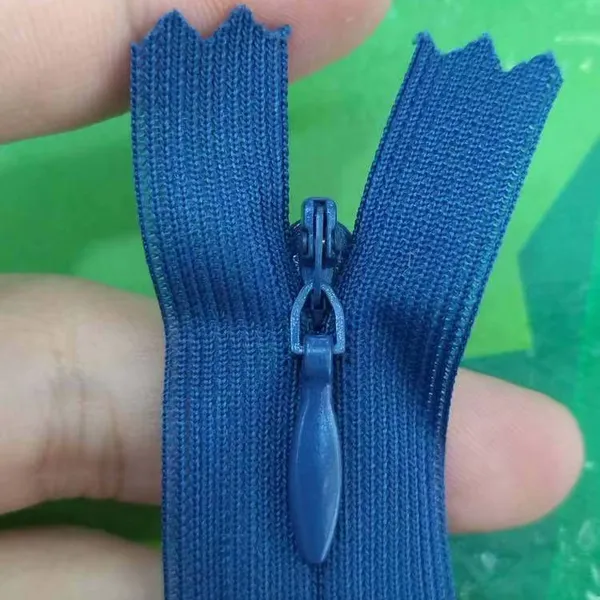 Read More
-
Zipper Tape and Teeth Materials: What Each Layer Is Made Of
October 29, 2026A zipper is built from 4 material layers that are chosen together: the woven tape, the teeth, the sewing thread and the coating ap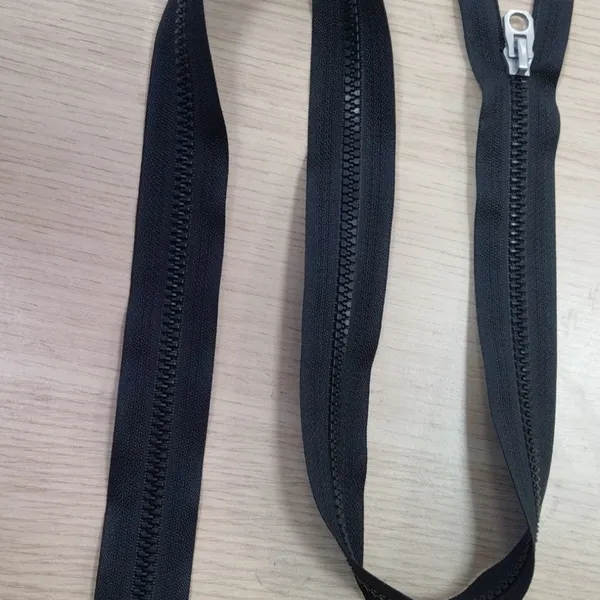 Read More

Contact Us
Recommended Products
-
 Clothing Accessories Lead Free Brass Metal Ring Prong Snap Button With 4 Parts for Infant Baby Clothes Baby BibsUS$ 0.01 - 0.03MOQ: 5000 Sets
-
Brass Metal Stainless Steel Material Ring Prong Snap Button With 4 Parts Lead Free & Nickel Free for Infant Baby Clothes Baby Bibs Baby SuitsUS$ 0.01 - 0.03MOQ: 5000 Sets
-
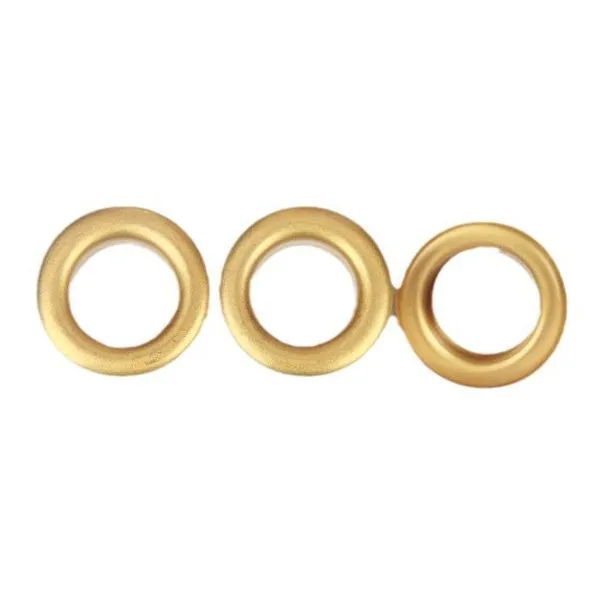
Metal Grommets Eyelets Gold Eyelet for Bag Shoes and Garment AccessoriesUS$ 0.01 - 0.03MOQ: 5000 Sets
-
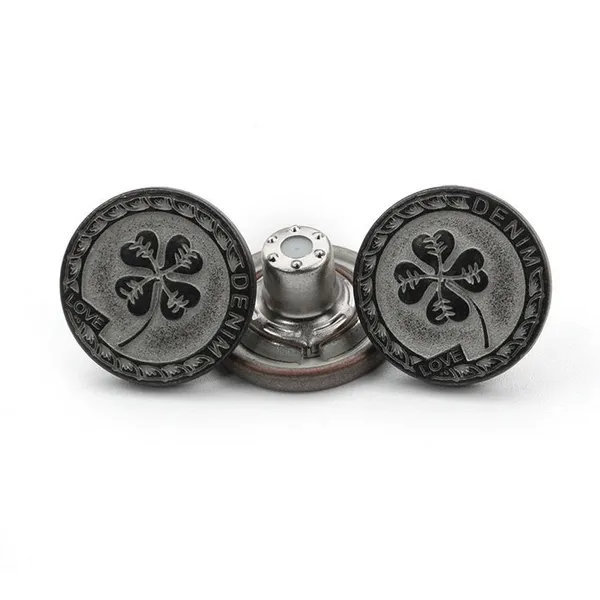
Cheap Price Custom Jeans Button Metal Custom Logo Metal Button for JeansUS$ 0.01 - 0.03MOQ: 5000 Sets
-
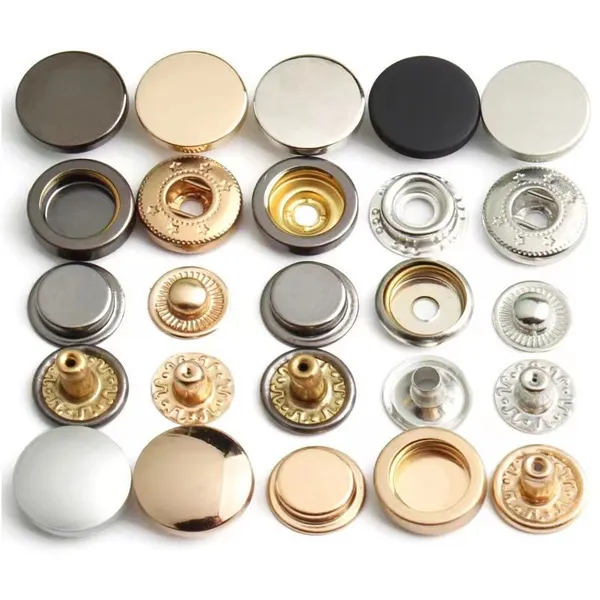
Factory Wholesale Hat Bag Clothing Press Snap Button Spring Snap Button Metal Snap ButtonsUS$ 0.03 - 0.06MOQ: 5000 Sets
-
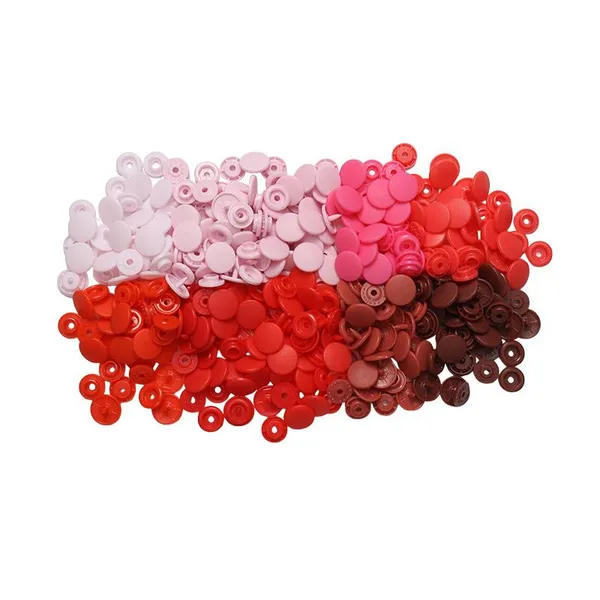
Wholesale Plastic Round Coloured Snaps Button Press Fasteners for Baby Bibs/ Baby GarmentsUS$ 0.01 - 0.03MOQ: 50000 Sets
-
Custom EngravedCopper I Brass Metal Jeans Button Denim Clothes Jacket for Jeans DenimUS$ 0.01 - 0.03MOQ: 5000 Sets
-
17mm Open Hole Shank Button With Aluminum Nail With Logo for Jeans Jacket PantsUS$ 0.01 - 0.03MOQ: 5000 Sets
-
Eco-friendly Custom Size Plastic Snaps Plastic Snap Button for Baby Clothes, Baby BibsUS$ 0.01 - 0.03MOQ: 50000 Sets
-
12mm 15mm 17mm 20mm Four Parts Metal Brass Fastener Press Snap Button for Clothes JacketUS$ 0.03 - 0.06MOQ: 5000 Sets
-
Custom Logo Personalized High Quality Metal Press Snap Fastener Snap Buttons for Clothing Garments JacketUS$ 0.03 - 0.06MOQ: 5000 Sets
-
Custom Printing Round Press Spring Four Part Snap Button for Clothing Leather 405#17mmUS$ 0.03 - 0.06MOQ: 5000 Sets
-
OEM Garment Accessories Custom Baby Snap Button Press Metal Prong Pearl Ring Snap ButtonUS$ 0.01 - 0.03MOQ: 5000 Sets
-
Factory Stock Buttons Stainless Steel or Brass Material Colors Pearl Snap Button Prong Pearl Snap Button for Shirts ClothingUS$ 0.01 - 0.03MOQ: 5000 Sets
-
Long Lasting Smooth Edge 1513 POM Snap Button 14.6mm for Outer Apparel and JacketsNegotiableMOQ: 50000 Pieces
-
Bulk Supply OEM Custom 1513 Plastic Snap Button 14.6mm for DIY Crafts and Sewing KitsNegotiableMOQ: 50000 Pieces
-
Custom Logo Matte Finish Plastic Snap Button 14.6mm for Canvas Bags and TotesNegotiableMOQ: 50000 Pieces
-
Soft Touch Easy Grip 14.6mm Plastic Snap Button POM for Baby Bibs and Feeding BibsNegotiableMOQ: 50000 Pieces
-
Washable Colorfast 1513 Plastic Snap Fastener 14.6mm POM for Bed Sheets and Duvet CoversNegotiableMOQ: 50000 Pieces
-
Easy Installation 12.3mm Plastic Snap Button Custom Engraved Logo For Fabric Closure HardwareNegotiableMOQ: 50000 Pieces