
 Business License
Sourcing Jeans Buttons: A Buyer Checklist Before Ordering
Denim hardware is a small line on a cost sheet and a large source of complaints when it goes wrong, because a jeans button cannot be replaced without leaving a mark on the placket. The part carries the full opening load of a garment built from heavy fabric, and it has to survive stone washing, enzyme washing and a plating bath before it ever reaches a customer. This guide sets out the checks that belong before an order is placed, covering how to read a jeans button supplier, what the order paperwork has to state, and where the money actually sits in denim hardware sourcing.
The material below follows the order of a real project, from screening a factory through sampling, specification, testing and the records that protect a repeat run.
1. Jeans Button Supplier Screening: The First Five Questions
A jeans button supplier can be screened with five questions that cost nothing to ask and reveal most of what matters. The answers show whether the factory runs its own plating line, whether it controls its own dies, and whether it understands the washing process that the garment will go through after the closure is attached.
| Question | Why it matters | Warning sign |
|---|---|---|
| Who owns the die? | Decides whether you can move the part later | Die held by the factory, never named in writing |
| Is plating in house? | Affects lead time and colour control | Subcontracted with no stated bath control |
| What is the minimum order? | Sets the real cost of a trial run | A figure quoted before the part is specified |
| How is the part inspected? | Shows whether quality has a method | Visual check described with no figures |
| What happens on a repeat order? | Decides whether colour survives a year | No sealed sample kept from the first run |
Two of the five answers carry more weight than the rest. Die ownership decides whether a brand is free to change factory at a later date, and a sealed first sample decides whether the second order matches the first. A supplier that answers both cleanly is worth a trial even if the price sits slightly above the lowest quotation received.
2. Jeans Button Order Checklist: Specifications to Confirm
A jeans button order checklist is worth building once and reusing on every project, because the same eight figures decide whether a shipment works. The list covers the part dimensions, the plating, the backing style and the pull force that the garment needs. Writing all eight on one sheet removes the round of messages that usually follows a first purchase order.
| Item | Typical range | Why it is on the list |
|---|---|---|
| Cap diameter | 14 - 20 mm | Sets the visual footprint on the waistband |
| Cap height | 3 - 6 mm | Must clear the belt and the topstitching |
| Post length | 8 - 12 mm | Matched to denim weight and waistband layers |
| Post wall thickness | 0.8 - 1.2 mm | Decides how the roll resists pull-out |
| Backing style | Ring or claw plate | Sets the inner face against the body |
| Plating | Antique brass, nickel, black | Sets colour and nickel release behaviour |
| Pull force | 150 - 300 N | Must exceed the load the garment will see |
| Wash condition | Stone, enzyme, bleach | Decides whether the finish survives processing |
Post length is the figure most often taken from a stock table and most often wrong. A 12 oz denim waistband with a folded seam and a leather patch can run to 5 mm of thickness before the closure is set, while the same waistband without the patch runs to 3 mm. Measuring the stack where the part will sit takes a few minutes and prevents a shipment that fits the fabric but not the seam. Difei Button (Guangzhou) Co Ltd measures the stack on the actual waistband before quoting a post length, so the figure on the drawing matches what the line will set.
3. Denim Hardware Sourcing: Where the Cost Sits
Cost in denim hardware sourcing divides into material, plating, tooling and handling, and the share held by each one changes with order size. Metal content usually runs between 40 percent and 55 percent of the piece price on a plated brass part. Plating adds 15 percent to 25 percent depending on the finish and the number of layers. Tooling is a fixed cost that is spread over the order, so the same die that adds 20 percent to a 10,000 piece run adds 2 percent to a 100,000 piece run.
| Cost element | Share of piece price | Behaviour with volume |
|---|---|---|
| Metal and forming | 40 - 55% | Falls slowly with volume |
| Plating and finish | 15 - 25% | Broadly fixed per piece |
| Tooling | Fixed cost | Spread across the order |
| Inspection and packing | 5 - 12% | Rises if hand sorting is needed |
Two quotations for the same part can differ by a wide margin without either one being unfair, because the assumptions behind them differ. One may price a 0.5 micron plating and the other a 1 micron coating, and the two parts will age differently after a season of wear. Comparing quotations line by line against the checklist from the previous section is the quickest way to see where the gap comes from.
4. Jeans Button Supplier Sampling: What a Sample Proves
A sample from a jeans button supplier proves the die exists and that the factory can form the part. It does not prove colour consistency across a batch, pull force on the finished garment, or how the plating behaves after a wash cycle. Treating a sample as a full approval is the single most common cause of a first shipment that disappoints.
A useful sampling round asks for three things beyond the part itself. Ask for the same part from two plating batches so a colour band can be seen. Ask for a pull test figure on the actual waistband fabric rather than on a test coupon. Ask for a sectioned piece showing the post roll, because a roll that is complete on the surface can still be short at the shoulder.
A denim brand that skipped the second plating batch approved a sample under office lighting and then received a shipment whose caps read two shades apart in daylight. The factory had plated across three shifts, and no colour band had ever been agreed. Agreeing a band at sampling would have caught the drift before the goods were made.
5. Jeans Button Order Checklist for Plating and Finish
Plating deserves its own section of the jeans button order checklist, because it drives both appearance and compliance. Nickel release is regulated in the European Union and in several other markets, and a part that touches the skin for prolonged periods has to meet a release limit rather than a content limit. Antique brass and black oxide finishes avoid the question entirely, which is one reason they remain common on denim.
Corrosion testing is the second plating question. A salt spray test of 24 hours is a reasonable floor for a garment closure, and 48 hours to 72 hours suits a part that will see regular contact with moisture. A finish that passes at 24 hours and fails at 72 hours is acceptable on a fashion part and unsuitable on workwear, so the target has to be set against the end use rather than against a generic standard.
Thickness sits behind both figures. A decorative coating of 0.3 micron to 0.5 micron wears through at the cap rim within a season on a part that is handled daily, while a coating of 1 micron or more holds its colour far longer. The thickness is worth stating on the drawing rather than leaving to the plating shop. Difei Button sets the plating thickness and the salt spray target on the same sheet, so the finish and the test figure are agreed at the same time rather than in two conversations.
6. Denim Hardware Sourcing: Lead Times and Order Quantity
Lead time in denim hardware sourcing breaks into four blocks, and just the last one belongs to the ocean. Sampling runs 7 to 15 days once a drawing is agreed, die making adds 10 to 20 days on a new shape, production runs 20 to 35 days depending on plating capacity, and transport adds 25 to 40 days by sea. A brand planning a season backwards from a delivery date has to include all four blocks rather than the production figure alone.
Order quantity interacts with lead time in a way that catches buyers out. A quantity below the factory minimum is often produced on a shared line, which means the start date depends on another customer's schedule. Paying for a dedicated run costs more per piece but removes that dependency, and on a launch date the difference is usually worth the money.
Spare quantity is the last item to settle. Ordering 3 percent to 5 percent above the garment requirement covers setting losses on the line and any pieces damaged in washing. A denim factory that runs out of closures mid-order faces a stoppage that costs far more than the spare pieces would have.
7. Pull Testing on a Jeans Button Order Before You Commit
Pull testing on a jeans button order is the check that connects the specification to the garment, and it should run on the finished waistband rather than on a bare coupon. The test pulls the cap away from the panel at a steady rate and records the peak figure, which for a well-set part on 12 oz denim usually lands between 150 N and 300 N. A coupon test reads higher because the coupon does not reproduce the seam, the fold or the interlining.
The washed figure matters more than the fresh one on denim, because the garment will be processed after the closure is attached. Stone washing and enzyme washing both soften the fabric around the post, and a part that holds 250 N when fresh can drop to 180 N after processing. Running the test on a washed sample shows the number the customer will actually experience.
Difei Button (Guangzhou) Co Ltd runs the pull test on a finished waistband sample after the intended wash process, and reports the peak figure together with the clamp distance and the pull rate so the result can be repeated.
8. Contracts and Records in Denim Hardware Sourcing
Records decide whether a good first order can be repeated, and they cost almost nothing to put in place. Four documents carry most of the value, and all four belong with the purchase order rather than in a folder somewhere else.
| Record | What it fixes | Kept by |
|---|---|---|
| Sealed first sample | Colour, dimension and finish baseline | Both parties |
| Approved drawing | Dimensions with tolerances and reference surfaces | Both parties |
| Colour band | The accepted range around the approved shade | Both parties |
| Die ownership note | Who may use and move the tool | Both parties |
The colour band is the record most often missing and the one that prevents the most argument. A single approved sample sets a point, and no plating line in the world holds a point across a production run. A band of two accepted samples, one at each edge of the range, gives an inspector something to measure against and gives the factory room to run a bath without a rejection.
Difei Button (Guangzhou) Co Ltd keeps a sealed sample and a die record for each denim closure it produces, and attaches both to the repeat order so a second run starts from a known baseline.
9. Frequently Asked Questions
9.1 What should I check before choosing a jeans button supplier?
Ask who owns the die, whether plating is handled in house, what the minimum order is, how the part is inspected, and what happens on a repeat order. Die ownership and a sealed first sample carry the most weight of the five, because they decide whether a brand can move the part later and whether a second order matches the first. A supplier that answers all five in writing is worth a trial run even at a slightly higher price.
9.2 What belongs on a jeans button order checklist?
The list needs the cap diameter and height, the post length and wall thickness, the backing style, the plating, the pull force target and the wash process the garment will see. Post length causes the most trouble, since it has to be measured against the waistband stack rather than taken from a stock table. Adding a tolerance band to each dimension turns the list into something a factory can inspect against. A written list also shortens the first article inspection, because the inspector knows which figures carry the most weight on the drawing.
9.3 How long does denim hardware sourcing take?
Sampling runs 7 to 15 days once the drawing is agreed, die making adds 10 to 20 days for a new shape, production takes 20 to 35 days, and sea transport adds another 25 to 40 days. Planning against the production figure alone is what causes most late deliveries. A brand working backwards from a launch date should add the four blocks together and then allow a margin for the plating queue. Die making and plating capacity are the two blocks most likely to slip when a factory is busy, so each deserves a buffer of its own.
9.4 Why test a jeans button after washing?
Denim is usually stone washed or enzyme washed after the closure is attached, and both processes soften the fabric around the post. A part that holds 250 N when fresh can drop to around 180 N after processing, so a fresh test overstates what the customer will experience. Testing a washed waistband sample gives the figure that predicts field behaviour, and it also shows whether the plating survived the process without a colour shift. A coating of 0.3 micron can wear through at the cap rim during the same process, which is why the washed sample is checked for colour as well as for strength.
Recently Posted
-
Buttons for Bedding, Pillow Covers and Home Textiles
September 28, 2026A home textile button lives a harder life than a garment closure, because it is unfastened to wash and refastened when the item go Read More
 -
Specifying Button Tolerances on a Purchase Order
September 28, 2026Two shipments can both match the drawing and still fail to work together, because a nominal figure says nothing about where inside Read More
 -
Ordering Custom Badges: Tooling, Backing and Approval Steps
September 28, 2026A custom metal badge order fails for one of three reasons, and none of them is the price of the metal. The artwork is approved bef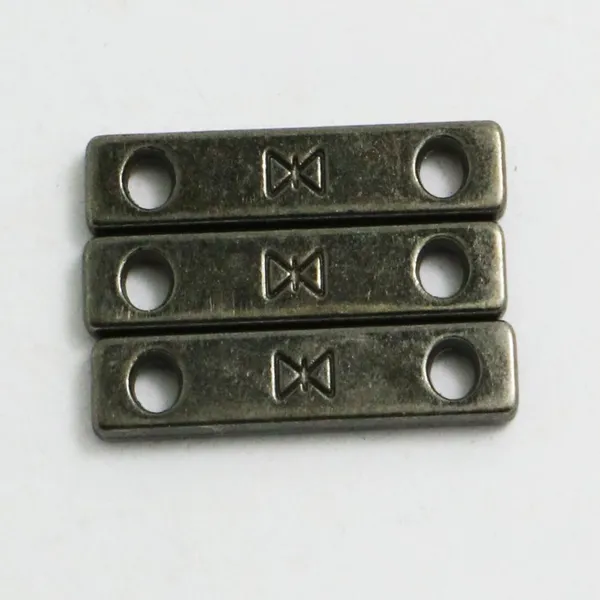 Read More
 -
Shank Button vs Flat Button: Matching Construction to Garment Weight
September 28, 2026The shank button vs flat button decision looks like a styling question and behaves like a structural one, because the two parts ha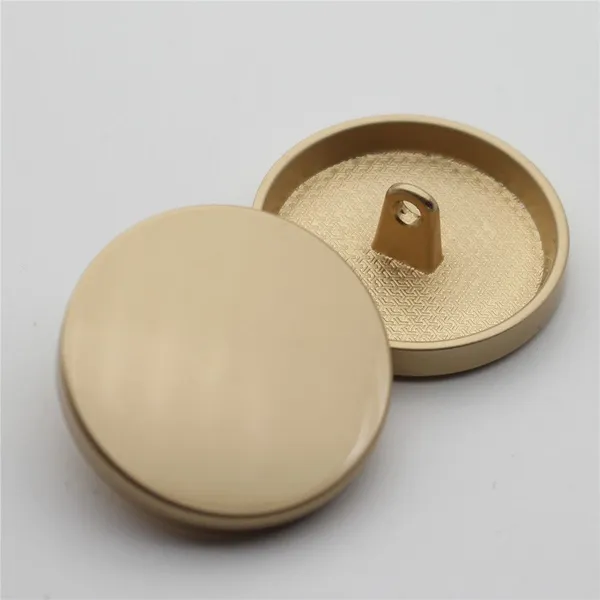 Read More

Contact Us
Recommended Products
-
 Clothing Accessories Lead Free Brass Metal Ring Prong Snap Button With 4 Parts for Infant Baby Clothes Baby BibsUS$ 0.01 - 0.03MOQ: 5000 Sets
 -
Brass Metal Stainless Steel Material Ring Prong Snap Button With 4 Parts Lead Free & Nickel Free for Infant Baby Clothes Baby Bibs Baby SuitsUS$ 0.01 - 0.03MOQ: 5000 Sets
-
Metal Grommets Eyelets Gold Eyelet for Bag Shoes and Garment AccessoriesUS$ 0.01 - 0.03MOQ: 5000 Sets
-
Cheap Price Custom Jeans Button Metal Custom Logo Metal Button for JeansUS$ 0.01 - 0.03MOQ: 5000 Sets
-
Factory Wholesale Hat Bag Clothing Press Snap Button Spring Snap Button Metal Snap ButtonsUS$ 0.03 - 0.06MOQ: 5000 Sets
-
Wholesale Plastic Round Coloured Snaps Button Press Fasteners for Baby Bibs/ Baby GarmentsUS$ 0.01 - 0.03MOQ: 50000 Sets
-
Custom EngravedCopper I Brass Metal Jeans Button Denim Clothes Jacket for Jeans DenimUS$ 0.01 - 0.03MOQ: 5000 Sets
-
17mm Open Hole Shank Button With Aluminum Nail With Logo for Jeans Jacket PantsUS$ 0.01 - 0.03MOQ: 5000 Sets
-
Eco-friendly Custom Size Plastic Snaps Plastic Snap Button for Baby Clothes, Baby BibsUS$ 0.01 - 0.03MOQ: 50000 Sets
-
12mm 15mm 17mm 20mm Four Parts Metal Brass Fastener Press Snap Button for Clothes JacketUS$ 0.03 - 0.06MOQ: 5000 Sets
-
Custom Logo Personalized High Quality Metal Press Snap Fastener Snap Buttons for Clothing Garments JacketUS$ 0.03 - 0.06MOQ: 5000 Sets
-
Custom Printing Round Press Spring Four Part Snap Button for Clothing Leather 405#17mmUS$ 0.03 - 0.06MOQ: 5000 Sets
-
OEM Garment Accessories Custom Baby Snap Button Press Metal Prong Pearl Ring Snap ButtonUS$ 0.01 - 0.03MOQ: 5000 Sets
-
Factory Stock Buttons Stainless Steel or Brass Material Colors Pearl Snap Button Prong Pearl Snap Button for Shirts ClothingUS$ 0.01 - 0.03MOQ: 5000 Sets
-
Resin Snap Buttons 9mm POM Heavy Duty Closure Parts for Baby Bibs and Textile Handmade Sewing ProductionNegotiableMOQ: 50000 Sets
-
13.8mm x 7.5mm Plastic Grommet Kit for Apparel and Garment Lacing, Lightweight and FlexibleNegotiableMOQ: 5000 Sets
-
Clear Plastic Eyelet and Washer Set Two‑piece Fastener for Tote Bags Canvas and Fabric Hole Reinforcement ApplicationsNegotiableMOQ: 5000 Sets
-
13.8mm x 7.5mm Clear Plastic Eyelet and Washer Set Durable Two‑part Hardware for Fabric Reinforcement and Bag Making ApplicationsNegotiableMOQ: 5000 Sets
-
Two‑Piece Plastic Grommet and Washer Set 13.8mm x 7.5mm Clear Hardware for Banner Craft Works and Light‑weight Textile ProductionNegotiableMOQ: 5000 Sets
-
Clear Plastic Eyelet and Washer Set 13.8mm x 7.5mm for Tarps, Banners, and Awning Fabric ReinforcementNegotiableMOQ: 5000 Sets