
 Business License
Metal Zipper Capability at Difei Button: From Teeth to Slider Assembly
Difei Button began as a maker of snaps, rivets and eyelets for garment factories, and the metal working that those parts require sits close to the work a metal zipper needs. Teeth are formed, plated and fixed to a tape; sliders are die cast and finished; both are checked against a written standard before they ship. That overlap is why a Metal Zipper Manufacturer able to hold a specification is a natural extension of the button work rather than a separate trade.
This page sets out what Difei Button (Guangzhou) Co Ltd does on a metal chain, how the stages sit under one roof at a zipper factory in Guangzhou, and what a buyer receives when a custom metal zipper order is placed. It is written for sourcing and product teams who need to know whether a supplier can hold a tolerance over several seasons.
1. What a Metal Zipper Manufacturer Has to Control
A Metal Zipper Manufacturer controls four variables that decide whether a chain works in the field. The tooth profile sets how smoothly the chain runs, the pitch sets whether a slider will engage, the plating sets how the part looks after a wash, and the tape sets whether the teeth stay in line. Miss any one of them and the finished garment will fail in a way that looks like someone else's fault.
Control begins at the drawing rather than at the machine. A specification that names the chain size, the tooth family, the plating and the tape gives the production team something to check against, and it gives the buyer something to claim against. A specification that describes the part as strong and gold gives nobody anything.
The third variable worth naming is consistency. A single good chain proves very little, while ten thousand chains that measure within 0.3 mm of one another prove that the process is under control. That is the number a repeat buyer is really paying for.
2. Metal Zipper Manufacturer: From Wire to Finished Chain
Production begins with wire, which arrives in coils and is drawn to the diameter the tooth size requires. A size 5 tooth is formed from wire of roughly 1.4 mm, while a size 10 tooth starts from about 2.6 mm. The wire is then cut and formed in a press that shapes the tooth profile in a single stroke.
Formed teeth are fed onto the tape at a controlled pitch, and the chain is inspected as it runs. Tape feed tension is monitored because a change there shows up as a taper in the finished chain, and a tapered chain will jam a slider long before it fails a dimensional check.
| Stage | What is controlled | Typical check |
|---|---|---|
| Wire drawing | Diameter | Gauge at three points per coil |
| Tooth forming | Profile and height | First article plus hourly sample |
| Fixing to tape | Pitch and tension | Chain run test, width measured |
| Plating | Colour and thickness | Colour card under fixed light |
| Assembly | Slider and stops | End to end run, 100 percent |
The table is short because a long process is usually described by five checkpoints rather than by twenty. What matters is that each checkpoint has a written limit, and that the limit is the same on a repeat order as it was on the first.
3. Zipper Factory Guangzhou: Production Under One Roof
Working with a zipper factory Guangzhou based has a practical advantage that is easy to measure, which is that the stages sit within a few hundred metres of one another. Plating, assembly and packing can be sequenced without a truck journey between them, and a problem found at assembly can be taken back to forming the same day rather than the same week.
The port is the second advantage. Guangzhou is a major garment accessories hub in South China, and goods can reach either the sea terminal or the airport without an inland leg. That shortens the last stage of an order, which is the one that most often decides whether a delivery lands on time.
The third advantage is the supplier base around the city. Tape, wire, plating chemistry and packaging are all available locally, so a change of tape colour or a new puller does not wait on an import. Difei Button works with that local base and holds the first article approval in house, so the responsibility for the finished part does not move around.
4. Custom Metal Zipper Work: Tooling and Sampling
A custom metal zipper order divides into tooling and sampling, and the two run on different clocks. Tooling covers a shaped puller, a printed tape or a special tooth, and it is a one-off cost that sits in front of production. Sampling covers the first articles that prove the tool and the process can make the part.
Sampling for Difei Button means a first article of at least 3 pieces per part number, measured against the drawing and approved in writing before the run starts. The sample set is retained with the order number, which means a claim six months later can be answered from the file rather than from memory.
The approval step is where buyers are most often surprised. A shaped puller usually adds a tooling stage of two to three weeks on a first order, and a printed tape adds a plate that has to be proofed. Neither is avoidable, and both are worth writing into the plan at enquiry stage.
5. A Zipper Factory Guangzhou Buyers Can Visit
An audit visit is a reasonable request for any long order, and a zipper factory in Guangzhou is usually reachable within a day for a buyer who is already in the region. A visit that takes half a day can cover more ground than a document pack, because a running line answers questions that a process chart cannot.
Four things are worth looking at on a visit. The incoming wire and tape store, the first article bench, the plating line and its control records, and the packing area where cartons are labelled. Those four show whether the standard written on paper is the standard used on the floor.
A buyer who cannot travel can ask for the same evidence in another form. Photographs of a first article with a scale, the retained sample from the last lot of a similar part, and the packing specification are all portable and all checkable. Difei Button shares those records on request so that a remote buyer can assess the same points.
6. Quality Control Behind Every Custom Metal Zipper
Quality control on a custom metal zipper runs through three gates, and each one asks a different question. Incoming inspection asks whether the wire and tape match the order, first article approval asks whether the tool can make the part, and final inspection asks whether the run did make the part.
The final gate is the one that catches drift. Chain width is measured at three places along a sample, the chain is run end to end with its slider, and the plating colour is compared with the approved card under a fixed lamp. Those three checks take about ten minutes per lot and cover the failures that reach a sewing line.
Testing support is available where a garment programme requires it. Difei Button can arrange Oeko-Tex Standard 100 certification, needle detection and a 90N pull test, and holds the results with the order file. The parts are also made lead free and nickel free where the brief calls for it, which matters for childrens wear and for markets with tight restrictions on metal content.
7. Metal Zipper Manufacturer Support After Delivery
A Metal Zipper Manufacturer is judged after delivery as much as before it. The first question a buyer asks when something goes wrong is whether the part matches the approved sample, and the answer depends on whether a sample was retained and a record kept. Difei Button keeps both, which turns most disputes into a comparison rather than an argument.
Where a fault is confirmed, the response follows a fixed route. The affected lot is identified from the batch record, the cause is traced to a stage, and the corrective step is written into the process before the next run. A supplier who can close a case this way keeps a buyer's sewing line moving while the paperwork catches up.
There is a broader point behind that habit. Difei serves more than a thousand customers and reports a repeat rate above 98 percent, and the pattern behind that figure is not price. It is a buyer knowing what will arrive, which is what a retained sample and a written first article actually deliver.
8. Custom Metal Zipper Orders at Difei Button
A custom metal zipper order at Difei Button starts with six lines: chain size, material and finish, tape width and colour, cut length, slider and puller, and quantity split by size and colour. Those lines come back with the quotation, so the assumptions behind the price are visible before anything is ordered. Difei sends them back as a filled sheet rather than as a list of questions.
The order then follows a fixed path. First article is submitted and approved, the run is scheduled against the delivery date, final inspection covers the three gates described above, and the packing is confirmed against the destination. Each step produces a record that travels with the shipment.
Two cases show how that works in practice. Not long ago a bag maker needed a size 8 chain with a shaped puller for an autumn range, and the tooling stage was flagged at enquiry so the calendar allowed for it; the first order shipped without a schedule change. Some time ago a workwear buyer moved a leg opening from a size 5 to a size 8 chain after a run of split returns, and the change was approved on a first article of 3 pieces within a week.
For a buyer planning a new zipper programme, the useful first step is a brief rather than a price. Difei Button (Guangzhou) Co Ltd works from the same sampling and first article process it uses on its button lines, so a single sheet can cover a full trim pack. Difei can quote a metal chain on its own or as part of a mixed order that includes snaps, rivets and eyelets. That is the practical meaning of one supplier for a trim pack.
9. Frequently Asked Questions
9.1 What does a metal zipper manufacturer actually control?
A Metal Zipper Manufacturer controls four things that decide whether a chain works in service. The tooth profile sets how smoothly the chain runs, the pitch decides whether a slider will engage cleanly, the plating sets how the surface looks after washing, and the tape holds the teeth in line. Around those sit the checks that make the control real, which are a written specification, a first article approval and a retained sample from each lot. A supplier who can prove all four is easier to work with over several seasons.
9.2 Why work with a zipper factory Guangzhou based?
A zipper factory Guangzhou based keeps the stages of production close together, so plating, assembly and packing can be sequenced without a long journey between them. Guangzhou is a major garment accessories hub in South China, and goods reach either the sea terminal or the airport without an inland leg. The local supplier base matters as well, since tape, wire and plating chemistry are all available nearby. Those three advantages shorten the last stage of an order, which is usually the one that decides the delivery date.
9.3 How is a custom metal zipper order sampled?
A custom metal zipper order is sampled after the tooling is ready and before the run starts. Difei Button submits a first article of at least 3 pieces per part number, measured against the drawing and approved in writing. The approved set is retained with the order number so a later question can be answered from the file. Where a shaped puller or a printed tape is involved, the tooling stage adds about two to three weeks in front of the schedule, and that should be allowed for at enquiry stage.
9.4 What testing can be arranged on a metal chain?
Testing is arranged to match the garment programme rather than applied as a standard package. Difei Button can arrange Oeko-Tex Standard 100 certification, needle detection and a 90N pull test, and the results are held with the order file. Parts can be made lead free and nickel free where the brief requires it, which matters for childrens wear and for markets with tight limits on metal content. The useful step is to name the test in the enquiry so the material is chosen for it.
Recently Posted
-
Nylon Coil Zippers for Bags and Luggage: Load and Curve Behaviour
October 21, 2026A nylon zipper for bags is chosen for a different reason than one chosen for a jacket. A bag opens and closes many times a day, it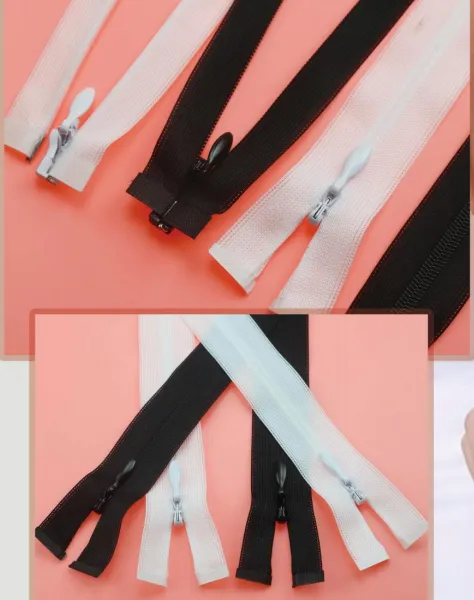 Read More
-
Custom Zipper Orders: Tape Printing, Sliders and Puller Tooling
October 21, 2026A custom zipper order usually changes one of three things: the puller shape, the slider finish, or the printing on the tape. Each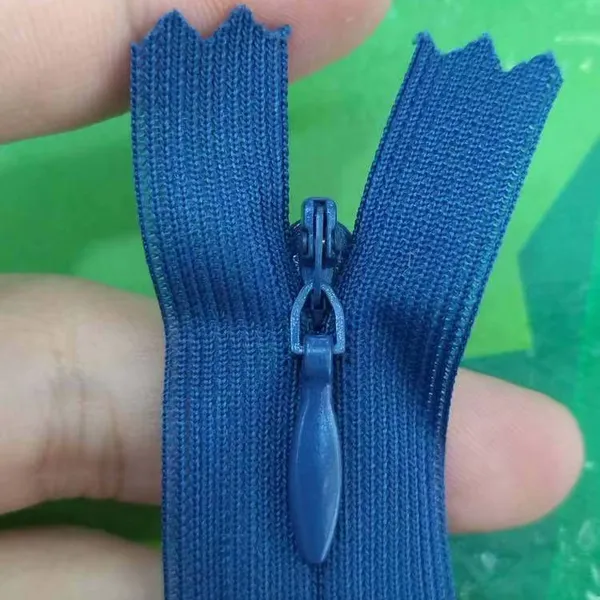 Read More
-
Brass vs Aluminum vs Nickel Teeth: Metal Zipper Materials Compared
October 21, 2026Brass, aluminum and nickel are the three metals used for zipper teeth, and they are chosen for different reasons rather than ranke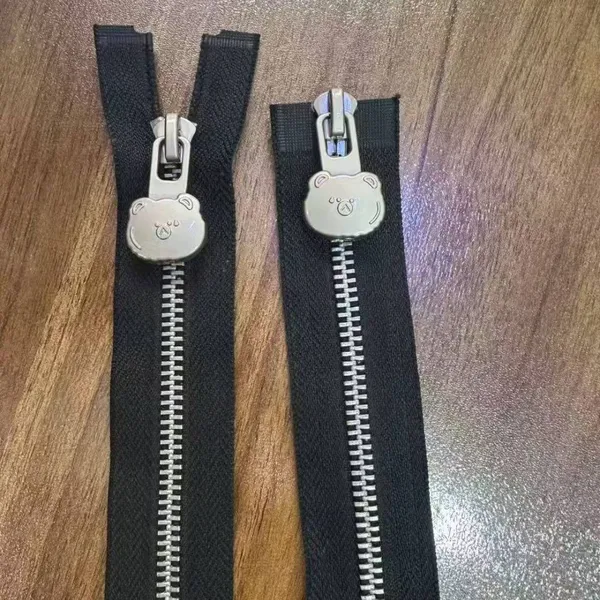 Read More
-
Nylon Coil Zippers Explained: How Spiral Teeth Are Wound and Sewn
October 20, 2026A nylon coil zipper is built from a continuous plastic monofilament that is wound into a spiral, stitched to a woven tape, and cut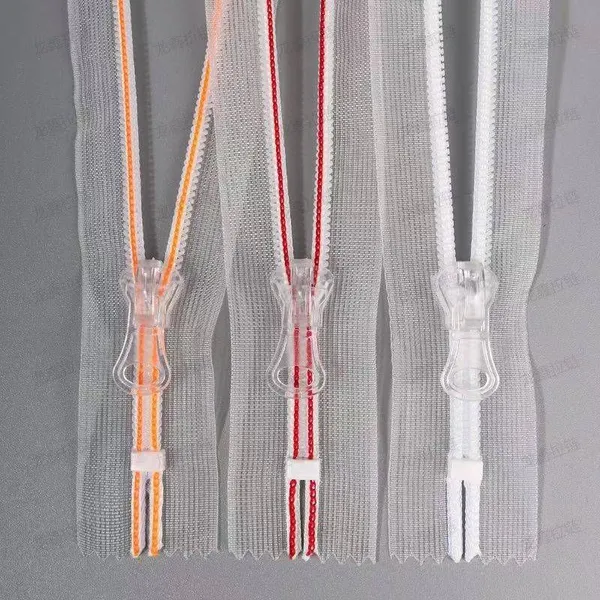 Read More

Contact Us
Recommended Products
-
 Clothing Accessories Lead Free Brass Metal Ring Prong Snap Button With 4 Parts for Infant Baby Clothes Baby BibsUS$ 0.01 - 0.03MOQ: 5000 Sets
-
Brass Metal Stainless Steel Material Ring Prong Snap Button With 4 Parts Lead Free & Nickel Free for Infant Baby Clothes Baby Bibs Baby SuitsUS$ 0.01 - 0.03MOQ: 5000 Sets
-
Metal Grommets Eyelets Gold Eyelet for Bag Shoes and Garment AccessoriesUS$ 0.01 - 0.03MOQ: 5000 Sets
-
Cheap Price Custom Jeans Button Metal Custom Logo Metal Button for JeansUS$ 0.01 - 0.03MOQ: 5000 Sets
-
Factory Wholesale Hat Bag Clothing Press Snap Button Spring Snap Button Metal Snap ButtonsUS$ 0.03 - 0.06MOQ: 5000 Sets
-
Wholesale Plastic Round Coloured Snaps Button Press Fasteners for Baby Bibs/ Baby GarmentsUS$ 0.01 - 0.03MOQ: 50000 Sets
-
Custom EngravedCopper I Brass Metal Jeans Button Denim Clothes Jacket for Jeans DenimUS$ 0.01 - 0.03MOQ: 5000 Sets
-
17mm Open Hole Shank Button With Aluminum Nail With Logo for Jeans Jacket PantsUS$ 0.01 - 0.03MOQ: 5000 Sets
-
Eco-friendly Custom Size Plastic Snaps Plastic Snap Button for Baby Clothes, Baby BibsUS$ 0.01 - 0.03MOQ: 50000 Sets
-
12mm 15mm 17mm 20mm Four Parts Metal Brass Fastener Press Snap Button for Clothes JacketUS$ 0.03 - 0.06MOQ: 5000 Sets
-
Custom Logo Personalized High Quality Metal Press Snap Fastener Snap Buttons for Clothing Garments JacketUS$ 0.03 - 0.06MOQ: 5000 Sets
-
Custom Printing Round Press Spring Four Part Snap Button for Clothing Leather 405#17mmUS$ 0.03 - 0.06MOQ: 5000 Sets
-
OEM Garment Accessories Custom Baby Snap Button Press Metal Prong Pearl Ring Snap ButtonUS$ 0.01 - 0.03MOQ: 5000 Sets
-
Factory Stock Buttons Stainless Steel or Brass Material Colors Pearl Snap Button Prong Pearl Snap Button for Shirts ClothingUS$ 0.01 - 0.03MOQ: 5000 Sets
-
Baby Safe Smooth Edge Plastic Snap Button TS09 9mm POM for Baby Garments and Bodysuits, Soft TouchNegotiableMOQ: 50000 Pieces
-
Plastic Snap Fastener TS09 9mm POM for Kids Sleepwear and Cotton Wear, Custom LogoNegotiableMOQ: 50000 Pieces
-
Printed Logo Bulk Supply Plastic Snap Fastener TS09 9mm for Fabric Totes and PouchesNegotiableMOQ: 50000 Pieces
-
0910(T09)9mm Plastic Snap Buttons for Baby Bibs and Infant ClothingNegotiableMOQ: 50000 Pieces
-
Custom Eco-Friendly Plastic Snap Button T09 9mm POM for Kids Wear and ChildrenswearNegotiableMOQ: 50000 Pieces
-
Printed Logo Plastic Snap Fastener TS09 9mm POM for Fabric Totes and Pouches WholesaleNegotiableMOQ: 50000 Pieces