
 Business License
Brass vs Aluminum vs Nickel Teeth: Metal Zipper Materials Compared
Brass, aluminum and nickel are the three metals used for zipper teeth, and they are chosen for different reasons rather than ranked in one order. Brass Zipper Teeth dominate mid and heavy garment work, an Aluminum Zipper runs light and resists rust, and Nickel Zipper Teeth deliver a hard bright finish on lighter trims. Reading them side by side is the quickest way to see where each one belongs.
This article compares the three families on composition, weight, finish and corrosion, then sets out how those differences reach a purchase order.
1. Brass Zipper Teeth: Composition and Behaviour
Brass Zipper Teeth are made from an alloy of copper and zinc, usually with a copper content between 60 and 65 per cent. The zinc supplies strength and the copper supplies the warm colour that buyers associate with denim hardware. A brass tooth is die-cast or wire-formed and then polished, so it holds a sharp profile at the interlock.
Brass behaves well under abrasion because it work-hardens as it wears. A fly chain that rubs against denim every day will lose its coating long before the tooth itself deforms, and the alloy underneath carries the same colour family. That is why an antique brass finish on a jeans chain ages without looking damaged.
The drawback is weight. A size 5 brass chain weighs roughly 12 grams per metre more than the same size in aluminum, and on a long parka that difference is felt on the shoulder. Brass also tarnishes in a damp store, so a sealed bag matters for a long sea transit.
| Material | Typical use | Weight | Corrosion behaviour |
|---|---|---|---|
| Brass | Denim and workwear | Heaviest | Tarnishes in damp air |
| Aluminum | Light jackets and bags | Lightest | Forms a stable oxide layer |
| Nickel | Fashion trim | Medium | Needs a barrier coat |
The table shows why the three are not interchangeable on one garment. A chain selected by colour alone will often be the wrong weight or the wrong hardness for the seam it has to survive. A buyer comparing quotations should ask which metal is being quoted before reading the price, because the three are rarely offered on equal terms.
2. Aluminum Zipper Chain: Weight and Corrosion
An Aluminum Zipper is chosen where weight matters more than stiffness. Aluminum is roughly one third the density of brass, so a chain of the same size is noticeably lighter in the hand. It also forms a thin oxide layer on its surface that stops rust from spreading, which suits a bag that meets rain.
The softness of aluminum is the trade-off. A tooth will deform under a heavy side load rather than resist it, so this family suits a size 3 to size 5 chain on a light jacket or an inner pocket. A size 10 aluminum chain on a work boot would flatten within a season.
Finishing needs care on an Aluminum Zipper. The metal takes anodised colour well, but a polished bright finish wears through quickly on a puller that is gripped by hand. A matte or anodised surface hides that wear better than a mirror finish does.
Two material habits help on a long programme. The first is to record the alloy temper, because a brass chain from a hard temper feels different at the slider than one from a soft temper even when the analysis matches. The second is to keep a retained length of chain from each heat, so a later question about colour or hardness can be answered from the part rather than from a certificate.
3. Nickel Zipper Teeth: Bright Finish and Hardness
Nickel Zipper Teeth are chosen for appearance first. Nickel is hard, takes a high polish, and holds a bright silver colour that reads as premium on a fashion trim. A nickel-plated tooth also resists abrasion better than a plated brass tooth, because the coating itself is harder.
The metal is usually applied as a plating over brass or a zinc alloy rather than used as a solid tooth. Solid nickel is costly and difficult to form, so a plated construction gives the look at a workable cost. Plating thickness is normally between 3 and 8 microns, and that figure belongs on the drawing.
Nickel Zipper Teeth carry one caution. Free nickel can provoke a skin reaction in some wearers, so a garment that sits against bare skin may need a barrier coating or a different metal. Where a buyer markets to that concern, an alternative finish is safer than a claim.
4. Aluminum Zipper vs Nickel Zipper Teeth in Service
An Aluminum Zipper and Nickel Zipper Teeth differ most in how they fail. Aluminum dents and stays dented, so a damaged tooth shows as a flat spot that makes the slider skip. Nickel plating chips at a sharp edge and exposes the base metal, so the fault shows as a dark mark rather than a change of shape.
Both are lighter than brass, and both run well on a fine chain. The choice between them usually comes down to the finish the garment needs rather than to strength, because neither is specified where a heavy pull is expected.
A third option is to combine them, which is common on bags. A nickel-plated zinc slider on an aluminum chain gives a bright visible hardware set while keeping the chain light, and the two metals sit far enough apart on the galvanic scale for a dry environment.
Purchasing habits differ between the three as well. Brass and nickel usually carry a longer lead time because both involve plating, while anodised aluminum can be scheduled with the chain itself. A buyer planning a mixed order should expect the plated parts to set the date.
5. Brass Zipper Teeth Under Wash and Abrasion
Brass Zipper Teeth face their hardest test in a garment wash. A stone wash or an enzyme wash removes a controlled amount of surface, and a brass tooth will lose its coating at a different rate from a nickel one. Quoting the wash recipe with the order is the practical way to predict the result.
Abrasion is the slower test. A brass tooth hardens as it is worked, so a chain that feels slightly stiff when new settles into a smooth run after a few dozen cycles. A buyer who judges a new sample by feel alone may reject a chain that would have performed well.
Corrosion is the third factor. Brass tarnishes in humid air and can leave a mark on pale fabric if a garment is stored damp. A lacquer coat slows that process, and a sealed polybag with a desiccant is the simple answer for a long sea route.
6. Matching Sliders to Aluminum Zipper Chains
A slider must be matched to the chain material as well as to the size. An Aluminum Zipper needs a slider whose channel is cut for the softer tooth profile, because a channel set for brass will grip too hard and score the aluminum. The fit is checked by running the slider over a one metre length.
Slider material is a separate decision. A zinc alloy slider is the usual choice and takes plating well, while a brass slider on an aluminum chain is avoided because the two metals react in damp conditions. Where the slider is visible, its finish is matched to the tooth finish.
Puller weight matters on a light chain. A heavy puller on a size 3 aluminum chain will drag the slider open when the garment hangs, so the puller is usually a light flat form on this family.
Fit is tested rather than assumed. Difei Button (Guangzhou) Co Ltd runs each new slider against a one metre length of the chain it will be used on, and records the result with the tool number. Difei keeps that record with the approved sample, and Difei reviews it before a repeat so that a slider from a different die is caught before it reaches the line.
7. Nickel Zipper Teeth and Skin Contact
Nickel Zipper Teeth sit close to the body on a neckline or a trouser front, and that proximity is the reason the material is regulated in some markets. The release of nickel from a plated surface is limited by the coating itself, so a thicker layer or a barrier coat is the practical answer.
A buyer can specify a nickel-free finish where the risk matters. A black oxide or a painted tooth gives the same dark look without the metal, and an anodised aluminum tooth does the same job at a lower weight. Those substitutes are usually quoted as an option rather than as a default.
Testing is straightforward. A wear and corrosion test on a finished part, run after the same wash the garment will receive, gives a figure that a buyer can hold a supplier to. Difei Button keeps that test report with the approved sample.
8. Choosing Between Brass, Aluminum and Nickel Zipper Teeth
Choosing between Brass, Aluminum and Nickel Zipper Teeth comes down to four questions. Does the chain carry a load, does it sit against bare skin, how much weight can the garment take, and what finish does the design call for. A heavy denim front answers those questions toward brass.
A light fashion jacket answers them toward nickel or aluminum, and a bag that meets weather answers them toward aluminum with a plated zinc slider. Writing the four answers into the specification prevents the usual mistake, which is to select a metal by colour alone.
The cost difference between the three is smaller than buyers expect at the tooth level, and larger at the finishing stage. That is why an early decision on finish saves more money than a late negotiation on metal.
9. Frequently Asked Questions
9.1 What are brass zipper teeth made of?
Brass Zipper Teeth are made from an alloy of copper and zinc, normally with a copper content between 60 and 65 per cent. The zinc supplies strength and the copper supplies the warm colour that buyers associate with denim hardware. A brass tooth is die-cast or wire-formed and then polished so that it holds a sharp profile at the interlock. The alloy work-hardens as it wears, which is why a brass chain that feels stiff when new settles into a smooth run, and the coating on top decides how the colour ages.
9.2 When is an aluminum zipper the right choice?
An Aluminum Zipper is the right choice where weight matters more than stiffness. Aluminum is about one third the density of brass, so a chain of the same size is noticeably lighter, and it forms a stable oxide layer that stops rust from spreading. That suits a light jacket, an inner pocket or a bag that meets rain. It is a poor choice for a work boot or a heavy workwear front, where a size 10 tooth would deform under a side load.
9.3 Why specify nickel zipper teeth?
Nickel Zipper Teeth are specified for appearance and hardness rather than for strength. Nickel takes a high polish and holds a bright silver colour that reads as premium on a fashion trim, and a nickel coating resists abrasion better than a plated brass tooth because the coating itself is harder. The metal is normally applied as a plating between 3 and 8 microns thick over brass or zinc alloy. A barrier coat is worth specifying where the chain sits against bare skin.
9.4 How should a buyer choose between the three metals?
A buyer should answer four questions before selecting a metal. Does the chain carry a load, does it sit against bare skin, how much weight can the garment take, and what finish does the design call for. A heavy denim front points toward brass, a light fashion jacket toward nickel, and a weather-exposed bag toward aluminum with a plated zinc slider. Writing those answers into the specification prevents the usual mistake of choosing a metal by colour alone, and it settles the debate before a sample is made, which is the cheaper place to settle it.
Recently Posted
-
Nylon Coil Zippers for Bags and Luggage: Load and Curve Behaviour
October 21, 2026A nylon zipper for bags is chosen for a different reason than one chosen for a jacket. A bag opens and closes many times a day, it Read More
-
Custom Zipper Orders: Tape Printing, Sliders and Puller Tooling
October 21, 2026A custom zipper order usually changes one of three things: the puller shape, the slider finish, or the printing on the tape. Each Read More
-
Nylon Coil Zippers Explained: How Spiral Teeth Are Wound and Sewn
October 20, 2026A nylon coil zipper is built from a continuous plastic monofilament that is wound into a spiral, stitched to a woven tape, and cut Read More
-
Metal Zipper Capability at Difei Button: From Teeth to Slider Assembly
October 20, 2026Difei Button began as a maker of snaps, rivets and eyelets for garment factories, and the metal working that those parts require s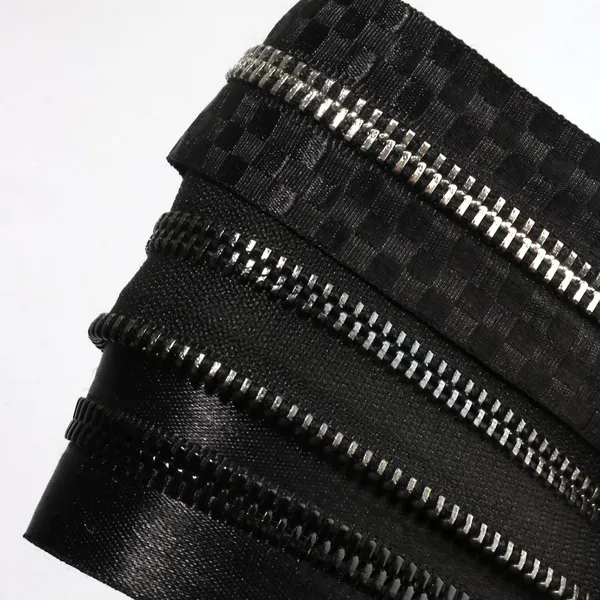 Read More

Contact Us
Recommended Products
-
 Clothing Accessories Lead Free Brass Metal Ring Prong Snap Button With 4 Parts for Infant Baby Clothes Baby BibsUS$ 0.01 - 0.03MOQ: 5000 Sets
-
Brass Metal Stainless Steel Material Ring Prong Snap Button With 4 Parts Lead Free & Nickel Free for Infant Baby Clothes Baby Bibs Baby SuitsUS$ 0.01 - 0.03MOQ: 5000 Sets
-
Metal Grommets Eyelets Gold Eyelet for Bag Shoes and Garment AccessoriesUS$ 0.01 - 0.03MOQ: 5000 Sets
-
Cheap Price Custom Jeans Button Metal Custom Logo Metal Button for JeansUS$ 0.01 - 0.03MOQ: 5000 Sets
-
Factory Wholesale Hat Bag Clothing Press Snap Button Spring Snap Button Metal Snap ButtonsUS$ 0.03 - 0.06MOQ: 5000 Sets
-
Wholesale Plastic Round Coloured Snaps Button Press Fasteners for Baby Bibs/ Baby GarmentsUS$ 0.01 - 0.03MOQ: 50000 Sets
-
Custom EngravedCopper I Brass Metal Jeans Button Denim Clothes Jacket for Jeans DenimUS$ 0.01 - 0.03MOQ: 5000 Sets
-
17mm Open Hole Shank Button With Aluminum Nail With Logo for Jeans Jacket PantsUS$ 0.01 - 0.03MOQ: 5000 Sets
-
Eco-friendly Custom Size Plastic Snaps Plastic Snap Button for Baby Clothes, Baby BibsUS$ 0.01 - 0.03MOQ: 50000 Sets
-
12mm 15mm 17mm 20mm Four Parts Metal Brass Fastener Press Snap Button for Clothes JacketUS$ 0.03 - 0.06MOQ: 5000 Sets
-
Custom Logo Personalized High Quality Metal Press Snap Fastener Snap Buttons for Clothing Garments JacketUS$ 0.03 - 0.06MOQ: 5000 Sets
-
Custom Printing Round Press Spring Four Part Snap Button for Clothing Leather 405#17mmUS$ 0.03 - 0.06MOQ: 5000 Sets
-
OEM Garment Accessories Custom Baby Snap Button Press Metal Prong Pearl Ring Snap ButtonUS$ 0.01 - 0.03MOQ: 5000 Sets
-
Factory Stock Buttons Stainless Steel or Brass Material Colors Pearl Snap Button Prong Pearl Snap Button for Shirts ClothingUS$ 0.01 - 0.03MOQ: 5000 Sets
-
Baby Safe Smooth Edge Plastic Snap Button TS09 9mm POM for Baby Garments and Bodysuits, Soft TouchNegotiableMOQ: 50000 Pieces
-
Plastic Snap Fastener TS09 9mm POM for Kids Sleepwear and Cotton Wear, Custom LogoNegotiableMOQ: 50000 Pieces
-
Printed Logo Bulk Supply Plastic Snap Fastener TS09 9mm for Fabric Totes and PouchesNegotiableMOQ: 50000 Pieces
-
0910(T09)9mm Plastic Snap Buttons for Baby Bibs and Infant ClothingNegotiableMOQ: 50000 Pieces
-
Custom Eco-Friendly Plastic Snap Button T09 9mm POM for Kids Wear and ChildrenswearNegotiableMOQ: 50000 Pieces
-
Printed Logo Plastic Snap Fastener TS09 9mm POM for Fabric Totes and Pouches WholesaleNegotiableMOQ: 50000 Pieces