
 Business License
Blog Categories
Custom Zipper Orders: Tape Printing, Sliders and Puller Tooling
A custom zipper order usually changes one of three things: the puller shape, the slider finish, or the printing on the tape. Each of the three carries a different tooling cost and a different lead time, and a buyer who treats them as one line item will be surprised at the quotation stage. Splitting them apart is the first useful step in planning a custom run.
This article works through a Custom Zipper Slider order from artwork to bulk, sets out where Zipper Puller Tooling is needed and where it is not, and explains what Logo Zipper Tape can and cannot carry.
1. What a Custom Zipper Slider Order Covers
A Custom Zipper Slider order covers the slider body, the puller and the finish. The body itself is rarely changed, because it is a standard die-cast form matched to a chain size. What changes is the puller that hangs from it and the plating on both parts.
Engraving is the third element and the least expensive to add. A logo engraved into an existing puller die needs no new tooling at all, because the mould already exists. A change of puller shape is the one case that requires a new mould.
| Change | New tooling | Usual lead time |
|---|---|---|
| Puller engraving | No | 1 week |
| Plating change | No | 1 to 2 weeks |
| Tape printing | Print screen | 1 to 2 weeks |
| New puller shape | Yes | 3 to 5 weeks |
The table is the reason a design review should happen before a purchase order is issued. Moving a decision from the fourth row to the first row can remove a month from a first delivery.
The order of decisions matters as much as the list itself. A buyer who fixes the puller shape before the plating will wait three to five weeks for a mould that a plating change would not have needed. Settling the low-cost options first keeps the tooling tied to a design that has stopped moving.
2. Zipper Puller Tooling: Shapes, Moulds and Lead Time
Zipper Puller Tooling is needed whenever the shape of the puller changes. A mould for a die-cast puller takes between three and five weeks to cut and prove, and it is charged once. After that the same mould runs every repeat order without further cost.
The mould is quoted against a drawing rather than a sketch. Wall thickness, the gate position and the draft angle all have to be fixed before cutting begins, so a buyer who supplies a photograph and nothing more will lose a week to questions. A dimensioned drawing on a 1:1 scale removes most of that delay.
Two puller designs can share one mould if they differ in length alone. That is worth checking before a second mould is approved, because a family of pullers cut from one tool keeps the unit cost down across a range.
3. Logo Zipper Tape: Printing Methods and Artwork
Logo Zipper Tape is printed, not woven, in most cases. A rotary screen print applies a colour layer to the tape surface and cures it, which holds detail down to about 0.3 mm of line width. A woven logo is possible but needs a custom tape loom and is reserved for large programmes.
Artwork for a Logo Zipper Tape is supplied as vector outlines rather than as a bitmap, because the print screen is burned from the outline. A logo with fine serifs or a gradient will lose definition at tape scale, so a simplified one-colour version is usually prepared for the tape even when the brand mark is more complex.
Position matters as much as the artwork. The print can be centred, repeated along the tape, or set as a single mark near the top stop. A repeated print needs the repeat length fixed in millimetres, and that figure goes on the specification so that a repeat order matches.
Two practical limits apply to a printed tape. The print cannot cross the coil line, so the usable band is the tape width less about 2 mm on each side. A mark that is drawn full width will be trimmed at the proof stage rather than on the loom.
4. Custom Zipper Slider Finishes and Engraving
A Custom Zipper Slider takes a range of finishes, and the finish is usually the visible part of the order. Bright nickel, antique brass, gunmetal and painted lacquer are all common. Each one is applied after the body is cast and polished, so a finish change does not disturb the tooling.
Engraving depth is worth specifying. A mark cut 0.05 mm deep will read as a faint shadow after plating, while one cut 0.15 mm deep stays legible for the life of the part. Depth costs nothing extra to cut but is easy to omit from a drawing.
Plating thickness on the slider is quoted in microns, usually between 3 and 8. A thicker coat survives abrasion longer but can round off a fine engraved edge, so the two figures are chosen together rather than separately.
Finish choice also interacts with the chain. A painted lacquer on a slider will wear at the top edge where the thumb rests, so a painted finish is usually paired with a matte base rather than a polished one. That worn area reads as a tone change rather than as a bright spot.
5. Zipper Puller Tooling Cost and Sample Rounds
Zipper Puller Tooling cost is charged once and then amortised across the order. The figure varies with the size of the part and the number of cavities in the mould, and a single-cavity tool is the sensible first step for a new design.
Sample rounds are the second cost. A new mould is proved with two or three rounds before it is released to production, and each round takes about a week. A buyer who allows for three rounds in the schedule will not be caught out by a puller that needs its gate moved.
A proven mould belongs to the buyer in most supply arrangements, and it should be stated in the order that the tool is retained and not used for another customer. That single clause protects the design over a long programme.
A tool record makes the second order cheaper than the first. Difei Button (Guangzhou) Co Ltd files the mould number, the drawing revision and the approved sample together, so Difei quotes a repeat without a tooling line at all. Difei also records when a mould is close to the end of its working life, which turns a surprise replacement into a planned cost.
6. Logo Zipper Tape: Colour and Match to Fabric
Logo Zipper Tape colour is matched to the tape rather than to the garment fabric, because the print sits on the tape and the tape is what the eye compares. A printed mark in a contrasting colour is the usual solution when the fabric shade is hard to repeat on a woven band.
Print adhesion is the technical point that decides whether the logo survives a wash. A cured screen print on a bonded polyester tape holds through a garment wash at 40 degrees, while an uncured print will crack at the fold. Asking for a wash test on the printed tape before bulk is a cheap safeguard.
Where a logo needs to be subtle, a tone-on-tone print is used. The mark is visible in raking light and almost invisible face on, which suits a brand that wants identification without a visible label.
A printed mark is sometimes replaced with a woven label stitched beside the tape where a logo has to survive a heavy wash. The label carries fine detail that a screen print cannot, and it costs less than a custom loom, though it sits beside the zip rather than on it.
7. Sampling a Custom Zipper Slider Before Production
A Custom Zipper Slider should be approved as a complete part rather than as separate components. The sample is assembled with the correct chain, run through a full length, and checked for the puller swing and the engraving legibility at the same time.
The approval should record the finish batch, the plating thickness and the mould number. Without those three figures a repeat order has nothing to be compared against, and a colour that has drifted will be argued rather than measured.
A first article sample is retained by Difei Button (Guangzhou) Co Ltd with the tool number. The retained part means a reorder is checked against the piece that was signed off, and Difei keeps the drawing with it so the same margin applies at the third order as at the first.
8. Custom Zipper Slider and Logo Tape on the Purchase Order
The purchase order for a custom run should carry five lines that are often left out. The puller drawing number, the plating and its thickness, the tape print repeat length, the print colour reference, and the chain size the slider is matched to. Missing any one of them leaves room for a substitution.
The order should also state who owns the tool. Where the mould is charged to the buyer, a short clause confirming retention and non-transfer protects the design for the life of the programme.
Finally, the order should fix the sample that governs acceptance. That sample is the approved assembled part, and every later lot is compared with it under the same light. Writing that sentence into the order removes most disputes before they start.
A closing note on timing is worth adding to the order. A custom run with a printed tape and an engraved puller needs about three weeks from artwork approval, while one with a new mould needs six to eight. Both figures assume the artwork and the drawing are final.
9. Frequently Asked Questions
9.1 When does a custom zipper slider need new tooling?
A Custom Zipper Slider needs new tooling when the shape of the puller changes. An engraved logo on an existing puller die uses the mould that already exists, and a plating change alters the surface without touching the tool. A new puller shape requires a die-cast mould that takes between three and five weeks to cut and prove, then two or three sample rounds of about a week each. A dimensioned drawing removes most of the delay before cutting begins.
9.2 What does zipper puller tooling cost include?
Zipper Puller Tooling cost covers cutting, proving and finishing a new mould. The figure varies with the size of the part and the number of cavities, and a single-cavity tool is the sensible first step for a new design. The charge is made once and then amortised across the order, so a repeat order carries no tooling at all. Two puller designs can share one mould when they differ in length alone, which keeps unit cost down across a range.
9.3 What can logo zipper tape carry?
Logo Zipper Tape is usually printed by rotary screen, which holds detail down to about 0.3 mm of line width. Artwork is supplied as vector outlines rather than as a bitmap, and a simplified one-colour version is prepared for the tape when the brand mark is more complex. A repeated print needs its repeat length fixed in millimetres on the specification. A cured print on a bonded polyester tape holds through a garment wash at 40 degrees, while an uncured print cracks at the fold.
9.4 What belongs on a custom zipper purchase order?
A custom order should carry five lines that buyers often leave out. The puller drawing number, the plating and its thickness in microns, the tape print repeat length, the print colour reference, and the chain size the slider is matched to. The order should also state who owns the mould and confirm that a charged tool is retained and not used for another customer. Fixing the approved sample as the acceptance reference removes most disputes before they start, and it also gives both sides the same part to compare, which is what a measurement needs.
Recently Posted
-
Nylon Coil vs Molded Resin Zippers: Flexibility, Weight and Cost
October 22, 2026A coil vs molded zipper decision is usually made on feel, and then defended on price. The two families share a plastic tooth and a Read More
-
Resin Zippers and Molded Teeth: Structure, Names and Typical Uses
October 22, 2026A resin zipper is built from molded plastic teeth that are formed directly onto the tape rather than sewn or crimped into place. T Read More
-
Difei Button's Nylon Zipper Programme: Sampling, Dyeing and Repeat Orders
October 22, 2026Difei Button (Guangzhou) Co Ltd runs its nylon zipper work as a programme rather than as a series of separate orders. The programm Read More
-
Nylon Coil Zippers for Bags and Luggage: Load and Curve Behaviour
October 21, 2026A nylon zipper for bags is chosen for a different reason than one chosen for a jacket. A bag opens and closes many times a day, it
Read More

Contact Us
Recommended Products
-
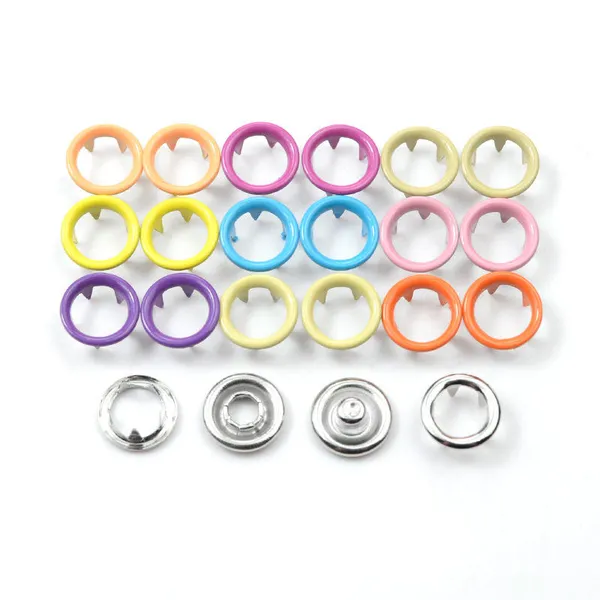
 Clothing Accessories Lead Free Brass Metal Ring Prong Snap Button With 4 Parts for Infant Baby Clothes Baby BibsUS$ 0.01 - 0.03MOQ: 5000 Sets
-
Brass Metal Stainless Steel Material Ring Prong Snap Button With 4 Parts Lead Free & Nickel Free for Infant Baby Clothes Baby Bibs Baby SuitsUS$ 0.01 - 0.03MOQ: 5000 Sets
-
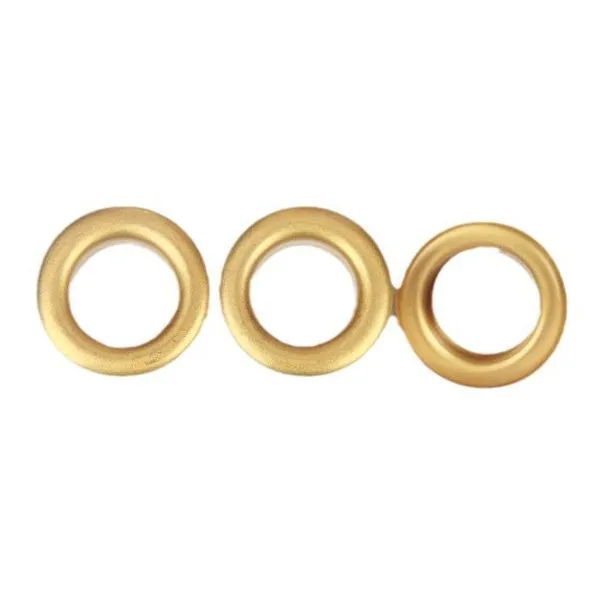
Metal Grommets Eyelets Gold Eyelet for Bag Shoes and Garment AccessoriesUS$ 0.01 - 0.03MOQ: 5000 Sets
-
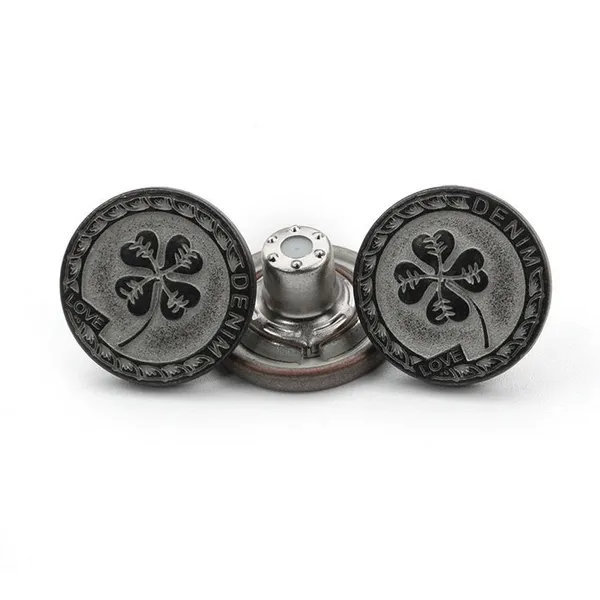
Cheap Price Custom Jeans Button Metal Custom Logo Metal Button for JeansUS$ 0.01 - 0.03MOQ: 5000 Sets
-
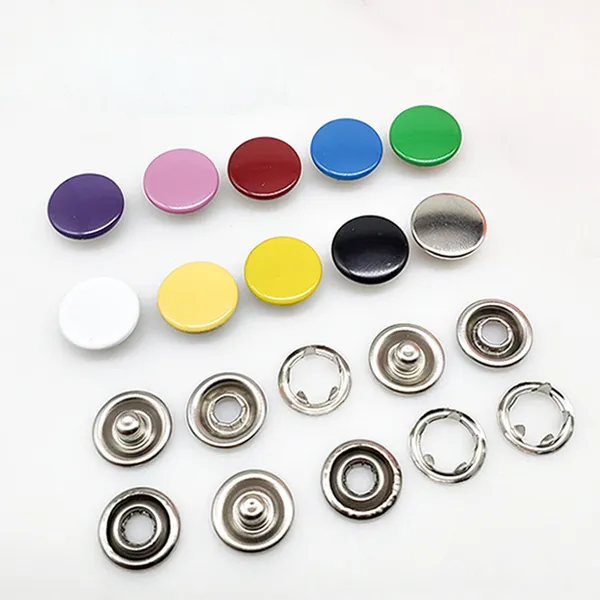
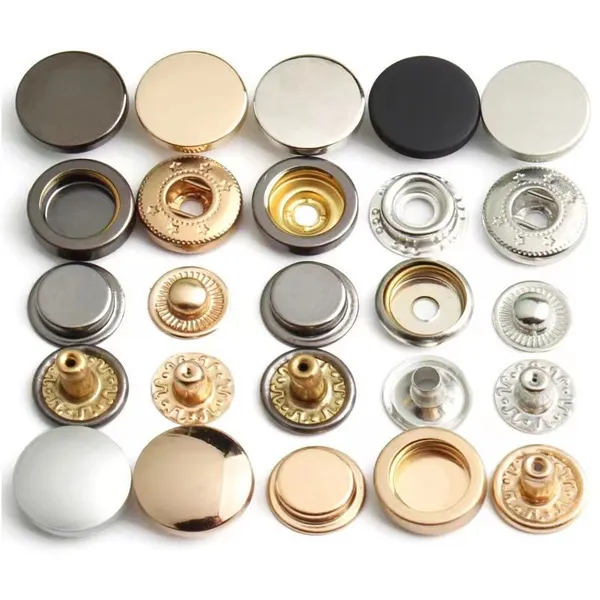
Factory Wholesale Hat Bag Clothing Press Snap Button Spring Snap Button Metal Snap ButtonsUS$ 0.03 - 0.06MOQ: 5000 Sets
-
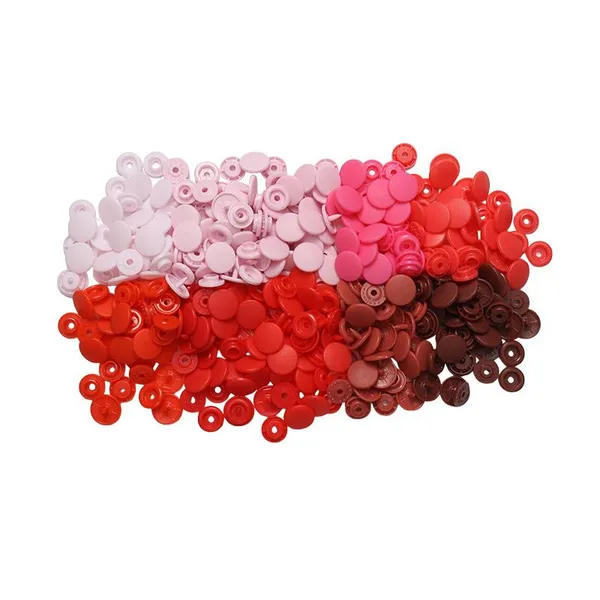
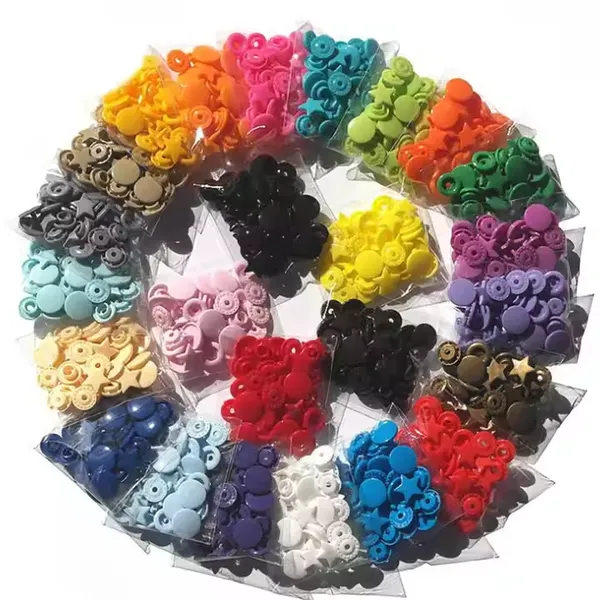
Wholesale Plastic Round Coloured Snaps Button Press Fasteners for Baby Bibs/ Baby GarmentsUS$ 0.01 - 0.03MOQ: 50000 Sets
-
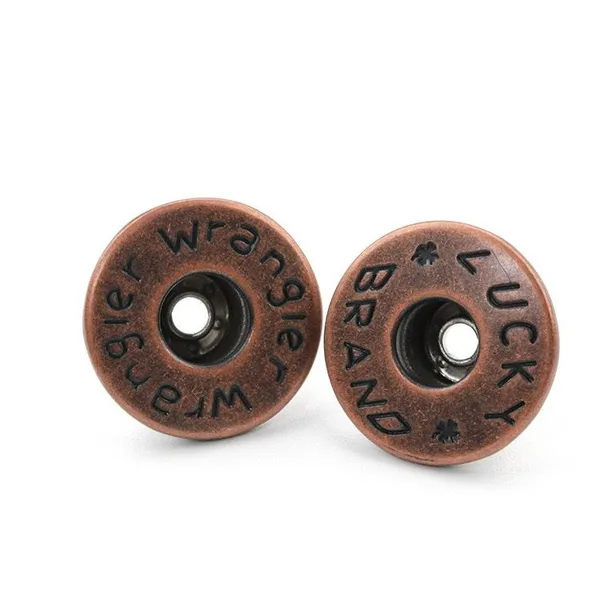
Custom EngravedCopper I Brass Metal Jeans Button Denim Clothes Jacket for Jeans DenimUS$ 0.01 - 0.03MOQ: 5000 Sets
-
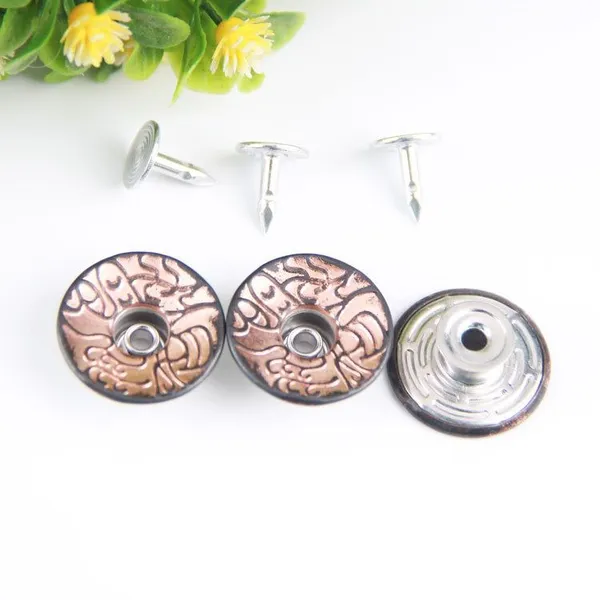
17mm Open Hole Shank Button With Aluminum Nail With Logo for Jeans Jacket PantsUS$ 0.01 - 0.03MOQ: 5000 Sets
-
Eco-friendly Custom Size Plastic Snaps Plastic Snap Button for Baby Clothes, Baby BibsUS$ 0.01 - 0.03MOQ: 50000 Sets
-
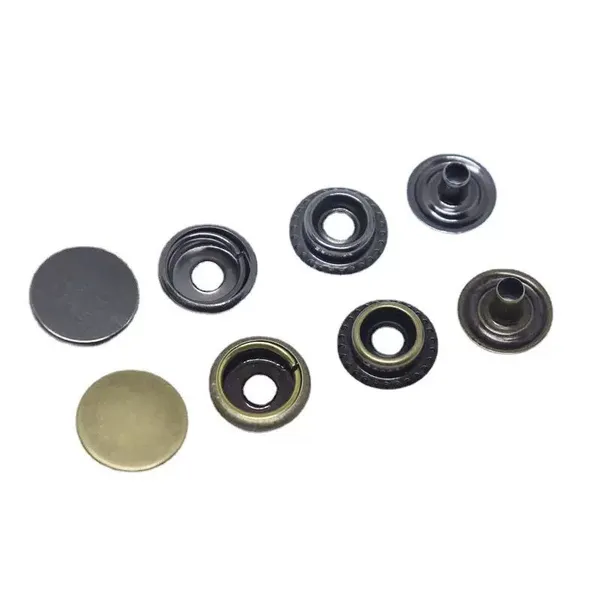
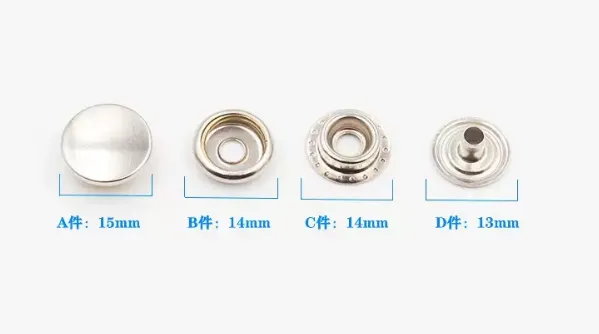
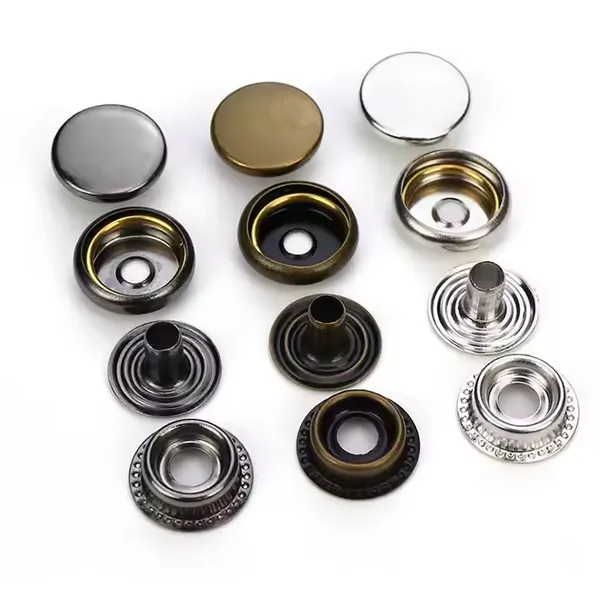
12mm 15mm 17mm 20mm Four Parts Metal Brass Fastener Press Snap Button for Clothes JacketUS$ 0.03 - 0.06MOQ: 5000 Sets
-
Custom Logo Personalized High Quality Metal Press Snap Fastener Snap Buttons for Clothing Garments JacketUS$ 0.03 - 0.06MOQ: 5000 Sets
-
Custom Printing Round Press Spring Four Part Snap Button for Clothing Leather 405#17mmUS$ 0.03 - 0.06MOQ: 5000 Sets
-
OEM Garment Accessories Custom Baby Snap Button Press Metal Prong Pearl Ring Snap ButtonUS$ 0.01 - 0.03MOQ: 5000 Sets
-
Factory Stock Buttons Stainless Steel or Brass Material Colors Pearl Snap Button Prong Pearl Snap Button for Shirts ClothingUS$ 0.01 - 0.03MOQ: 5000 Sets
-
Baby Safe Smooth Edge Plastic Snap Button TS09 9mm POM for Baby Garments and Bodysuits, Soft TouchNegotiableMOQ: 50000 Pieces
-
Plastic Snap Fastener TS09 9mm POM for Kids Sleepwear and Cotton Wear, Custom LogoNegotiableMOQ: 50000 Pieces
-
Printed Logo Bulk Supply Plastic Snap Fastener TS09 9mm for Fabric Totes and PouchesNegotiableMOQ: 50000 Pieces
-
0910(T09)9mm Plastic Snap Buttons for Baby Bibs and Infant ClothingNegotiableMOQ: 50000 Pieces
-
Custom Eco-Friendly Plastic Snap Button T09 9mm POM for Kids Wear and ChildrenswearNegotiableMOQ: 50000 Pieces
-
Printed Logo Plastic Snap Fastener TS09 9mm POM for Fabric Totes and Pouches WholesaleNegotiableMOQ: 50000 Pieces