
 Business License
Blog Categories
Resin Zippers for Outdoor Jackets: Cold, Rain and Wind
A resin zipper for jackets is chosen for the cold rather than for the look. Below about minus 10 degrees a coil tooth stiffens and a metal tooth conducts heat away from the fingers, while a molded plastic tooth keeps most of its flexibility and much of its temperature. That behaviour is the reason the family dominates outerwear.
This article covers how an outdoor zipper seals against rain, what molded zipper outerwear gives up in stiffness, and how to specify a slider, a puller and a tape for a jacket that has to work in wind.
1. Why a Resin Zipper for Jackets Handles Cold
A resin zipper for jackets handles cold better than either a metal or a coil chain because of the compound it is made from. A POM tooth keeps its dimensions and a good part of its flexibility down to about minus 30 degrees, while a metal tooth becomes uncomfortable to touch and a coil chain stiffens noticeably below minus 10.
The second reason is thermal. Metal conducts heat away from a bare hand in a way that plastic does not, so a metal puller on a winter jacket is a small but real discomfort. A plastic or a coated puller removes it at almost no cost.
The third reason is snow and grit. A molded tooth has a defined interlock face that sheds a small amount of ice, while a coil loop can pack snow into the spiral. On a ski jacket that difference shows up over a single day of use. A coated shell adds a fourth point, because the coating stiffens in the cold as well.
A test on the assembled jacket is more useful than a test on the chain alone for that reason. The chain and the fabric beside it change together in the cold, and just the assembled part shows how the two behave as a pair.
2. Outdoor Zipper Sealing Against Rain
An outdoor zipper is usually sealed in one of two ways. A coated tape is the common approach for a jacket, where a polyurethane layer on the tape blocks water that reaches the chain. A taped seam with a storm flap is used where the exposure is greater.
The coating is applied to the tape rather than to the tooth, which is why a waterproof zipper still shows a visible chain. Water that pools on the closed chain is held by surface tension, and the coated tape stops it from wicking into the garment behind.
A storm flap is the second line of defence. The flap covers the chain from outside and sheds most of the direct rain, so the chain itself faces just what gets past the flap. A jacket that combines a coated tape with a flap handles long exposure better than either one alone.
| Method | Protection | Suited to |
|---|---|---|
| Coated tape | Blocks wicking | Everyday rain jackets |
| Storm flap | Sheds direct rain | Outdoor and ski shells |
| Taped seam | Seals the stitch line | Waterproof garments |
| Water-resistant coil | Light shower | Softshell and casual |
The table is useful at the brief stage, because a designer who asks for a waterproof zipper usually means one row of it rather than all four.
3. Molded Zipper Outerwear: Stiffness and Wind
Molded zipper outerwear gains a stiff front edge from the tooth, and that stiffness is useful in wind. A chain that holds a straight line does not flutter or gap, so the front of the jacket stays closed against a gust in a way that a soft chain sometimes does not.
The stiffness has to be planned for at the pattern stage. A molded chain needs a wider seam allowance and a straighter run than a coil, and a curved neckline has to be re-shaped or the chain will bind. That is a design decision rather than a purchasing one.
Wind also finds the ends of a run. The top and bottom of a jacket zip are the points where a gap opens, so a molded chain is usually paired with a top stop sitting under the collar and a bottom stop tucked behind a flap. Difei keeps those two stop positions on the drawing alongside the chain length.
4. Resin Zipper for Jackets: Slider and Puller Choice
A resin zipper for jackets uses a slider matched to the tooth and often to a gloved hand. A size 5 or a size 8 slider with a longer puller reaches past a cuff or a flap, and an enlarged puller tab is easier to find in the cold.
Lock strength matters on outerwear because a jacket front takes a side load in wind. A slider with a positive locking pawl on a molded chain should resist a pull of 40 to 60 newtons without creeping, and that is the figure to quote rather than a general statement about quality.
The puller material is the third choice. A metal puller feels cold against the skin and conducts heat from a hand, so a coated or a molded puller is often specified for a jacket worn against a face or a neck.
5. Outdoor Zipper Tapes and Coated Fabrics
An outdoor zipper tape has to work with a coated shell. A laminated fabric does not stretch, so the tape beside it has to carry the seam without puckering. A slightly heavier tape with a stable weave handles that better than a light band.
Tape width follows the flap. A wide tape gives the machinist room for the flap seam and the chain seam on the same band, while a narrow tape forces the two seams onto one line and risks a leak at the stitch.
The tape finish matters as well. A coated tape is stiffer than a plain one, which helps a molded chain hold its line but makes a coil chain harder to turn at a curve. The two choices are usually made together rather than separately.
A tape that meets a coated shell should also be checked for adhesion. Two layers that separate at the fold are a common fault on a laminated zip, and the fault often shows just after a few weeks of use. A simple crease test at the sample stage catches it before bulk.
6. Molded Zipper Outerwear: Cold Flex Testing
Molded zipper outerwear should be tested cold rather than at room temperature. A chain that runs smoothly at 20 degrees may stiffen below zero, and the change shows in the force needed to move the slider rather than in the appearance of the part.
A cold chamber test is the standard method. The assembled part is held at minus 20 degrees for two hours and then cycled 50 times, and the force at the start and the end of the run is recorded. A steady figure across the run indicates a compound that suits the climate it will meet.
A simpler check is available in a freezer for a small order. The part is left overnight and run the following morning, and a slider that jams or a chain that gaps is a clear fault. It is not a substitute for a chamber, but it catches the worst cases before a bulk order is placed. At Difei the cold check is run on the assembled part rather than on the chain alone.
7. Resin Zipper for Jackets in a Layered System
A resin zipper for jackets has to work in a layered system where the inner and outer openings line up. A two-way chain is common on a shell so that the wearer can open the jacket from below while seated or while wearing a harness.
A two-way pair has to be matched as a set. The two sliders meet in the middle of the run, and a mismatched pair leaves a gap at the meeting point that leaks and looks wrong. The pair is checked on the sample rather than on the bulk.
Liner attachment is the second point. Where a jacket takes a zip-in liner, the inner chain has to match the outer in size and in colour, and the two are usually quoted together. A liner zip that falls out of step with the shell is a common fault on a season-old jacket.
Ventilation is the last part of the system. A pit zip on a shell uses the same family as the front chain, and it should be quoted with the front so that both run from the same masterbatch. A mismatched shade between a front zip and a pit zip is one of the faults hardest to explain to a retailer.
8. Outdoor Zipper Care and Field Repair
An outdoor zipper is cleaned rather than repaired in most cases. Grit and salt are the usual causes of a stiff run, and a soft brush along the closed chain followed by a silicone stick restores most parts without a workshop visit.
A molded chain that has been forced past its bend radius is the exception. The kink is permanent, and the practical repair is a replacement panel or a new chain rather than a straightening attempt, which usually makes the kink worse.
A field repair kit for a molded chain is simple. A spare slider of the correct size and a pair of pliers will return most jackets to service, because a slider can be replaced on a closed chain. Difei Button (Guangzhou) Co Ltd supplies a matched spare slider with outerwear orders on request, and Difei notes the size number on the packing so a replacement is easy to order later.
9. Frequently Asked Questions
9.1 Why is a resin zipper used on outdoor jackets?
A resin zipper for jackets is used because a molded plastic tooth keeps its flexibility and its temperature in the cold. A POM tooth holds its dimensions down to about minus 30 degrees, while a metal tooth conducts heat away from a bare hand and a coil chain stiffens below minus 10. A molded tooth also has a defined interlock face that sheds a little ice, where a coil loop can pack snow into the spiral. That shows up over a day on the mountain.
9.2 How does an outdoor zipper keep rain out?
An outdoor zipper keeps rain out in two ways, and most jackets use both. A coated tape carries a polyurethane layer that blocks water from wicking into the garment along the chain, and a storm flap covers the chain from outside so it faces just the rain that gets past the flap. A taped seam is added where the stitch line itself has to be sealed. A softshell may use a water-resistant coil by itself for light showers, a choice about exposure rather than about quality.
9.3 What should be tested on molded zipper outerwear?
Molded zipper outerwear should be tested cold rather than at room temperature, because a chain that runs smoothly at 20 degrees may stiffen below zero. The standard method is a cold chamber: hold the assembled part at minus 20 degrees for two hours, cycle it 50 times, and record the force at the start and the end. A steady figure across the run indicates a compound suited to the climate. A freezer gives a rough check for a small order, and it is worth running before a bulk commitment is made.
9.4 How is a resin zipper repaired in the field?
A resin zipper is usually cleaned rather than repaired. Grit and salt cause most stiff runs, and a soft brush along the closed chain followed by a silicone stick restores the part. A molded chain forced past its bend radius is the exception, because the kink is permanent and the practical fix is a new chain or a replacement panel. A spare slider of the correct size plus pliers returns most jackets to service, which is why a spare is worth shipping with the order.
Recently Posted
-
Nylon Coil vs Molded Resin Zippers: Flexibility, Weight and Cost
October 22, 2026A coil vs molded zipper decision is usually made on feel, and then defended on price. The two families share a plastic tooth and a Read More
-
Resin Zippers and Molded Teeth: Structure, Names and Typical Uses
October 22, 2026A resin zipper is built from molded plastic teeth that are formed directly onto the tape rather than sewn or crimped into place. T Read More
-
Difei Button's Nylon Zipper Programme: Sampling, Dyeing and Repeat Orders
October 22, 2026Difei Button (Guangzhou) Co Ltd runs its nylon zipper work as a programme rather than as a series of separate orders. The programm Read More
-
Nylon Coil Zippers for Bags and Luggage: Load and Curve Behaviour
October 21, 2026A nylon zipper for bags is chosen for a different reason than one chosen for a jacket. A bag opens and closes many times a day, it
Read More

Contact Us
Recommended Products
-
 Clothing Accessories Lead Free Brass Metal Ring Prong Snap Button With 4 Parts for Infant Baby Clothes Baby BibsUS$ 0.01 - 0.03MOQ: 5000 Sets
-
Brass Metal Stainless Steel Material Ring Prong Snap Button With 4 Parts Lead Free & Nickel Free for Infant Baby Clothes Baby Bibs Baby SuitsUS$ 0.01 - 0.03MOQ: 5000 Sets
-
Metal Grommets Eyelets Gold Eyelet for Bag Shoes and Garment AccessoriesUS$ 0.01 - 0.03MOQ: 5000 Sets
-
Cheap Price Custom Jeans Button Metal Custom Logo Metal Button for JeansUS$ 0.01 - 0.03MOQ: 5000 Sets
-
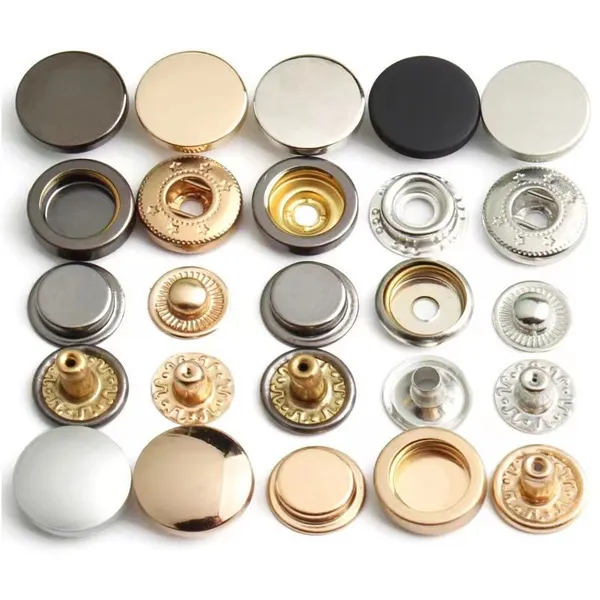
Factory Wholesale Hat Bag Clothing Press Snap Button Spring Snap Button Metal Snap ButtonsUS$ 0.03 - 0.06MOQ: 5000 Sets
-
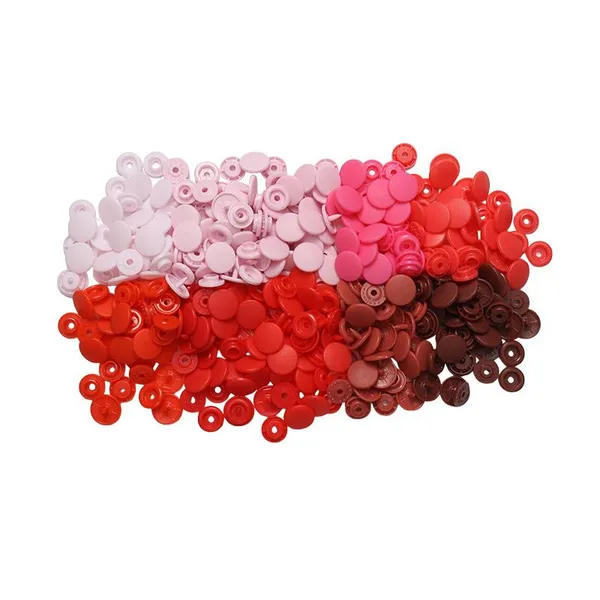
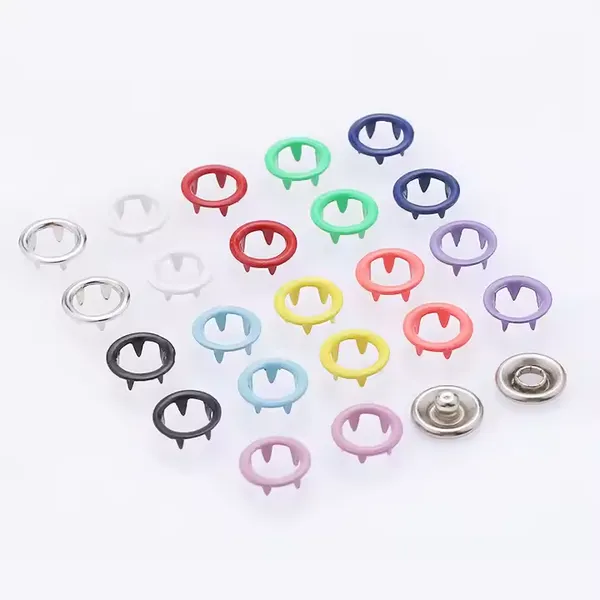
Wholesale Plastic Round Coloured Snaps Button Press Fasteners for Baby Bibs/ Baby GarmentsUS$ 0.01 - 0.03MOQ: 50000 Sets
-
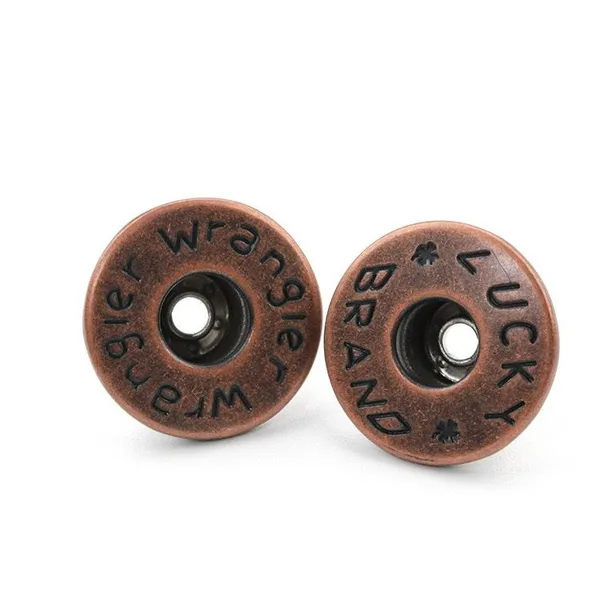
Custom EngravedCopper I Brass Metal Jeans Button Denim Clothes Jacket for Jeans DenimUS$ 0.01 - 0.03MOQ: 5000 Sets
-
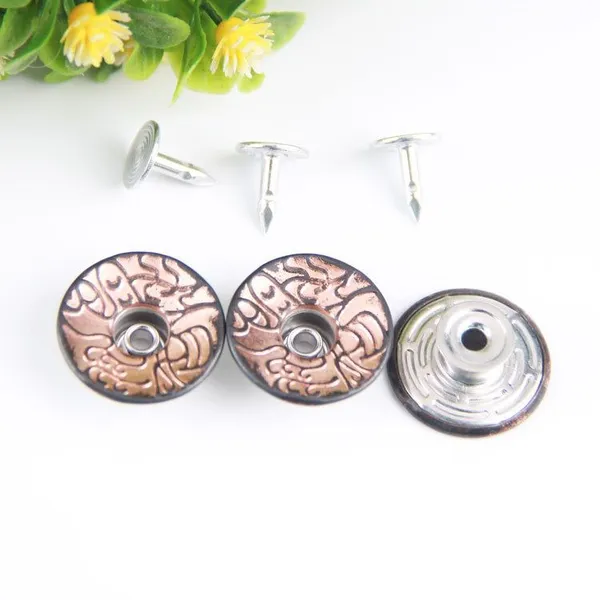
17mm Open Hole Shank Button With Aluminum Nail With Logo for Jeans Jacket PantsUS$ 0.01 - 0.03MOQ: 5000 Sets
-
Eco-friendly Custom Size Plastic Snaps Plastic Snap Button for Baby Clothes, Baby BibsUS$ 0.01 - 0.03MOQ: 50000 Sets
-
12mm 15mm 17mm 20mm Four Parts Metal Brass Fastener Press Snap Button for Clothes JacketUS$ 0.03 - 0.06MOQ: 5000 Sets
-
Custom Logo Personalized High Quality Metal Press Snap Fastener Snap Buttons for Clothing Garments JacketUS$ 0.03 - 0.06MOQ: 5000 Sets
-
Custom Printing Round Press Spring Four Part Snap Button for Clothing Leather 405#17mmUS$ 0.03 - 0.06MOQ: 5000 Sets
-
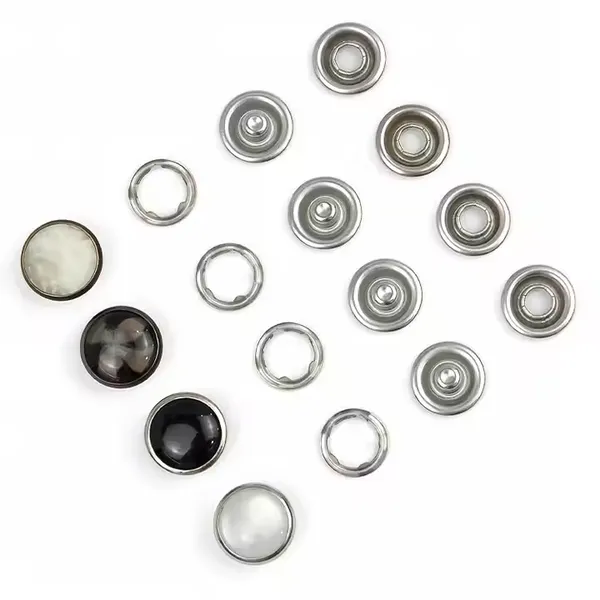
OEM Garment Accessories Custom Baby Snap Button Press Metal Prong Pearl Ring Snap ButtonUS$ 0.01 - 0.03MOQ: 5000 Sets
-
Factory Stock Buttons Stainless Steel or Brass Material Colors Pearl Snap Button Prong Pearl Snap Button for Shirts ClothingUS$ 0.01 - 0.03MOQ: 5000 Sets
-
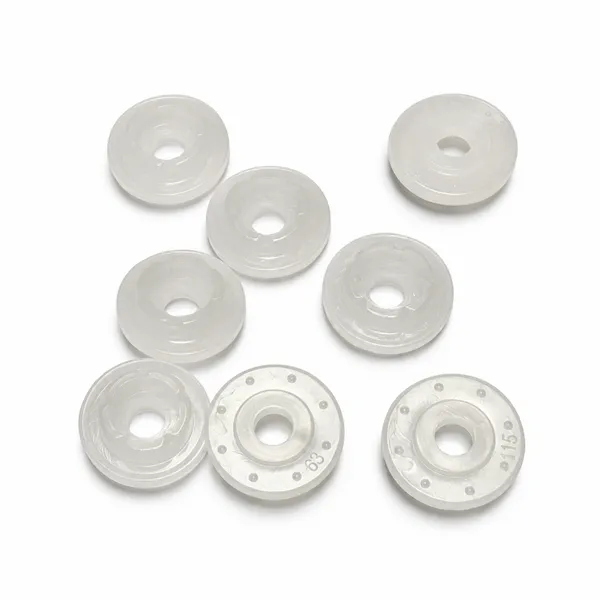
Baby Safe Smooth Edge Plastic Snap Button TS09 9mm POM for Baby Garments and Bodysuits, Soft TouchNegotiableMOQ: 50000 Pieces
-
Plastic Snap Fastener TS09 9mm POM for Kids Sleepwear and Cotton Wear, Custom LogoNegotiableMOQ: 50000 Pieces
-
Printed Logo Bulk Supply Plastic Snap Fastener TS09 9mm for Fabric Totes and PouchesNegotiableMOQ: 50000 Pieces
-
0910(T09)9mm Plastic Snap Buttons for Baby Bibs and Infant ClothingNegotiableMOQ: 50000 Pieces
-
Custom Eco-Friendly Plastic Snap Button T09 9mm POM for Kids Wear and ChildrenswearNegotiableMOQ: 50000 Pieces
-
Printed Logo Plastic Snap Fastener TS09 9mm POM for Fabric Totes and Pouches WholesaleNegotiableMOQ: 50000 Pieces