
 Business License
Blog Categories
How to Read a Zipper Quotation: Price per Meter and per Piece
A zipper price per meter and a price per piece are the two figures that appear on most quotations, and they are not interchangeable. A meter is a continuous length of chain without a slider or a stop, while a piece is a finished zip cut to a length with a slider, a top stop and a bottom stop fitted. A buyer who compares the two figures without noticing the difference will misjudge the cost.
This article sets out the zipper quotation terms that decide a price, explains the zipper cost structure behind the number, and shows how a quotation is read line by line so that two suppliers can be compared fairly.
1. What Zipper Quotation Terms Cover
Zipper quotation terms describe what is included in the figure rather than the figure alone. A quotation that states a price should also state the chain size, the tape width, the tooth material, the slider material, the length and the packing. Two quotations with the same price can describe very different parts, and the terms are what separate them.
The unit of measure is the first term to check. A price quoted per meter covers a length of chain, and a price quoted per piece covers a finished zip. Some suppliers quote per hundred pieces, and some quote per thousand, so the first step of any comparison is to convert both figures to a common unit.
The second term is the trade term. A price on an ex-works basis excludes freight and duty, while a price on a delivered basis includes them. A buyer comparing an ex-works figure from one supplier with a delivered figure from another is comparing two different scopes. Listing the zipper quotation terms in one column beside the price makes the scope visible.
2. Zipper Price per Meter Explained
A zipper price per meter covers the chain as it leaves the production line, before it is cut and fitted. The meter price includes the tape, the teeth and the finishing of the chain, and it normally excludes the slider, the stops and the packing. That is why a meter price looks low beside a piece price, and why it is not the figure to put in a garment cost sheet without adjustment.
The meter figure is useful at the design stage, where the length of zip in a garment is not yet fixed. A designer who knows the chain costs a certain figure per meter can estimate the trim cost of a range before the lengths are settled. The estimate is then refined once the lengths are known and the piece price is quoted.
The third use is comparison between suppliers. A meter price removes the variable of zip length, so two chains of the same size and material can be compared directly. Once the shorter has won, the piece price is quoted for the actual lengths in the order. Difei Button (Guangzhou) Co Ltd quotes the chain per meter first for that reason, and Difei then quotes the finished piece once the lengths are confirmed.
3. Zipper Cost Structure: Material, Labour and Tooling
A zipper cost structure has four main parts, which are material, labour, tooling and overhead. Material covers the tape, the teeth and the slider, and it is usually the largest share on a standard part. Labour covers the cutting, the fitting and the packing, and it rises with the number of operations a finished piece needs.
Tooling is the part a buyer often overlooks. A custom puller needs a die, and a printed tape needs a plate, and both are one-time costs that are recovered across the run. On a long order the tooling adds a fraction of a cent per piece, while on a short order it can dominate the unit price.
| Cost line | Share of unit price | Affected by |
|---|---|---|
| Material | 40 to 55 percent | Chain size, tooth and slider material |
| Labour | 20 to 30 percent | Operations per piece, fitting |
| Tooling | 1 to 15 percent | Custom puller, printed tape, run length |
| Overhead and margin | 10 to 20 percent | Order size, payment terms |
The table shows why two quotations for the same part can differ. A supplier with a lower material share may have a longer run, and a supplier with a higher tooling share may be quoting a custom puller. Reading the zipper cost structure line by line exposes the reason rather than leaving it as a difference in price.
4. Reading Zipper Quotation Terms in a Table
Reading zipper quotation terms in a table is the quickest way to compare two offers. Each row carries one term, and the two suppliers are placed in two columns beside it. A term that is present in one column and absent in the other is a question to raise before the order is placed.
The rows that matter most are the unit of measure, the length, the chain size, the slider material, the plate, the packing and the trade term. A difference in any one of them changes the part rather than the price. A missing row, such as a plate thickness, is a gap in the quotation rather than a saving.
The second pass through the table is arithmetic. Once both offers are converted to a price per finished piece of the same length and material, the difference is real. Before that conversion the difference may be an artefact of the unit or the scope, and acting on it would be a mistake.
5. Zipper Price per Meter vs Price per Piece
The zipper price per meter and the price per piece are linked by the length, the slider and the stops. A piece price is the meter price multiplied by the length plus the cost of the slider and the two stops plus the fitting labour. A buyer who has the meter price and the component prices can build the piece price and check the quotation against it.
The check is worth running on a large order. If a supplier quotes a piece price that is far below the built-up figure for the same components, either a component has been changed or a cost has been left out. The difference usually appears later as a substitution rather than as a discount.
A worked example makes the relationship clear. A size 5 chain at a meter price of 0.30 dollars, cut to 60 cm, gives 0.18 dollars of chain. A slider adds about 0.06 dollars and the two stops add about 0.01 dollars, and the fitting adds about 0.03 dollars of labour. The finished piece lands near 0.28 dollars, so a quotation far below that figure deserves a question, and Difei provides that breakdown on request so a buyer can see how the piece price was reached.
6. Zipper Cost Structure and Order Quantity
The zipper cost structure changes with the order quantity, because the fixed lines spread over more pieces. Tooling is the clearest case. A custom puller die that costs 400 dollars adds 0.40 dollars per piece over 1,000 pieces and 0.04 dollars over 10,000, so the same part carries a very different unit price at the two volumes.
Material is the second line to move. A larger order allows a longer run of one colour, which reduces the purge and the setup between colours. That saving is passed on at a volume where a single colour runs long enough to matter, which is usually several thousand pieces.
The third line is freight, which falls per piece as the shipment fills a container. A part shipped at a small volume carries a higher share of the freight than the same part shipped at a full container load. The packing is therefore part of the cost structure rather than a separate subject.
7. Zipper Quotation Terms for Tooling and Sampling
Zipper quotation terms for tooling and sampling are often quoted separately from the production price, and they should be read as one-time costs. A sampling charge covers the sample room time and the materials for a small run, and it is sometimes credited against the first bulk order. A tooling charge covers a die or a plate, and it is normally quoted with a lead time.
The ownership of the tooling is a term worth stating. A die paid for by the buyer is normally the buyer's property, and it should be kept for that buyer rather than reused. A quotation that includes a tooling charge should also state who holds the tool and for how long it will be kept.
The sample lead time is the third term. A standard chain sample can be ready in a few days, while a custom puller or a printed tape takes longer because the tool has to be made first. The two lead times should be quoted separately so the schedule is built on the right figure. Difei states both on the quotation, and Difei notes the tooling ownership beside the charge so there is no dispute later.
8. Zipper Price per Meter After Freight and Duty
The zipper price per meter that arrives at a warehouse is higher than the figure on the quotation, because freight and duty sit on top. A buyer building a landed cost should add the freight share, the insurance, the duty and the inland delivery, and then divide by the number of pieces. That final figure is the one that compares against a local supplier.
The freight share depends on the volume and the weight. A dense part such as a metal chain carries a high freight share for its value, while a light coil chain carries less. A shipment that fills a container spreads the freight over more pieces than a part load, which is why the packing is planned with the order rather than after it.
The duty depends on the classification and the destination, and it is quoted as a percentage of the value. A buyer comparing an imported part with a local one should apply the duty to the imported figure before the comparison. A landed cost built this way is the number that belongs in a garment cost sheet, and it is the number the two suppliers can be judged against.
9. Frequently Asked Questions
9.1 What does zipper price per meter include?
A zipper price per meter covers the continuous chain as it leaves the line, which means the tape, the teeth and the chain finishing. It normally excludes the slider, the top stop, the bottom stop and the packing, so it is not the same as a finished piece price. The meter figure is useful at the design stage, where the zip length is not yet fixed, and for comparing two chains of the same size and material. The piece price is quoted once the lengths in the order are known.
9.2 Which zipper quotation terms matter most?
The terms that matter most are the unit of measure, the length, the chain size, the slider material, the plate, the packing and the trade term. The unit of measure decides whether the figure is per meter, per piece or per thousand, and the trade term decides whether freight and duty are included. A term that is present in one quotation and absent in another is a question to raise before an order is placed. Reading the terms in a table across two suppliers is the quickest way to see the gaps.
9.3 How is a zipper cost structure built up?
A zipper cost structure has four main parts, which are material, labour, tooling and overhead. Material covers the tape, the teeth and the slider, and it is usually the largest share at 40 to 55 percent of the unit price. Labour covers the cutting, the fitting and the packing at 20 to 30 percent. Tooling covers a custom puller die or a printed tape plate on a short run, and shrinks per piece as the order grows, while overhead and margin make up the balance of the unit price.
9.4 Why does the piece price differ from the meter price?
A piece price and a meter price differ because a piece carries more than a length of chain. A finished piece adds a slider, a top stop, a bottom stop and the labour to fit them, so it costs more than the chain alone. A size 5 chain at 0.30 dollars per meter, cut to 60 cm, gives 0.18 dollars of chain before a slider, the stops and the fitting are added. A buyer who builds the piece price from the components can check a quotation against it.
Recently Posted
-
Nylon Zipper Variants: Coil, Invisible and Water-Repellent Tapes
October 29, 2026Almost every zip sold as a nylon zip is built on the same coil chain, and the differences between products sit in the tape rather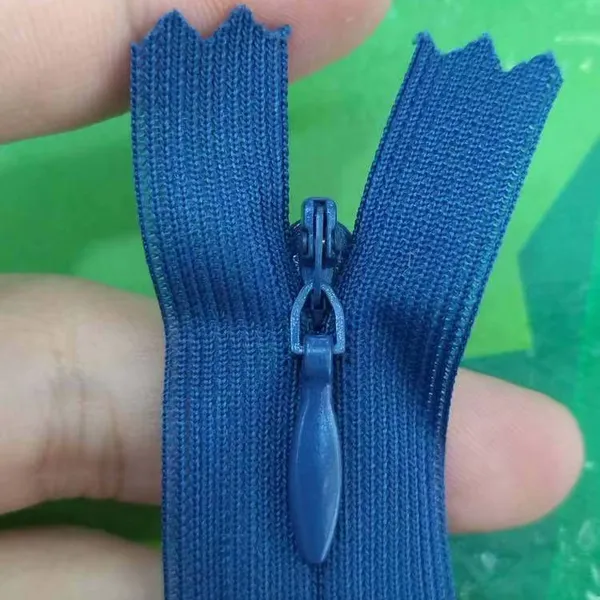 Read More
-
Zipper Tape and Teeth Materials: What Each Layer Is Made Of
October 29, 2026A zipper is built from 4 material layers that are chosen together: the woven tape, the teeth, the sewing thread and the coating ap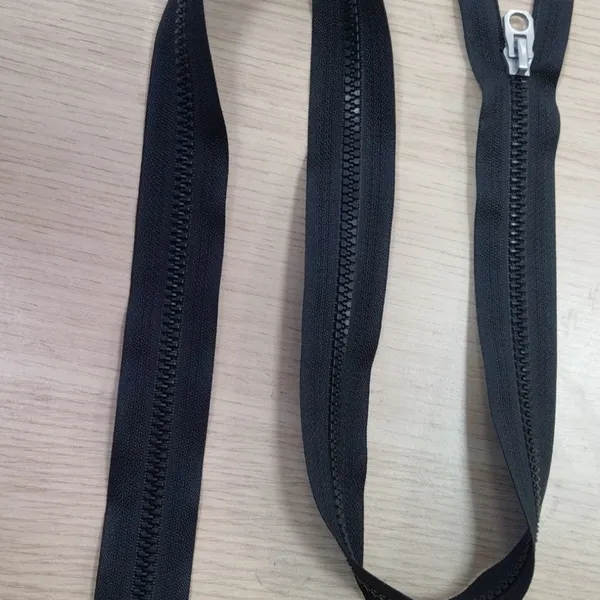 Read More
-
Metal Zipper Manufacturing: Wire Forming, Teeth Stamping and Assembly
October 29, 2026Metal zipper manufacturing turns a coil of brass or aluminium wire into a finished chain in 4 main stages. The wire is formed into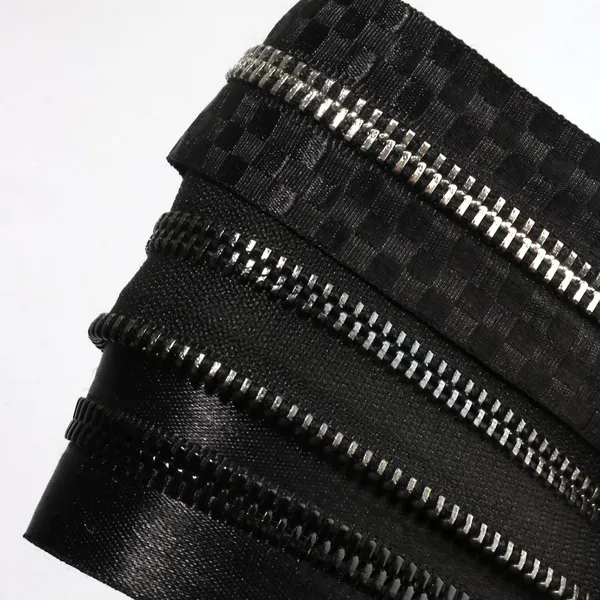 Read More
-
Zipper Strength Testing: Pull Apart, Holding and Slider Lock Tests
October 28, 2026A zipper strength test measures how much load a chain can take before it separates, and how well a slider holds that chain closed.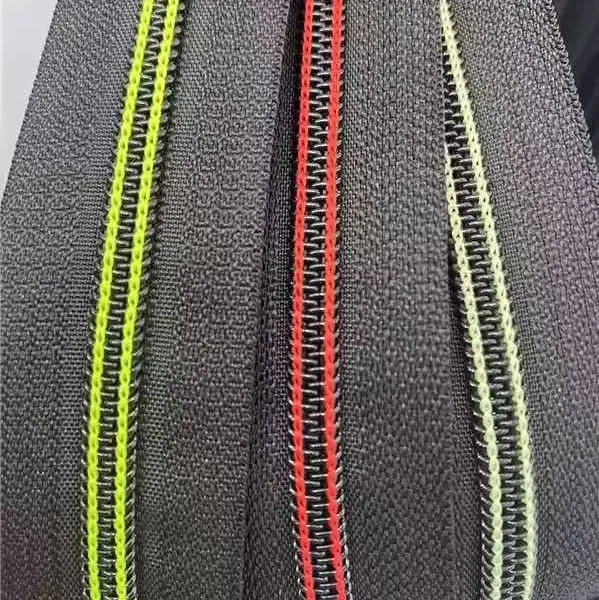 Read More

Contact Us
Recommended Products
-
 Clothing Accessories Lead Free Brass Metal Ring Prong Snap Button With 4 Parts for Infant Baby Clothes Baby BibsUS$ 0.01 - 0.03MOQ: 5000 Sets
-
Brass Metal Stainless Steel Material Ring Prong Snap Button With 4 Parts Lead Free & Nickel Free for Infant Baby Clothes Baby Bibs Baby SuitsUS$ 0.01 - 0.03MOQ: 5000 Sets
-
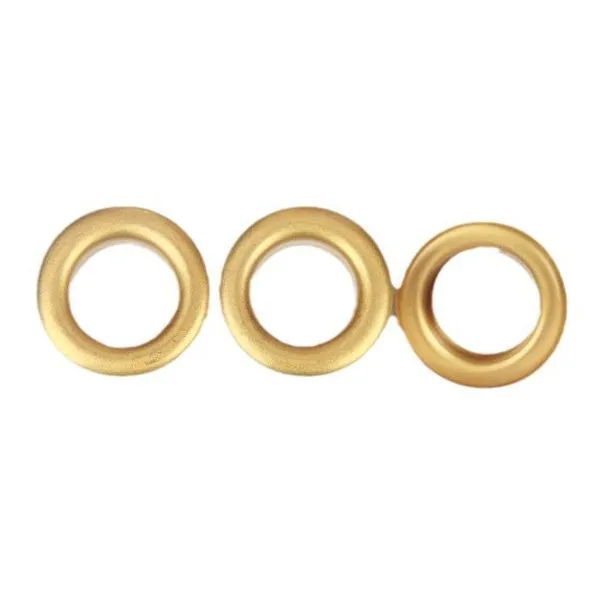
Metal Grommets Eyelets Gold Eyelet for Bag Shoes and Garment AccessoriesUS$ 0.01 - 0.03MOQ: 5000 Sets
-
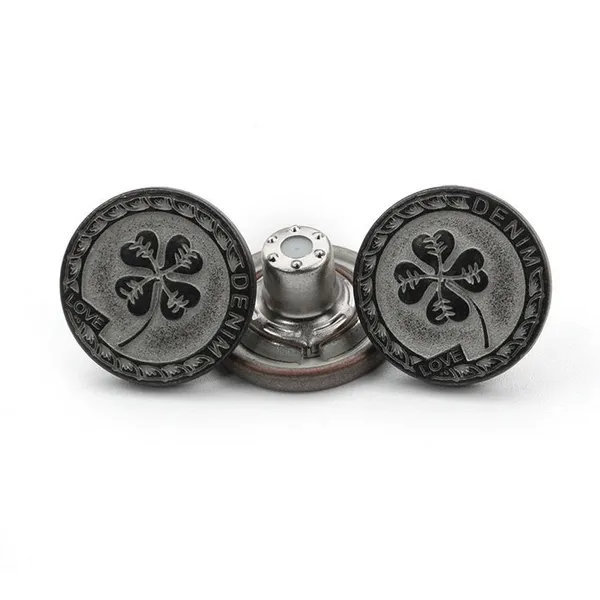
Cheap Price Custom Jeans Button Metal Custom Logo Metal Button for JeansUS$ 0.01 - 0.03MOQ: 5000 Sets
-
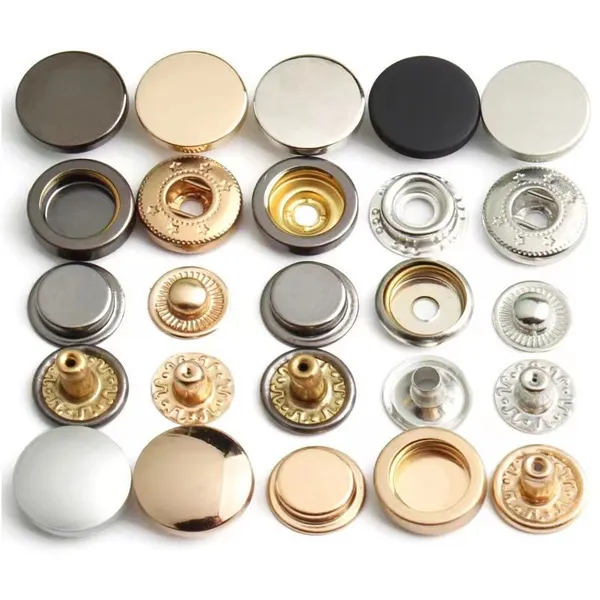
Factory Wholesale Hat Bag Clothing Press Snap Button Spring Snap Button Metal Snap ButtonsUS$ 0.03 - 0.06MOQ: 5000 Sets
-
Wholesale Plastic Round Coloured Snaps Button Press Fasteners for Baby Bibs/ Baby GarmentsUS$ 0.01 - 0.03MOQ: 50000 Sets
-
Custom EngravedCopper I Brass Metal Jeans Button Denim Clothes Jacket for Jeans DenimUS$ 0.01 - 0.03MOQ: 5000 Sets
-
17mm Open Hole Shank Button With Aluminum Nail With Logo for Jeans Jacket PantsUS$ 0.01 - 0.03MOQ: 5000 Sets
-
Eco-friendly Custom Size Plastic Snaps Plastic Snap Button for Baby Clothes, Baby BibsUS$ 0.01 - 0.03MOQ: 50000 Sets
-
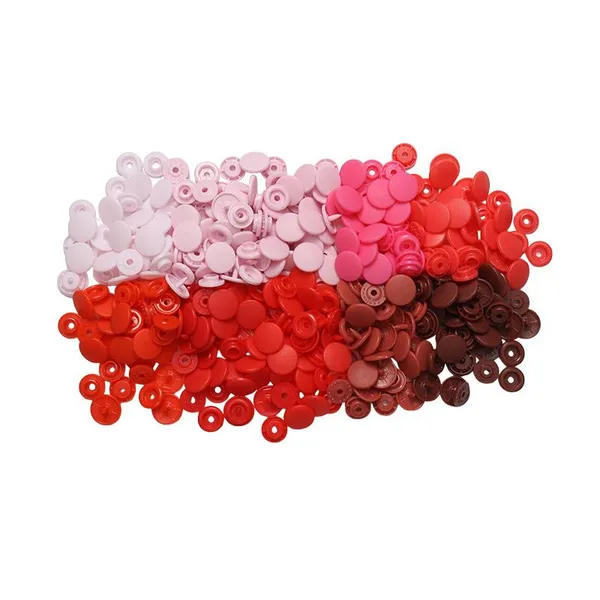
12mm 15mm 17mm 20mm Four Parts Metal Brass Fastener Press Snap Button for Clothes JacketUS$ 0.03 - 0.06MOQ: 5000 Sets
-
Custom Logo Personalized High Quality Metal Press Snap Fastener Snap Buttons for Clothing Garments JacketUS$ 0.03 - 0.06MOQ: 5000 Sets
-
Custom Printing Round Press Spring Four Part Snap Button for Clothing Leather 405#17mmUS$ 0.03 - 0.06MOQ: 5000 Sets
-
OEM Garment Accessories Custom Baby Snap Button Press Metal Prong Pearl Ring Snap ButtonUS$ 0.01 - 0.03MOQ: 5000 Sets
-
Factory Stock Buttons Stainless Steel or Brass Material Colors Pearl Snap Button Prong Pearl Snap Button for Shirts ClothingUS$ 0.01 - 0.03MOQ: 5000 Sets
-
Easy Installation 12.3mm Plastic Snap Button Custom Engraved Logo For Fabric Closure HardwareNegotiableMOQ: 50000 Pieces
-
Impact Resistant 1311 T5 Plastic Snap Fastener 12.3mm Factory OEM For Fabric Closure PartsNegotiableMOQ: 50000 Pieces
-
Factory Direct Wholesale Plastic Snap Button12.3mm POM for Bed Sheets and Duvet CoversNegotiableMOQ: 50000 Pieces
-
Square Plastic Snap Button 8.5mm for Baby Garments, Soft Edge Non-Scratch, Steam Disinfection SafeNegotiableMOQ: 50000 Pieces
-
Impact Resistant Square Snap Fastener 8.5x8.5mm Plastic POM for Outer Apparel and WorkwearNegotiableMOQ: 50000 Pieces
-
Matte Finish Reinforced Plastic Snap Fastener 1311 T5 12.3mm for Bags and LuggageNegotiableMOQ: 50000 Pieces