
 Business License
Blog Categories
Zipper Slider Materials Compared: Zinc Alloy, Brass and Plastic
A zinc alloy zipper slider is the body most buyers meet first, because die cast zinc covers the great majority of sliders in production. The metal flows into a complex shape at a low melting point, which keeps tooling cheap and the part strong enough for everyday use. Two alternatives sit beside it, and each one answers a question the zinc part cannot.
This article compares a brass slider, a plastic zipper slider and the zinc alloy default on strength, weight, corrosion and cost, and it sets out where each material belongs on a garment or a bag.
1. Zinc Alloy Zipper Slider: The Default Choice
A zinc alloy zipper slider is produced by die casting, in which molten metal is forced into a steel mould under pressure. The process holds a tolerance of about plus or minus 0.05 mm on the critical channel, which is why a cast slider mates reliably with a chain. The alloy is usually a zinc-aluminium-copper blend with a density near 6.6 grams per cubic centimetre.
The strength of the part comes from the shape rather than from the metal alone. The channel walls, the bridge and the body are formed in one shot, so a complex geometry costs no more than a simple one. That is the reason a zinc alloy zipper slider carries a locking pawl and a puller bridge at almost no extra cost.
The limit of the material is corrosion. Zinc is less noble than brass, so it will show white rust in a salt or a chlorine environment before a brass part shows anything. A coating of nickel, brass or black oxide slows that down, and the coating is chosen for the climate the part will meet.
2. Brass Slider Bodies and Their Advantages
A brass slider is chosen where corrosion and wear matter more than price. Brass is an alloy of copper and zinc at a density near 8.5 grams per cubic centimetre, and it resists salt water far better than die cast zinc. The material is also harder, so the channel keeps its clearance over a longer service life.
Brass is worked by stamping and machining rather than by casting in most cases. The body is formed from sheet or bar and then finished, which takes more operations and more material than a single casting. That route is the reason a brass slider costs more than a zinc one of the same size.
The weight is a second consideration. A brass part is roughly 30 percent heavier than a zinc part of the same volume, which is an advantage on a heavy chain and a small penalty on a light one. On a size 5 chain the difference is felt in the hand before it is measured.
3. Plastic Zipper Slider Uses and Limits
A plastic zipper slider is made from a moulded thermoplastic, usually a POM or a nylon grade, and it is chosen for weight, colour and cost. The part can be moulded in any colour to match a tape or a fabric, which is not possible with a plated metal body. It is also light, which matters on children's wear and on a fine chain.
The strength is the limit. A moulded body has a lower stiffness than a cast one, so a plastic zipper slider is used on a light chain rather than on a heavy one. On a size 3 chain it works well. On a size 10 chain the same body would flex and release under load.
The temperature is the second limit. A moulded part softens above about 80 degrees, so it is not used where the slider will be pressed against a hot surface or left in a hot vehicle. Within its range, though, a plastic part is dependable and easy to replace.
| Material | Density | Corrosion | Suited to |
|---|---|---|---|
| Zinc alloy | 6.6 g/cm3 | Moderate | Everyday garments and bags |
| Brass | 8.5 g/cm3 | Good | Marine, heavy duty, premium trim |
| Plastic | 1.4 g/cm3 | Unaffected | Light chain, children's wear |
The table separates the three materials on the three figures that decide most projects, which are weight, corrosion and the load the chain carries. A fourth factor, cost, is treated in the sections below.
4. How a Zinc Alloy Zipper Slider Is Made
A zinc alloy zipper slider begins as a die casting from a multi-cavity mould. A single mould can produce four to eight parts per shot, and the cycle runs at about 60 to 120 shots per minute on a small part. The runner and the flash are trimmed, and the parts are tumbled to remove the gate marks before finishing.
The finishing stage decides the appearance. A nickel plate gives a bright silver, a brass plate gives a warm gold, and a black oxide gives a muted dark finish. The plate thickness is usually 3 to 8 microns, and it is quoted with the colour because a thin plate wears through at the bridge first.
Assembly follows the finish. The puller is fitted to the bridge, the locking spring is set into the body, and the part is checked for channel clearance with a pin gauge. Difei Button (Guangzhou) Co Ltd runs that check on every batch, and Difei keeps the pin gauge size with the mould number so a repeat order is measured against the same standard.
5. Where a Brass Slider Outperforms Zinc
A brass slider outperforms zinc in three situations, and each one is a question of exposure rather than of preference. The first is salt water, where the copper alloy resists corrosion that would pit a zinc body within a season. The second is repeated load, where a harder channel keeps its clearance over a long service life.
The third is a metal chain that is itself brass. Plating a zinc body to match a brass chain gives a near match at first, but the plate wears at the bridge and the difference shows through. A solid brass part holds the colour through the full section, so the two pieces age together. That is why a brass chain and a brass slider are often quoted as a set.
The penalty is cost and weight, and both are real. A brass part carries a higher unit price and adds a few grams to a finished garment. On a marine application or a premium bag the trade is worth making, and on a light fashion zip it is not.
6. Where a Plastic Zipper Slider Fits
A plastic zipper slider fits a light chain, a coloured chain and a part that has to be replaced cheaply. A moulded body takes any colour from a masterbatch, so it can be matched to a coil tape without a plating step. That makes it the natural partner for a bright colour programme on children's wear and on casual bags.
The second fit is a non-metallic requirement. A garment that has to pass a metal detection test, or a part worn against the skin in a cold climate, is often specified with a plastic slider. A moulded body does not conduct heat, so it feels warmer in the hand than a metal part.
The third fit is economy at volume. A moulded part is cheaper than a cast one at the same size, because the tooling and the cycle cost less. On a light zip sold at a low price the saving is meaningful, and the limit is the load rather than the price.
7. Zinc Alloy Zipper Slider vs Brass and Plastic
The zinc alloy zipper slider holds the middle of the range, with brass above it and plastic below it on load and on price together. Zinc covers everyday garments, bags and luggage, which is the largest part of the market. Brass is reserved for corrosion and for a metal chain that has to match. Plastic covers the light end.
The choice is usually settled by three questions, which are the environment, the chain material and the target price. A salt environment points to brass. A zinc or a nickel chain points to a plated zinc body. A light chain at a low price points to plastic, and those three answers decide the material before the drawing is made.
It is worth noting that the puller can differ from the body. A zinc body with a plastic puller is common on a garment that is worn against the face, because the puller is the part that touches the skin. The body keeps its strength while the puller keeps its warmth.
8. Slider Material Cost Compared: Zinc Alloy Zipper Slider and Brass
Cost follows the process rather than the weight alone. A zinc part is die cast in a multi-cavity mould at a fast cycle, so the unit cost is low once the tool is paid for. A brass part is stamped and machined, so it takes more operations and more scrap, and the unit cost runs higher at the same size.
A plastic part is the least expensive of the three at volume, because the moulding cycle is short and the material is cheap. The saving disappears on a small order, where the mould cost has to be carried by a short run rather than spread over a long one.
The plate adds a second cost line to any metal body. A nickel plate is the least expensive finish, a brass plate costs more, and a two-tone or a black oxide finish costs more again. A buyer comparing two quotations should check the plate thickness as well as the colour. Difei quotes the body material and the plate as separate lines so the two can be compared directly, and Difei states the plate thickness in microns on the drawing.
9. Frequently Asked Questions
9.1 Why is zinc alloy used for most zipper sliders?
Zinc alloy is used for most sliders because it die casts into a complex shape at a low melting point, which keeps the tooling and the cycle cheap. The metal holds a tolerance of about plus or minus 0.05 mm on the channel, so a cast part mates with a chain reliably. The alloy is usually a zinc-aluminium-copper blend with a density near 6.6 grams per cubic centimetre, and it is strong enough for a garment or a bag. Its weaker point is corrosion, which a plated finish is added to slow down.
9.2 When is a brass slider worth the extra cost?
A brass slider is worth the extra cost where the part will meet salt water or where it has to match a brass chain. Brass resists corrosion that would pit a zinc body within a season, and its harder channel keeps its clearance over a longer life. A solid brass part also holds its colour through the section, so a brass chain and a brass slider age together rather than drifting apart. The penalty is a higher unit price and roughly 30 percent more weight than a zinc part of the same volume.
9.3 What is a plastic zipper slider good for?
A plastic zipper slider is good for a light chain, a coloured chain and a part that has to be replaced cheaply. A moulded body takes any colour from a masterbatch, so it matches a coil tape without a plating step, which suits a bright colour programme. It is also warm to the touch and does not conduct heat, so it is often chosen for a part worn against the skin or for a garment that has to pass a metal detection test. Its limit is load, because a moulded part flexes more than a cast one.
9.4 How much more does a brass slider weigh?
A brass slider weighs roughly 30 percent more than a zinc part of the same volume, because brass sits at a density near 8.5 grams per cubic centimetre against about 6.6 for die cast zinc. A plastic part is lighter again at around 1.4 grams per cubic centimetre. The extra weight is felt in the hand on a size 5 chain and is negligible on a small part. On a marine fitting the durability outweighs it, while on a light fashion zip the same weight is a penalty without a benefit.
Recently Posted
-
Zipper Sliders That Jam or Skip: Causes and Prevention
October 30, 2026Two faults account for most zipper complaints on a sewn product: the slider that will not travel, and the chain that opens behind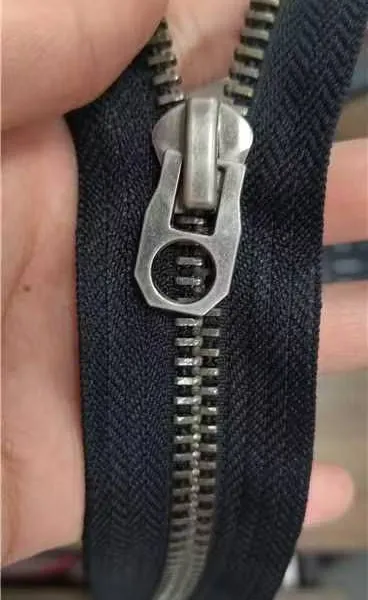 Read More
-
Nylon Zippers for Children's Wear: Safety and Small Parts
October 30, 2026A zipper on adult clothing is a fastener, and a zipper on children's clothing is a fastener with a safety file attached to it. A n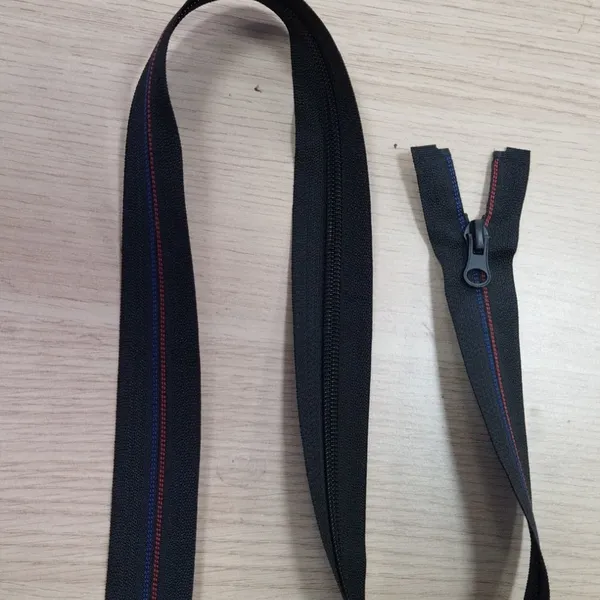 Read More
-
Zipper Length Tolerance: Specifying Cut Length on a Purchase Order
October 30, 2026A zipper is bought by length, and the length on the bag is rarely the length the maker wrote on the purchase order. The gap betwee Read More
-
Nylon Zipper Variants: Coil, Invisible and Water-Repellent Tapes
October 29, 2026Almost every zip sold as a nylon zip is built on the same coil chain, and the differences between products sit in the tape rather Read More

Contact Us
Recommended Products
-
 Clothing Accessories Lead Free Brass Metal Ring Prong Snap Button With 4 Parts for Infant Baby Clothes Baby BibsUS$ 0.01 - 0.03MOQ: 5000 Sets
-
Brass Metal Stainless Steel Material Ring Prong Snap Button With 4 Parts Lead Free & Nickel Free for Infant Baby Clothes Baby Bibs Baby SuitsUS$ 0.01 - 0.03MOQ: 5000 Sets
-
Metal Grommets Eyelets Gold Eyelet for Bag Shoes and Garment AccessoriesUS$ 0.01 - 0.03MOQ: 5000 Sets
-
Cheap Price Custom Jeans Button Metal Custom Logo Metal Button for JeansUS$ 0.01 - 0.03MOQ: 5000 Sets
-
Factory Wholesale Hat Bag Clothing Press Snap Button Spring Snap Button Metal Snap ButtonsUS$ 0.03 - 0.06MOQ: 5000 Sets
-
Wholesale Plastic Round Coloured Snaps Button Press Fasteners for Baby Bibs/ Baby GarmentsUS$ 0.01 - 0.03MOQ: 50000 Sets
-
Custom EngravedCopper I Brass Metal Jeans Button Denim Clothes Jacket for Jeans DenimUS$ 0.01 - 0.03MOQ: 5000 Sets
-
17mm Open Hole Shank Button With Aluminum Nail With Logo for Jeans Jacket PantsUS$ 0.01 - 0.03MOQ: 5000 Sets
-
Eco-friendly Custom Size Plastic Snaps Plastic Snap Button for Baby Clothes, Baby BibsUS$ 0.01 - 0.03MOQ: 50000 Sets
-
12mm 15mm 17mm 20mm Four Parts Metal Brass Fastener Press Snap Button for Clothes JacketUS$ 0.03 - 0.06MOQ: 5000 Sets
-
Custom Logo Personalized High Quality Metal Press Snap Fastener Snap Buttons for Clothing Garments JacketUS$ 0.03 - 0.06MOQ: 5000 Sets
-
Custom Printing Round Press Spring Four Part Snap Button for Clothing Leather 405#17mmUS$ 0.03 - 0.06MOQ: 5000 Sets
-
OEM Garment Accessories Custom Baby Snap Button Press Metal Prong Pearl Ring Snap ButtonUS$ 0.01 - 0.03MOQ: 5000 Sets
-
Factory Stock Buttons Stainless Steel or Brass Material Colors Pearl Snap Button Prong Pearl Snap Button for Shirts ClothingUS$ 0.01 - 0.03MOQ: 5000 Sets
-
Long Lasting Smooth Edge 1513 POM Snap Button 14.6mm for Outer Apparel and JacketsNegotiableMOQ: 50000 Pieces
-
Bulk Supply OEM Custom 1513 Plastic Snap Button 14.6mm for DIY Crafts and Sewing KitsNegotiableMOQ: 50000 Pieces
-
Custom Logo Matte Finish Plastic Snap Button 14.6mm for Canvas Bags and TotesNegotiableMOQ: 50000 Pieces
-
Soft Touch Easy Grip 14.6mm Plastic Snap Button POM for Baby Bibs and Feeding BibsNegotiableMOQ: 50000 Pieces
-
Washable Colorfast 1513 Plastic Snap Fastener 14.6mm POM for Bed Sheets and Duvet CoversNegotiableMOQ: 50000 Pieces
-
Easy Installation 12.3mm Plastic Snap Button Custom Engraved Logo For Fabric Closure HardwareNegotiableMOQ: 50000 Pieces