
 Business License
Snap Button Holding Force: Understanding Pull Strength Testing
A snap button pull strength figure is one of the few numbers in a garment specification that a buyer can verify without taking the closure apart, and it is also one of the most frequently misread. Two laboratories can test the same closure and report figures that differ by a third, and both reports can be technically correct. What separates them is sample preparation, direction of pull and the condition the closure was in before the test began.
This article explains what a pull strength figure measures, how a snap fastener tensile test is run, and what a snap button holding capacity claim means once laundering and opening cycles are taken into account. It closes with the values that suit different garment categories so a specification can be written against a number rather than a feeling.
1. What Snap Button Pull Strength Actually Measures
Snap button pull strength is the force required to separate a closed closure along its own axis, applied until the stud leaves the socket. It is expressed in newtons, and some suppliers still report kilograms force, where one kilogram force is roughly 9.8 newtons. The test measures the closure's retention rather than the strength of the metal, which is why the same closure body can produce different figures on different days.
The first source of variation is the spring inside the socket, because the spring geometry and the wire temper decide how much interference has to be overcome. The second source is the mating parts, since a stud that sits at the lower edge of its tolerance releases sooner than one at the upper edge. A supplier who holds a wide tolerance on the stud will therefore ship closures with a wide spread of pull figures, even though the drawing has not changed.
Reading the figure as a range rather than as a single value is the habit that prevents most specification arguments, because the buyer is purchasing a distribution rather than an exact number. A snap button pull strength quoted as one value without a spread says nothing about the pieces at either end of the shipment.
2. Snap Button Holding Capacity vs Pull Strength
Snap button holding capacity is a broader claim than pull strength, and the two terms are often used as if they were interchangeable. Pull strength describes one separation performed on a fresh closure. Holding capacity describes how that figure changes across the life of the garment, including after washing, after repeated opening and closing, and after the fabric around the closure has relaxed.
A closure can hold a high fresh figure and lose it quickly, which is the usual failure pattern when the spring is over-tempered or the socket wall is thin. The reverse also occurs, where a closure with a moderate fresh figure holds most of it through hundreds of cycles. For a garment that will be worn and laundered for years, the second behaviour is the one worth buying.
| Measure | What it describes | Typical condition |
|---|---|---|
| Pull strength | Force to separate a closed closure | Fresh part, as received |
| Holding capacity after wash | Retention through laundering cycles | Part measured after a defined wash programme |
| Holding capacity after cycling | Retention through repeated opening | Part measured after a set number of cycles |
| Fabric tear resistance | Panel performance rather than closure performance | Closure set into the real cloth |
3. How a Snap Fastener Tensile Test Is Run
A snap fastener tensile test is run on a universal testing machine fitted with a pair of fixtures that grip the two halves of the closure without deforming them. The standard method for resistance to unsnapping is widely followed, and one common specification sets the crosshead speed at roughly 300 mm per minute. The machine records the peak force, and the report normally states the mean and the spread across a sample rather than a single reading.
Sample size is part of the method. Five pieces taken from one hour of production tell a buyer about that hour, while twenty pieces drawn across a shift tell them about the shipment. A test report without the sample size, the test speed and the conditioning state is a number without a context, and it cannot be compared with a second report.
Where the closure is tested as a loose part, the fixtures contact the metal directly. Where it is tested as an assembly, the fixture grips the fabric behind the closure, and the result then includes the behaviour of the cloth. Both are valid tests, and they answer different questions.
4. Sample Preparation for a Snap Fastener Tensile Test
Sample preparation explains most of the disagreement between two reports. A closure tested loose will release at a different figure from the same closure set into fabric, because the fabric transfers part of the load and allows the panel to distort before the spring releases. The difference is not a testing error in either case, and it can be substantial on a stretch material.
The fabric matters on its own as well. The same closure set into a stable woven cotton and into a loose knit will show different figures, and the knit will usually release the closure earlier because the panel deforms first. Conditioning also enters, since a closure held at room humidity and one held in a humid chamber behave differently on the day of the test. Difei Button conditions samples for a set period before testing, so a figure quoted in a specification can be repeated on a second run.
5. Test Direction in a Snap Button Pull Strength Measurement
Direction is the second large variable. An axial pull applied straight out of the closure measures the spring release. A side pull applied parallel to the panel measures shear, which is the load a bag flap or a strap imposes, and it usually releases at a lower figure because the stud tilts in the socket.
A peel-style pull, where one panel lifts away while the other stays flat, sits between the two and reflects how a jacket front actually opens. Specifying the direction is therefore as important as specifying the number, because a closure quoted at a comfortable axial figure can feel weak when loaded sideways. A snap fastener tensile test run in shear and one run axially will not agree, so the direction belongs beside the figure in every report.
| Direction | What it represents | Effect on the figure |
|---|---|---|
| Axial | Straight separation, as in the standard test | Highest figure |
| Fixed to fabric, axial | Real garment opening | Lower than loose axial |
| Shear or side | Flap and strap loads | Lower again |
| Peel | Placket opening as worn | Between axial and shear |
6. Reading a Pull Strength Figure in a Specification
A specification worth signing states the figure, the direction, the condition and the sample size. A line reading "pull strength 60 N minimum, axial, loose part, mean of twenty pieces" can be verified, argued and repeated. A line reading "strong closure" cannot be tested at all, and it leaves both parties exposed when a claim arrives.
It also helps to define what happens at the two ends of the range. A closure that releases below the minimum is a functional failure, while a closure that exceeds the maximum is a usability problem, because a garment the wearer cannot open without effort is a return risk. Both limits belong in the specification, and Difei writes them into the test report rather than quoting a single minimum.
One childrenswear supplier learned the second half of that lesson after a range of closures was specified on a minimum figure alone. The production run held comfortably above the minimum and sold well, and the complaints that followed were about adults unable to open the garments rather than about closures failing. The specification was rewritten with an upper limit and a target band, and the next season drew no complaints of either type.
7. Holding Capacity After Laundering and Cycling
Laundering affects holding capacity through several routes at once. Heat relaxes the spring in a plastic socket, detergent and mechanical action abrade the contact faces, and the fabric around the closure shrinks or relaxes and changes the load path. A wash programme therefore changes the figure in a way that a fresh-part test cannot predict.
Opening cycles act more slowly. Each cycle wears the contact faces by a small amount, and the loss accumulates, so a closure measured after five hundred cycles usually holds less than one measured after fifty. The practical approach is to specify the figure after a defined wash programme and after a defined cycle count, and to state both numbers in the report. A snap button holding capacity figure quoted without either of those conditions cannot be verified by an incoming inspection, which is why both belong on the same line of the specification.
8. Typical Snap Button Pull Strength Values and What They Suit
Acceptable values follow the garment rather than the closure, so a figure that suits a coat front is unsuitable for a shirt. Across the categories in practice, a light shirting closure commonly measures 25 N to 40 N, casualwear 45 N to 70 N, and outerwear or workwear 70 N to 110 N. The ranges below are planning figures rather than limits, and each one should be confirmed against the real fabric stack before a specification is frozen.
| Application | Typical range | Consideration |
|---|---|---|
| Infant and childrenswear | Lower end of the scale | Must open without adult force, safety testing applies |
| Shirting and blouses | Moderate | Light placket, wearer expects easy opening |
| Denim and casualwear | Moderate to high | Heavy fabric, repeated wear |
| Outerwear and workwear | High | Thick stack, gloves, industrial laundering |
| Bag flaps and straps | High, tested in shear | Load carried by the panel, not the closure alone |
A denim brand working with Difei Button (Guangzhou) Co Ltd once sent a complaint about closures that felt loose after a few months of wear, although the incoming inspection had passed. Testing the returned garments showed that the fresh-part figure was within specification and the figure after twenty wash cycles was not, because the socket had relaxed in the dryer. Switching the socket polymer and lowering the drying recommendation restored the figure, and Difei added a post-wash figure to the standard test report for that customer.
A second buyer, sourcing for uniform shirts, cut cost by moving to a thinner socket wall and saw the fresh figure hold while the cycle figure fell. The wall thickness was restored once the two figures were placed side by side, which settled the argument in one meeting.
9. Frequently Asked Questions
9.1 What is a normal snap button pull strength?
There is no single normal figure, because the requirement follows the garment. Light shirting closures are usually specified at a moderate figure that opens easily, while outerwear, workwear and bag flaps are specified higher because the panel is heavier and the closure is loaded repeatedly. Infant and childrenswear sit at the low end by design, since a closure an adult cannot open presents a safety problem. The workable approach is to set a target band with a minimum and a maximum, then confirm it against the real fabric stack.
9.2 How is a snap fastener tensile test performed?
The closure is mounted in a tensile testing machine with fixtures that hold each half, and the crosshead separates them at a defined speed, commonly around 300 mm per minute. The machine records the peak force at which the stud leaves the socket, and a report usually gives the mean across a sample of at least five pieces drawn from production. A report becomes comparable with another when the test speed, sample size, direction and conditioning state are stated alongside the figure. Testing the loose part and testing the assembly give different figures, and both are valid for their own question.
9.3 Does snap button holding capacity change after washing?
Yes, and the change is often larger than a buyer expects. Heat relaxes a plastic socket, mechanical action wears the contact faces, and the fabric around the closure shrinks or relaxes and changes the load path through the assembly. A closure that measures comfortably on arrival can fall below the requirement after twenty cycles. Specifying a post-wash figure alongside the fresh figure is the way to control it, and it also gives the factory a clear target when choosing the polymer for the socket.
9.4 Why do two laboratories report different figures for the same closure?
Differences usually come from preparation rather than from equipment, since a loose part and a closure set into fabric produce different results and the fabric itself matters because a stretch knit distorts before the spring releases. Direction explains another share, because an axial pull and a side pull on the same closure are not the same measurement. Conditioning, sample size and the part of the production run sampled account for most of what remains. Agreeing those four points in advance makes two reports comparable.
Recently Posted
-
Snap Buttons for Knitwear and Lightweight Fabrics
September 24, 2026Choosing a knitwear snap button is a different exercise from specifying one for a woven shirt, because the material around the fix Read More
 -
Oeko-Tex Standard 100 and Button Compliance: What to Verify
September 24, 2026Compliance questions arrive late in most trim orders, usually after a garment buyer has been asked for a certificate that nobody o
Read More -
Packaging, Carton Configuration and Shipping Terms for Button Orders
September 24, 2026A button order is small in value and heavy in handling, which makes button packaging the part of the transaction that most often p Read More
 -
Plating and Coating Options for Metal Snap Buttons
September 24, 2026Two orders can use identical brass underneath and behave completely differently after a year of wear, because the snap button surf Read More

Contact Us
Recommended Products
-
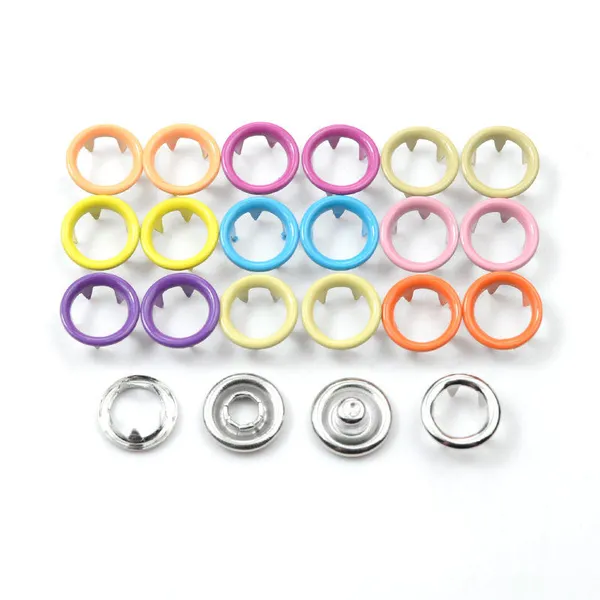
 Clothing Accessories Lead Free Brass Metal Ring Prong Snap Button With 4 Parts for Infant Baby Clothes Baby BibsUS$ 0.01 - 0.03MOQ: 5000 Sets
 -
Brass Metal Stainless Steel Material Ring Prong Snap Button With 4 Parts Lead Free & Nickel Free for Infant Baby Clothes Baby Bibs Baby SuitsUS$ 0.01 - 0.03MOQ: 5000 Sets
-
Metal Grommets Eyelets Gold Eyelet for Bag Shoes and Garment AccessoriesUS$ 0.01 - 0.03MOQ: 5000 Sets
-
Cheap Price Custom Jeans Button Metal Custom Logo Metal Button for JeansUS$ 0.01 - 0.03MOQ: 5000 Sets
-
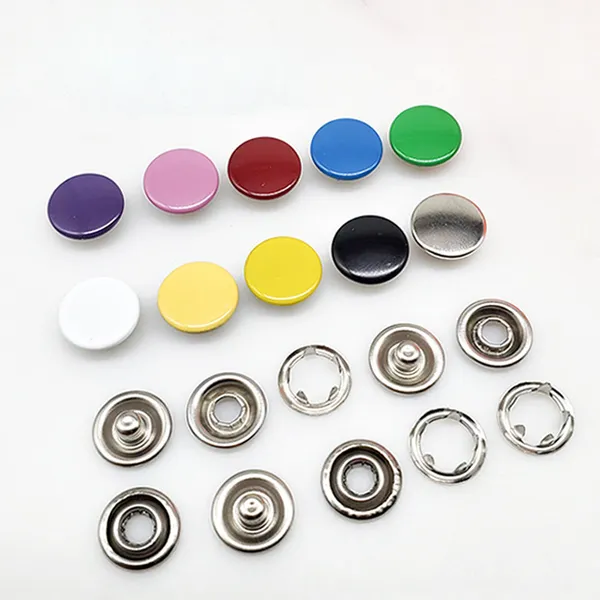
Factory Wholesale Hat Bag Clothing Press Snap Button Spring Snap Button Metal Snap ButtonsUS$ 0.03 - 0.06MOQ: 5000 Sets
-
Wholesale Plastic Round Coloured Snaps Button Press Fasteners for Baby Bibs/ Baby GarmentsUS$ 0.01 - 0.03MOQ: 50000 Sets
-
Custom EngravedCopper I Brass Metal Jeans Button Denim Clothes Jacket for Jeans DenimUS$ 0.01 - 0.03MOQ: 5000 Sets
-
17mm Open Hole Shank Button With Aluminum Nail With Logo for Jeans Jacket PantsUS$ 0.01 - 0.03MOQ: 5000 Sets
-
Eco-friendly Custom Size Plastic Snaps Plastic Snap Button for Baby Clothes, Baby BibsUS$ 0.01 - 0.03MOQ: 50000 Sets
-
12mm 15mm 17mm 20mm Four Parts Metal Brass Fastener Press Snap Button for Clothes JacketUS$ 0.03 - 0.06MOQ: 5000 Sets
-
Custom Logo Personalized High Quality Metal Press Snap Fastener Snap Buttons for Clothing Garments JacketUS$ 0.03 - 0.06MOQ: 5000 Sets
-
Custom Printing Round Press Spring Four Part Snap Button for Clothing Leather 405#17mmUS$ 0.03 - 0.06MOQ: 5000 Sets
-
OEM Garment Accessories Custom Baby Snap Button Press Metal Prong Pearl Ring Snap ButtonUS$ 0.01 - 0.03MOQ: 5000 Sets
-
Factory Stock Buttons Stainless Steel or Brass Material Colors Pearl Snap Button Prong Pearl Snap Button for Shirts ClothingUS$ 0.01 - 0.03MOQ: 5000 Sets
-
13.8mm x 7.5mm Plastic Grommet Kit for Apparel and Garment Lacing, Lightweight and FlexibleNegotiableMOQ: 5000 Sets
-
Clear Plastic Eyelet and Washer Set Two‑piece Fastener for Tote Bags Canvas and Fabric Hole Reinforcement ApplicationsNegotiableMOQ: 5000 Sets
-
13.8mm x 7.5mm Clear Plastic Eyelet and Washer Set Durable Two‑part Hardware for Fabric Reinforcement and Bag Making ApplicationsNegotiableMOQ: 5000 Sets
-
Two‑Piece Plastic Grommet and Washer Set 13.8mm x 7.5mm Clear Hardware for Banner Craft Works and Light‑weight Textile ProductionNegotiableMOQ: 5000 Sets
-
Clear Plastic Eyelet and Washer Set 13.8mm x 7.5mm for Tarps, Banners, and Awning Fabric ReinforcementNegotiableMOQ: 5000 Sets
-
Clear Plastic Eyelet and Washer Set Snap‑together Grommet Assembly Suited for Sewing Accessory and Finished Bag ManufacturingNegotiableMOQ: 5000 Sets